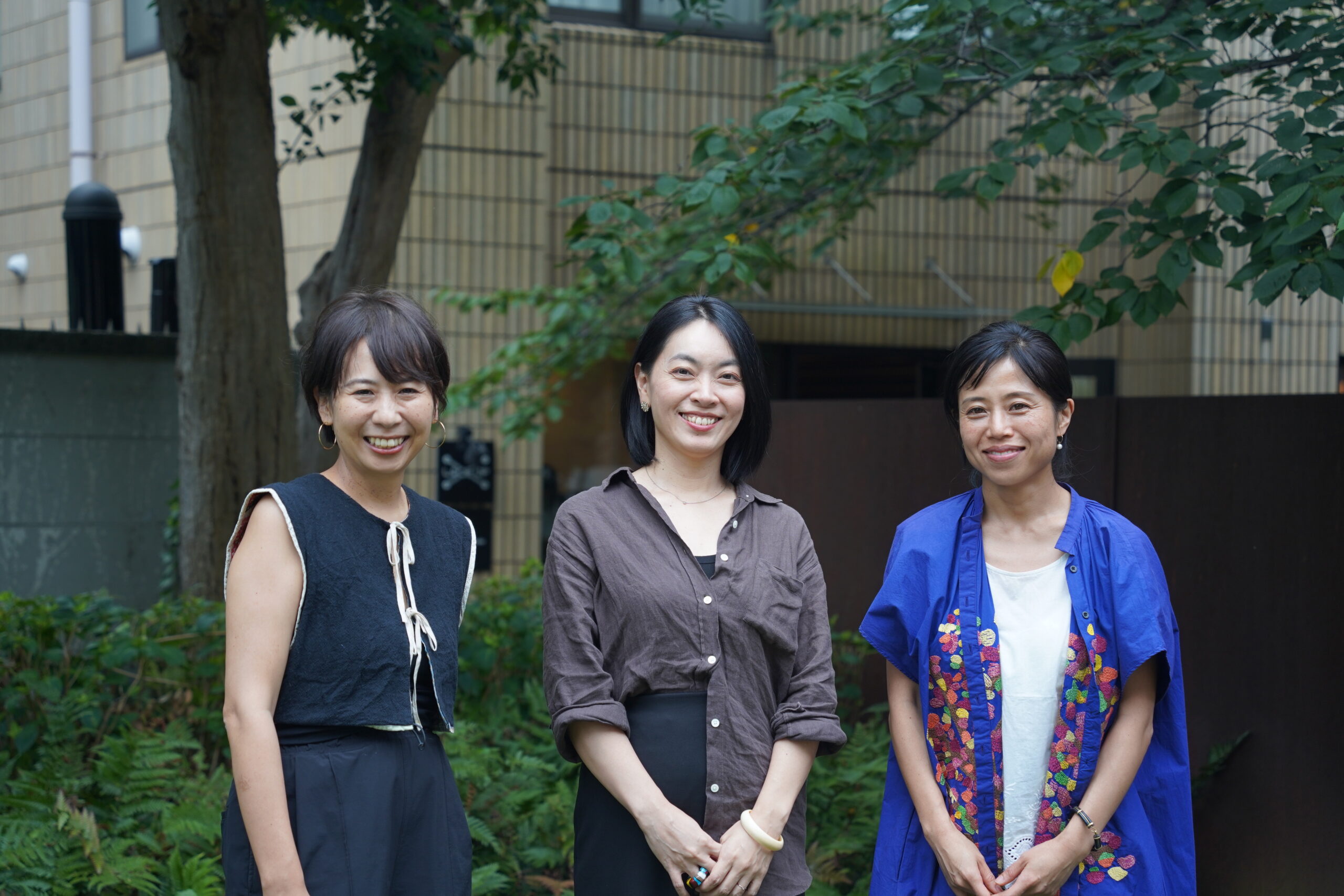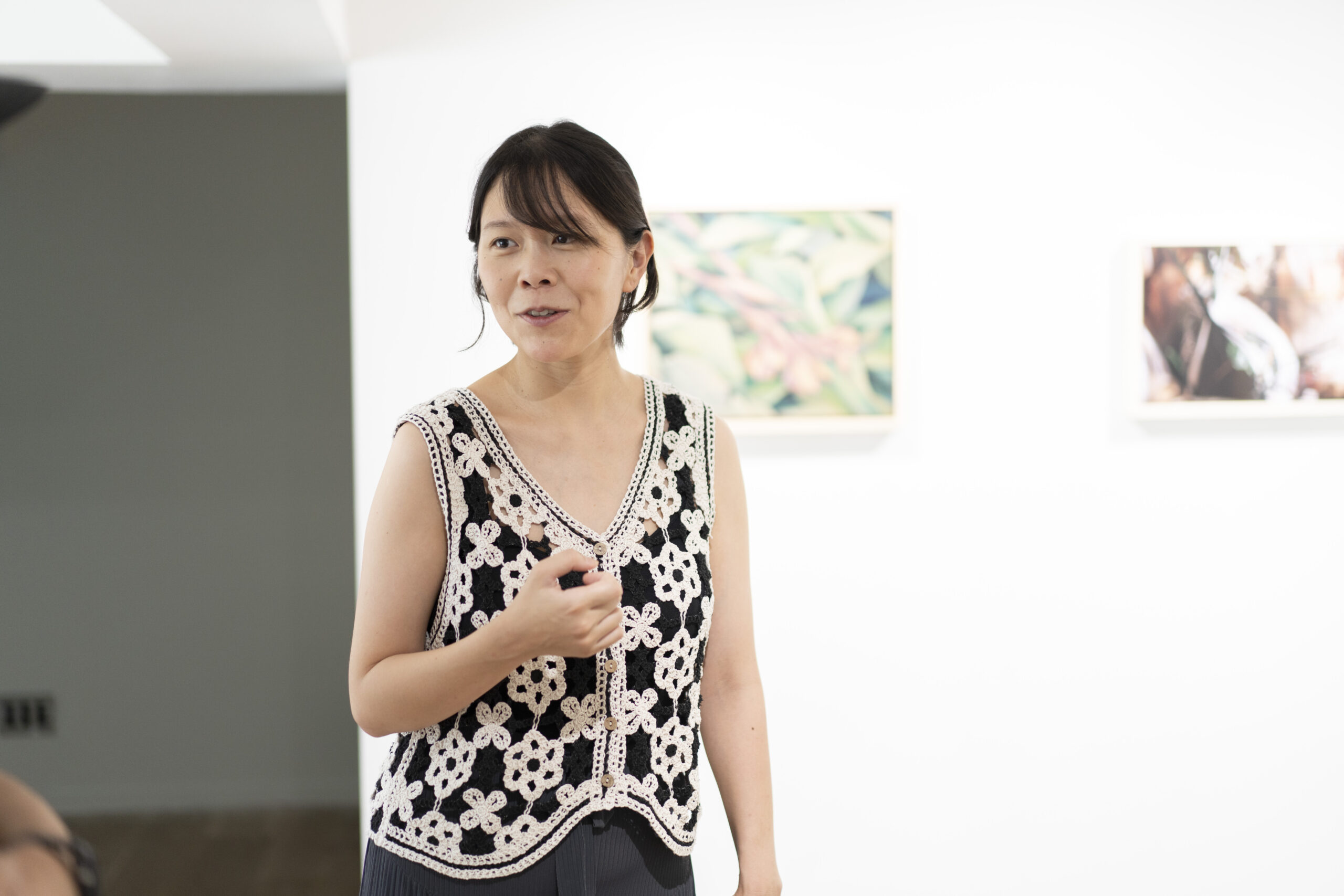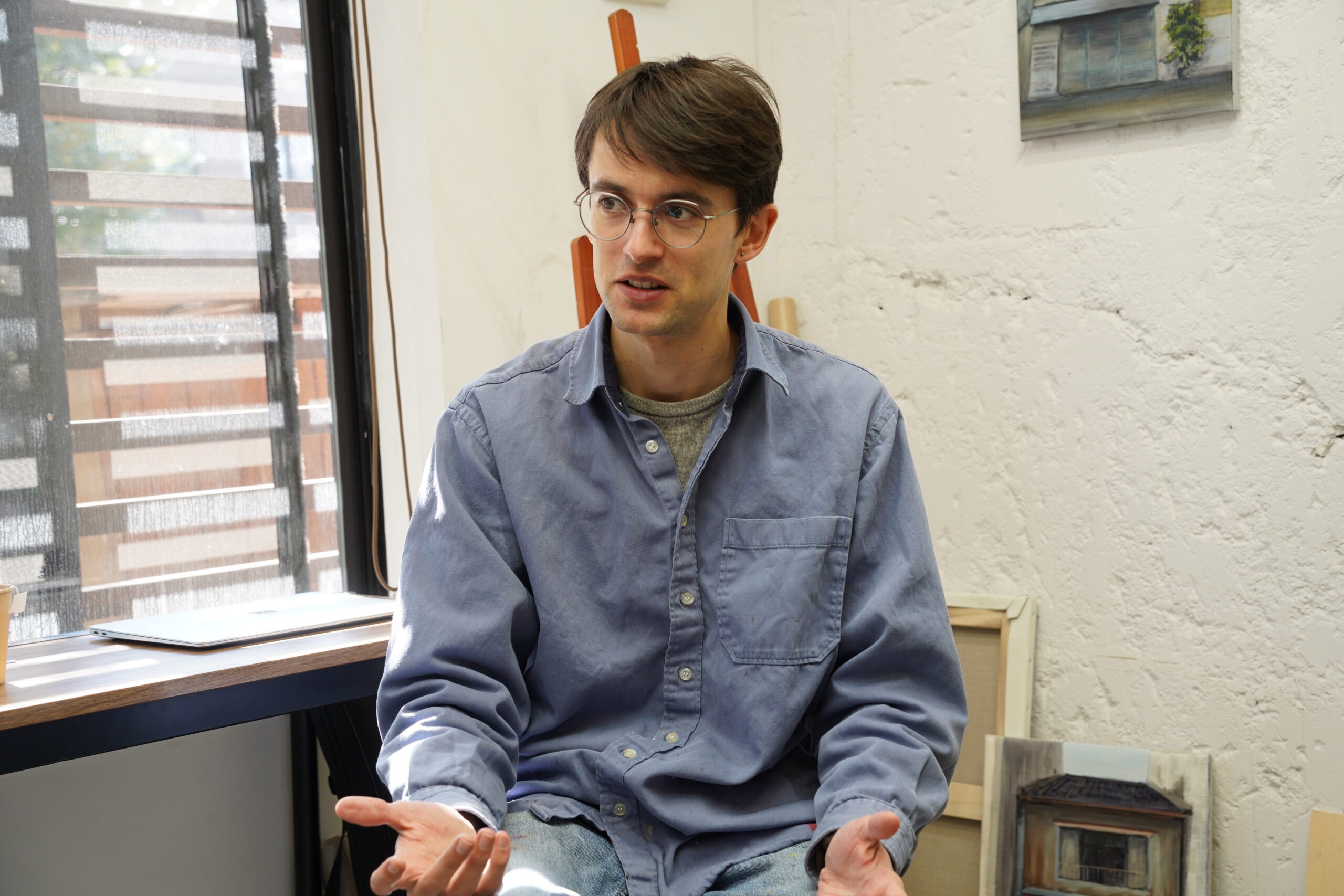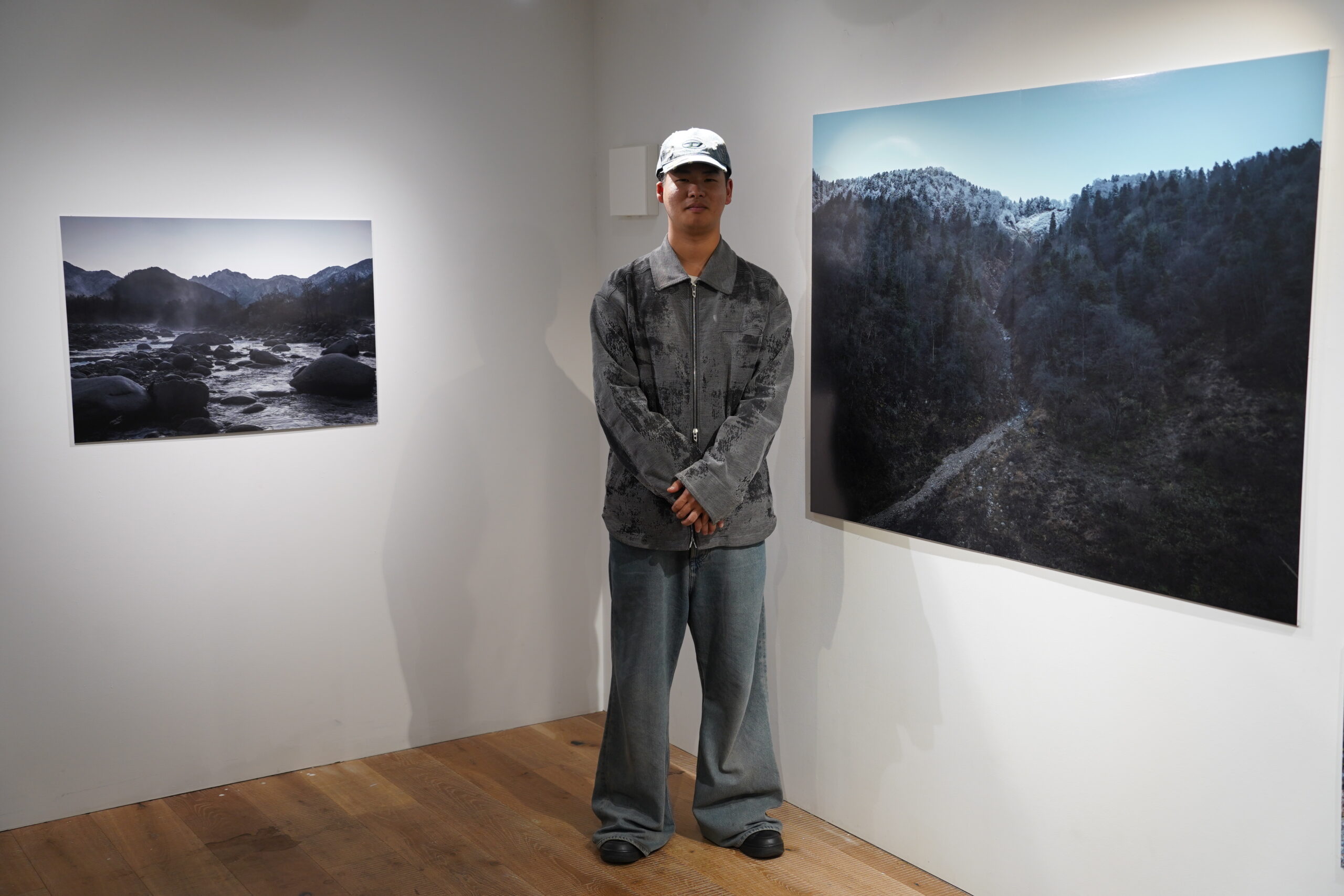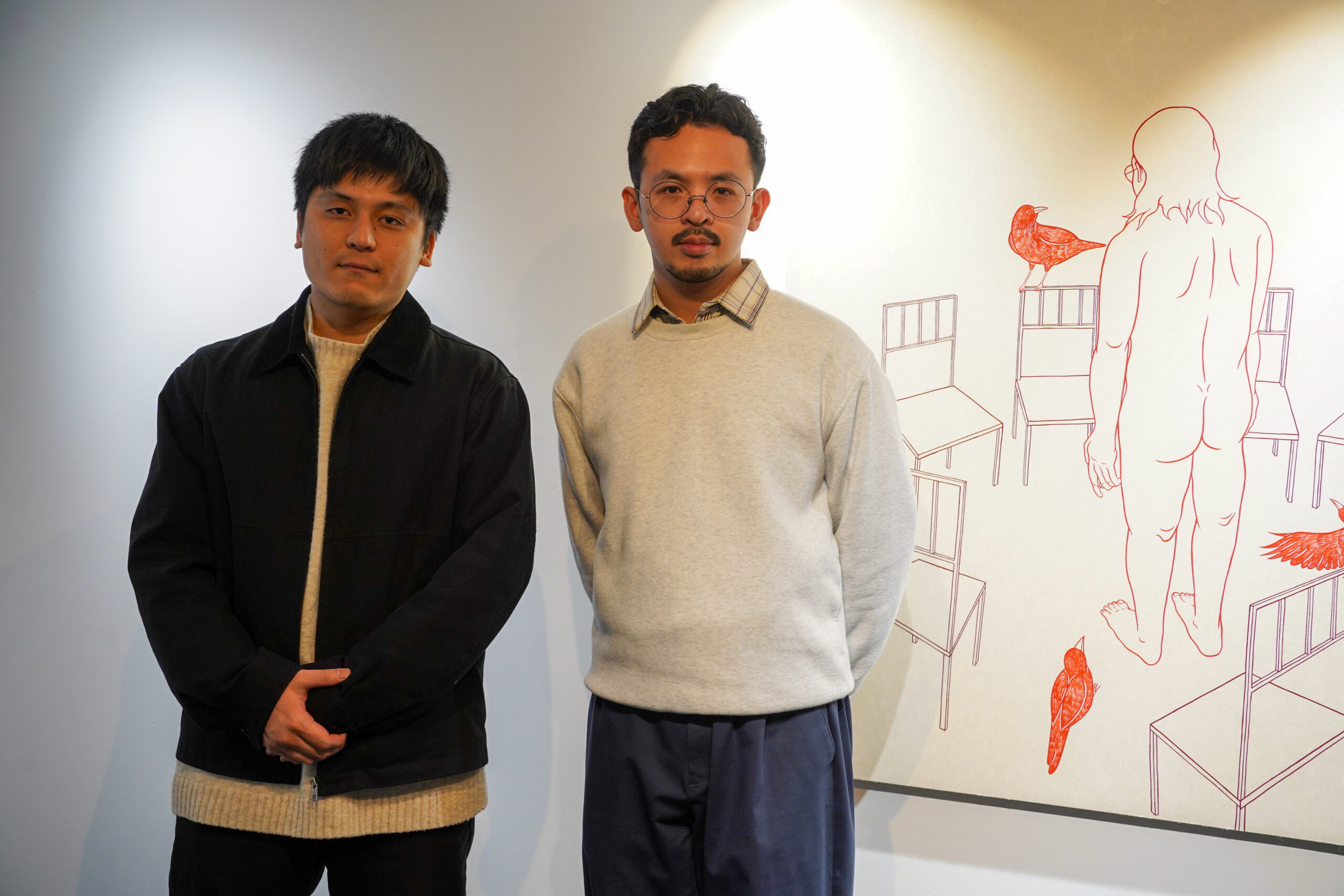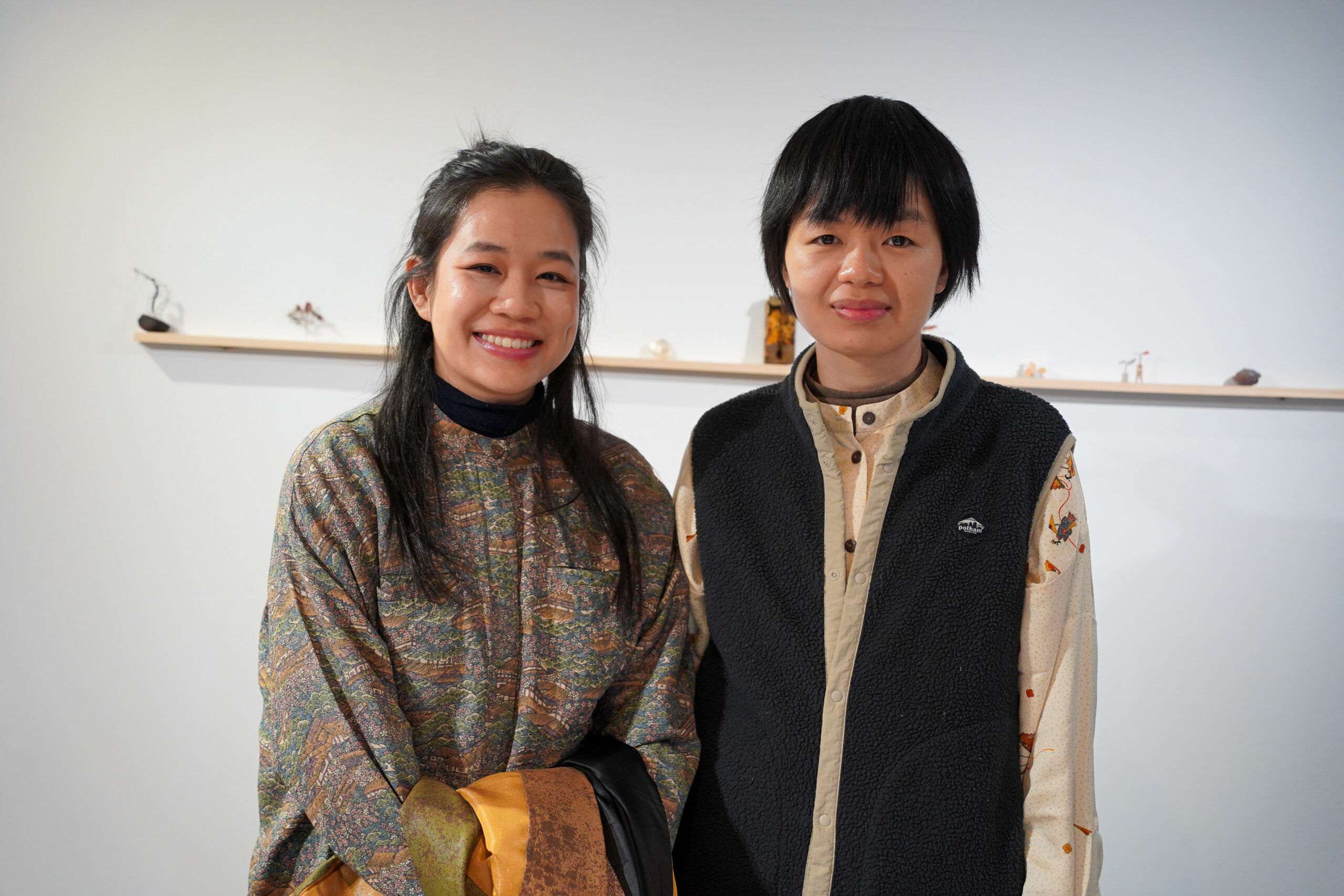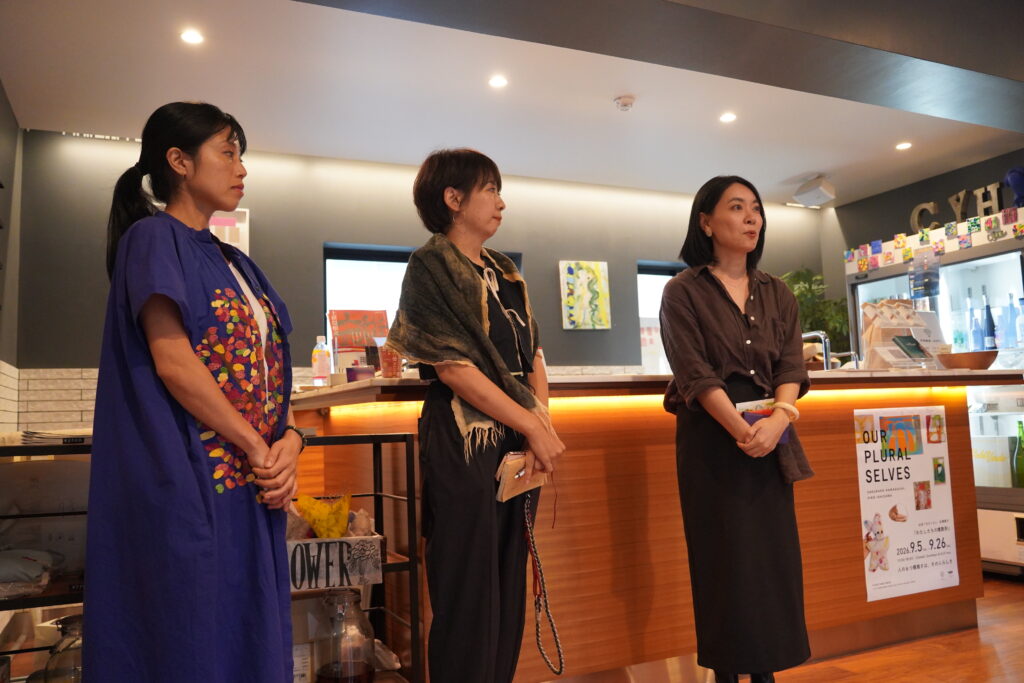
コートヤードHIROOにて開催された「私たちの複数形」。gallery ayatsumugi主宰の友川綾子さんが企画を手掛け、アーティストの石澤英子さん、はまぐちさくらこさんの2名による作品群が空間を彩りました。
一丸の固定された概念に捉われず、変化や関係性、過去と現在の重なりを抱きかかえる「複数形」というテーマ。今回、企画者の友川さん、そして出展作家である石澤さん、はまぐちさんの3名にお話を伺い、それぞれの創作の源泉や文化に対する想いをお聞きしました。
“Our Plural Forms” was held at Courtyard HIROO. Curated by Ayako Tomokawa, director of gallery ayatsumugi, the exhibition featured works by two artists, Eiko Ishizawa and Sakurako Hamaguchi, which brought the space to life.
The theme, “Plural,” embraces change, relationships, and the overlap between past and present, without being bound by fixed notions of unity. For this feature, we spoke with the curator, Ms. Tomokawa, and the participating artists, Ms. Ishizawa and Ms. Hamaguchi, to learn about the sources of their creativity and their thoughts on culture.
はまぐちさくらこ インタビュー:幼年期の感覚を呼び覚まし、物語と精神性を未来へ繋ぐ
Interview with Sakurako Hamaguchi: Reviving Childhood Sensibilities and Connecting Stories and Spirituality to the Future
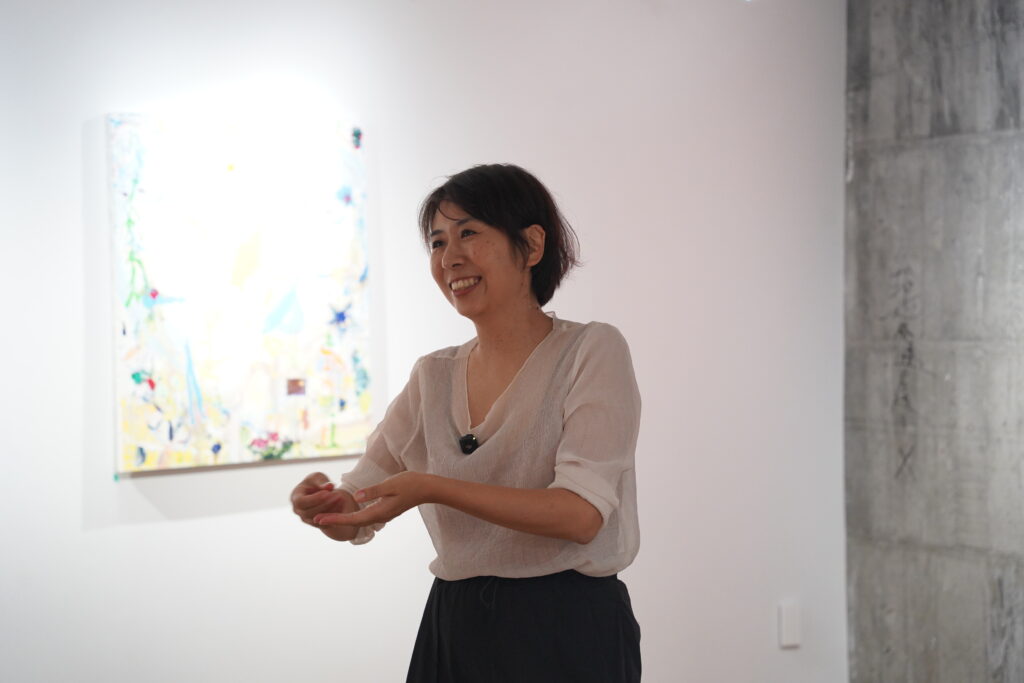
「幼年期の自分」と「現在の自分」が出現する展覧会
An Exhibition Featuring “My Childhood Self” and “My Present Self”
Q:今回の「私たちの複数形」というテーマにおいて、作品にどのような思いを込められたのでしょうか?
Q: Regarding this theme, “Our Plural Forms,” what kind of thoughts did you put into your work?
はまぐち:「複数形」というテーマに向き合う中で、子供時代の自分、大人になった自分、母としての自分、そして母にとっての娘である自分といった、私の中に存在する様々な「自分」が浮かび上がってきました。
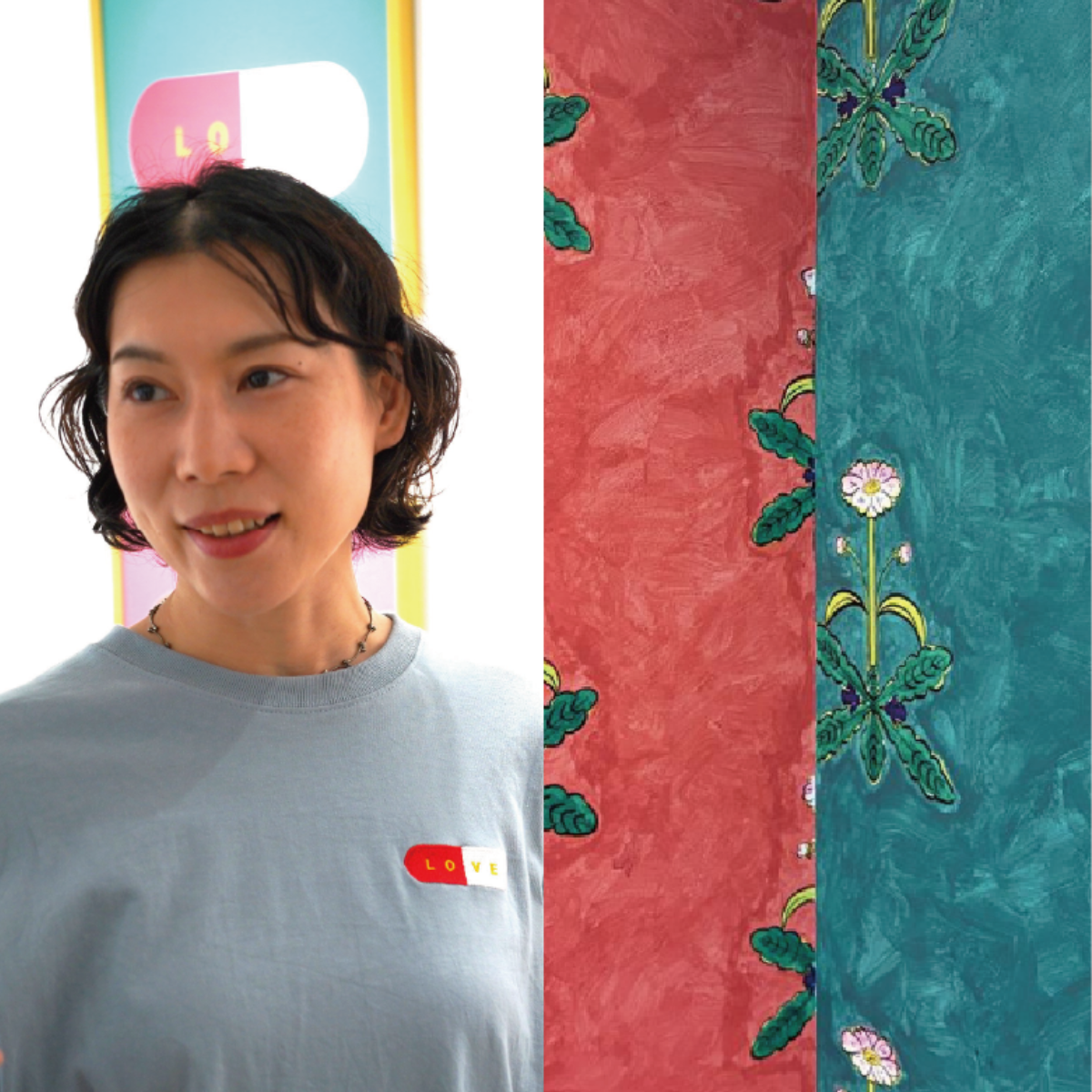
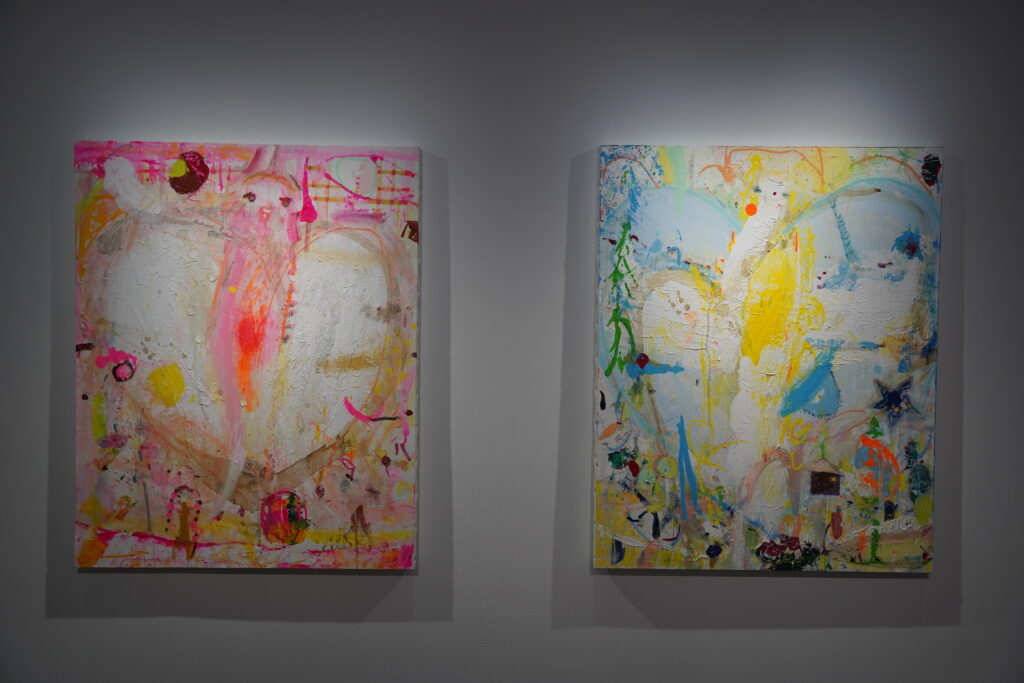
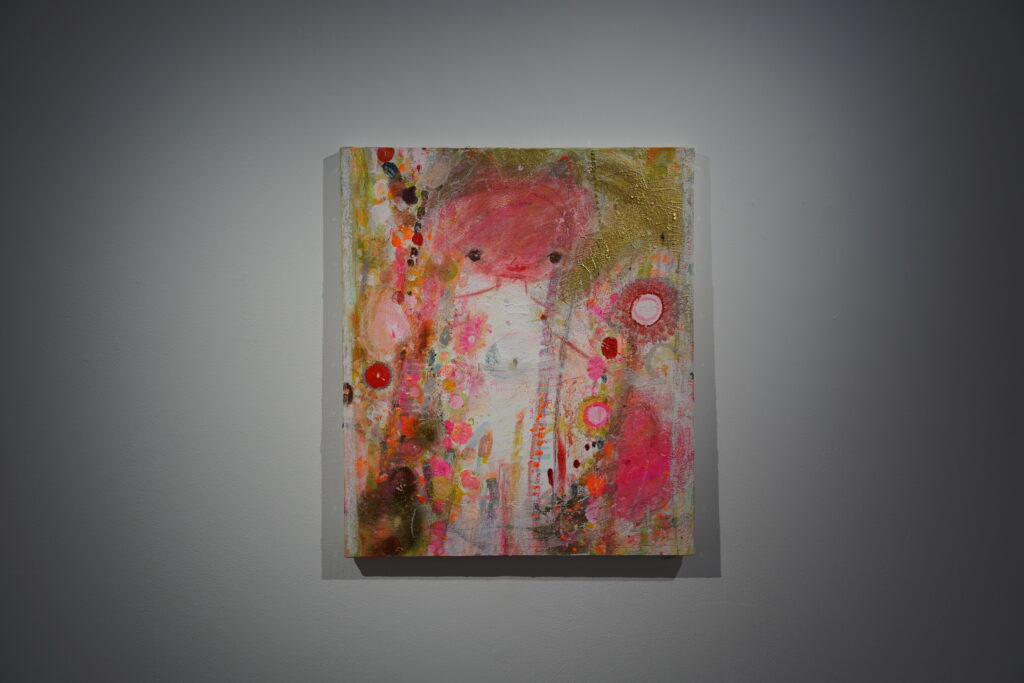
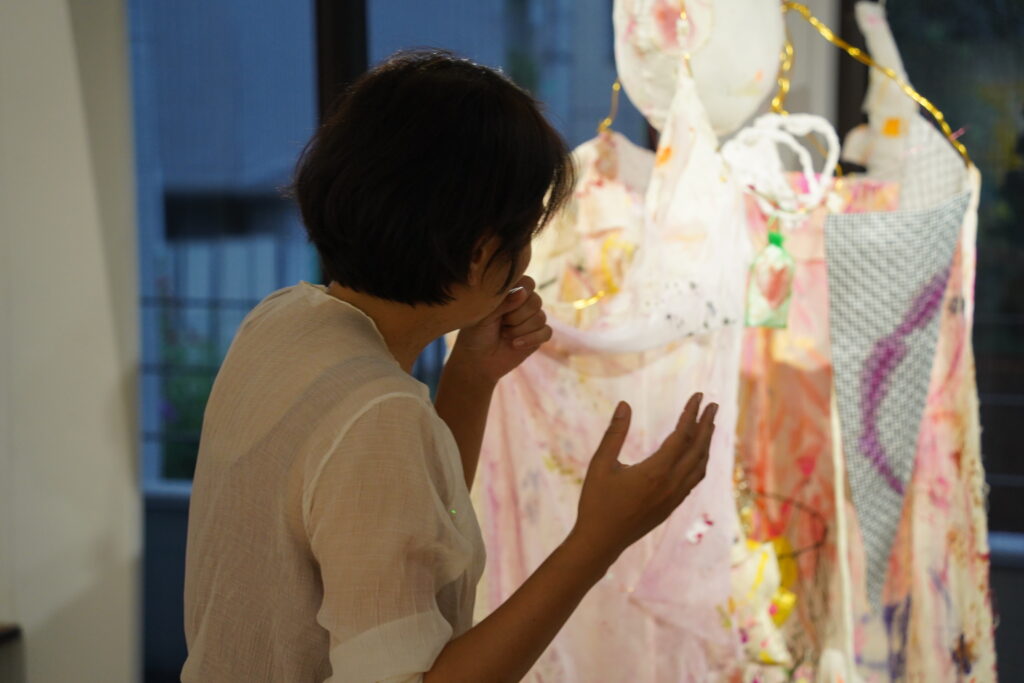
今回の展示では、ずっと描き続けてきた子供時代の絵の感覚をもう一度呼び覚まし、幼い頃の自分と現在の自分を同時に出現させたいと考えたんです。幼少期に描いていた絵を引っぱり出してきて、女の子やウサギ、蝶々、ハート、お花といったモチーフを改めて描き直しました。筆を動かしていると、当時の純粋な気持ちや感覚がリアルに蘇ってくる感覚がありましたね。
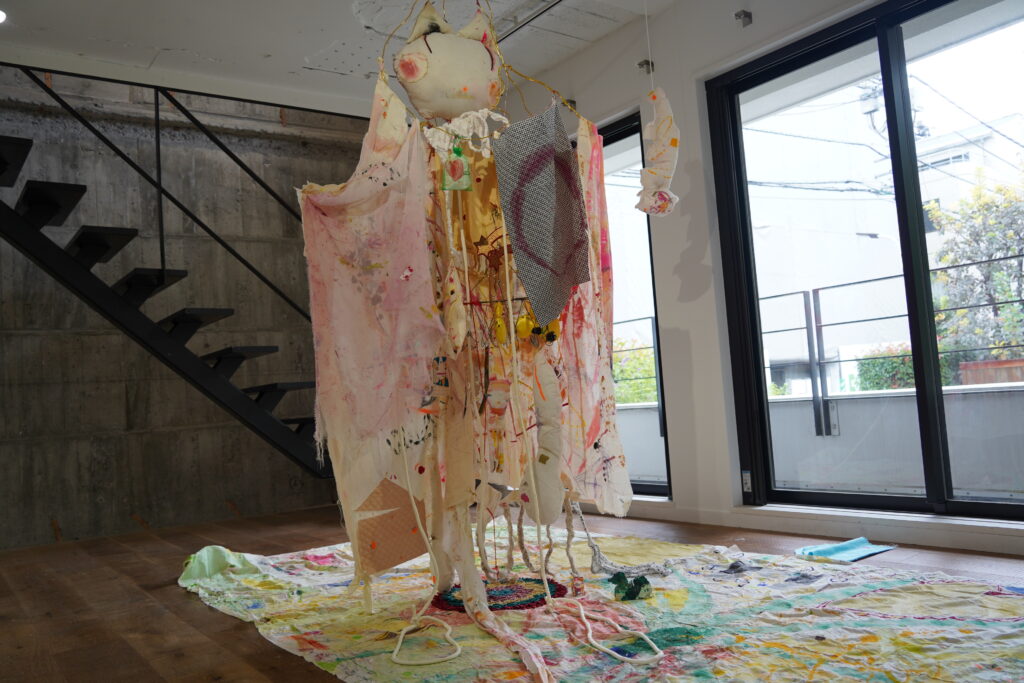
インスタレーションについても、幼い頃の身体感覚を意識しています。生まれたばかりで生き方も身体の使い方もうまく分からず、歩き方もいびつだった幼稚園や小学校の頃の不器用な感覚。そうした「いびつさ」を残しつつ、当時好きだったピンクや白といった色合い、憧れていた世界観やキャラクターをぬいぐるみや立体として形にしていきました。
Hamaguchi: As I explored the theme of “plurality,” various “selves” that exist within me—my childhood self, my adult self, my self as a mother, and my self as a daughter to my own mother—began to emerge.
For this exhibition, I wanted to reawaken the sensibility of the childhood drawings I’ve been creating all along and bring my younger self and my present self into existence simultaneously. I dug out the drawings I made as a child and redrew motifs like little girls, rabbits, butterflies, hearts, and flowers. As I moved the brush, I felt as though the pure emotions and sensations from that time were vividly coming back to life.
In my installations as well, I’m conscious of the physical sensations I experienced as a child—that clumsy feeling from kindergarten and elementary school, when I was just born and didn’t quite know how to live or use my body, and my walking was still awkward. While preserving that “awkwardness,” I gave form to the colors I loved back then—like pink and white—as well as the worlds and characters I longed for, through stuffed animals and three-dimensional sculptures.
「うまくなってはいけない」——幼少期の純粋な感覚を保ち続ける
“You Mustn’t Get Better” — Preserving the Pure Sensibilities of Childhood
Q:幼い頃(3〜4歳)の感覚を今も鮮明に覚えていて、それを再現できるのは驚異的ですね。その感覚はどのように維持されてきたのでしょうか?
Q: It’s amazing that you still vividly remember the sensations from your early childhood (ages 3–4) and can recreate them. How have you managed to preserve those sensations?
はまぐち:母が当時の絵や記録を大切に保管してくれていたことも大きいですが、何より自分自身が「この感覚を絶対に忘れたくない」と強く願っていたからだと思います。「大人になって絵がうまくなってはいけない、この感覚を保ち続けなければ」という切実な思いがずっとありました。
幼少期から絵を描くことが大好きで、時に距離を置くことがあっても、家族が常に後押ししてくれたおかげで自然と表現の道を進むことができました。佐賀美術短期大学では絵画だけでなく立体や写真など多様な表現技法を学びましたが、試行錯誤を経たからこそ、自分が本当に表現したい「絵画」へと立ち戻ることができました。
Hamaguchi: It certainly helped that my mother carefully preserved my drawings and records from that time, but I think the biggest reason was that I myself had a strong desire to “never, ever forget this feeling.” I’ve always had this earnest conviction: “I mustn’t become too skilled at drawing as an adult; I have to hold onto this feeling.”
I’ve loved drawing since I was a child, and even though there were times when I distanced myself from it, thanks to my family’s constant encouragement, I was able to naturally pursue a path in the arts. At Saga College of Art, I studied a variety of expressive techniques—not just painting, but also sculpture and photography—and it was precisely through that process of trial and error that I was able to return to “painting,” which is what I truly wanted to express.
アイコンからの刺激と、生活と制作が巡る日常
Inspiration from Icons and the Daily Cycle of Life and Creativity
Q:作家としてキャリアを広げていく中で、大きな転機となった出会いや環境について教えてください。
Q: As you’ve built your career as a writer, could you tell us about any encounters or circumstances that served as major turning points?
はまぐち:東京に出てGEISAIに参加し始めた頃、村上隆さんと奈良美智さんの存在が大きな刺激になりました。ご自身でセルフマネジメントまで追求される村上さんの斬新さや、心のままを瞬間的にキャンバスへぶつける奈良さんのロックなスタンスに強く惹かれ、「もっと自由に描いていいんだ」と勇気をもらいました。多くの表現者たちと出会えたことは本当に楽しかったです。
現在は母として子育てをしながら制作を行っていますが、「両立」というよりは生活と制作がリビングでごちゃ混ぜに混ざり合っている状態です(笑)。自宅のアトリエにいても結局子どもがいるリビングに戻ってきてしまい、テーブルの上には生活用品と絵の具が隣り合わせで並んでいます。
でも、子どもが私の制作風景や本を作る過程を否定せず、ごく自然に受け入れてくれているのは幸せなことですね。子どもの成長を間近で見守ることで、私自身も幼少期の感覚をもう一度体験し直し、一緒に成長させてもらっていると感じています。
Hamaguchi: When I first moved to Tokyo and started participating in GEISAI, Takashi Murakami and Yoshitomo Nara were a huge source of inspiration for me. I was deeply drawn to Murakami’s innovative approach—even going so far as to manage his own career—and Nara’s “rock-and-roll” attitude of instantly pouring his innermost feelings onto the canvas. They gave me the courage to realize, “It’s okay to paint more freely.” It was truly a joy to meet so many other artists.
These days, I’m creating art while raising my child as a mother, but rather than “balancing” the two, my daily life and my art are all jumbled together in the living room (laughs). Even when I’m in my home studio, I end up returning to the living room where my child is, and on the table, household items and paints sit side by side.
But I feel so fortunate that my child doesn’t reject my creative process or the process of making books, but accepts them quite naturally. Watching my child grow up up close allows me to relive the sensations of my own childhood, and I feel like we’re growing together.
アウトサイダーアートとの出会いと、これからの活動
My Encounter with Outsider Art and My Future Activities
Q:今後の展望についてお聞かせください。
Q: Could you tell us about your future plans?
はまぐち:高松に移住してから、長年やってみたかった子ども向けワークショップや、障害のある方々のアウトサイダーアートのサポートに関わる機会が増えました。
現場では一応「先生」という立場ですが、皆さんの描く絵があまりにも素晴らしくて、教えることなんて何もないと感じるほどです。私は画材を渡したり水を替えたりするサポート役に徹し、圧倒的な才能が命を宿す瞬間を間近で見られることに大きな幸せを感じています。今後は彼らの作品の魅力をより多くの人に届けるため、展示の開催やグッズ展開などのサポートにも取り組んでいきたいです。
Hamaguchi: Since moving to Takamatsu, I’ve had more opportunities to lead children’s workshops—something I’ve wanted to do for years—and to support “outsider art” created by people with disabilities.
Although I’m technically in the role of “teacher” on site, the paintings everyone creates are so wonderful that I often feel there’s nothing left for me to teach. I focus solely on my supporting role—handing out art supplies and changing the water—and I find immense joy in witnessing up close the moments when their overwhelming talent comes to life. Going forward, I’d like to work on organizing exhibitions and developing merchandise to help share the appeal of their artwork with an even wider audience.
形ある作品を超えて、語り継がれる「物語」と「精神性」
Beyond Tangible Works: “Stories” and “Spirituality” That Are Passed Down Through the Generations
Q:弊社では「Imagine 100 Years」という言葉を掲げていますが、はまぐちさんにとって「100年後にも残ってほしいもの」は何でしょうか?
Q: Our company has adopted the slogan “Imagine 100 Years.” What is something you, Mr. Hamaguchi, would like to see remain 100 years from now?
はまぐち:一番は作品そのものが残ることですが、絵画などの物質的な作品は保存環境や時代の変化によって形を保つのが難しい場合もあります。
だからこそ、作品に込められた「物語」や「思い」、そして「精神性」が親から子へと口伝で受け継がれていってほしいと思っています。「昔、こんな物語を描いていた人がいたんだよ」という思いが語り継がれ、100年・200年後の未来で誰かがそれを聞いて新しい表現を生み出してくれるなら、仮に私の作品そのものがなくなったとしても、その精神は永遠に続いていくと思うんです。
作品という形とともに、人と人との心や記憶の繋がりの中で、100年先の未来へ思いを届けていきたいですね。
Hamaguchi: The most important thing is for the artwork itself to endure, but with physical works like paintings, it can sometimes be difficult to preserve their original form due to changes in storage conditions or the passage of time.
That is precisely why I hope the “stories,” “feelings,” and “spirit” embedded in the artwork will be passed down from parent to child through oral tradition. If the sentiment—“There was once an artist who painted stories like this”—is passed down through the generations, and if someone 100 or 200 years from now hears that story and creates a new form of expression inspired by it, then even if my actual artwork were to disappear, I believe that spirit will live on forever.
Alongside the physical form of my artwork, I want to convey my thoughts to the future—100 years from now—through the connections between people’s hearts and memories.
石澤英子インタビュー:「関係性」と「言葉になる前の世界」
Interview with Eiko Ishizawa: “Relationships” and “The World Before Words”

「私たちの複数形」というテーマと作品
The Theme and Works of “Our Plural”
Q:今回の「私たちの複数形」というテーマについて、石澤さんはどのように受け止め、作品へ落とし込まれたのでしょうか?
Q: Regarding this theme, “Our Plural Forms,” how did you interpret it, Ms. Ishizawa, and how did you incorporate it into your work?
石澤:企画者である友川綾子さんから「私たちの複数形」というテーマをいただいたとき、改めて「複数形って何だろう」と考えていました。人はさまざまな側面を持ち、多様な経験や現実を見つけていく中で「複数形」が増えていくと思うのですが、私自身、作風を含めて複数形の人間だなと感じる部分があります。
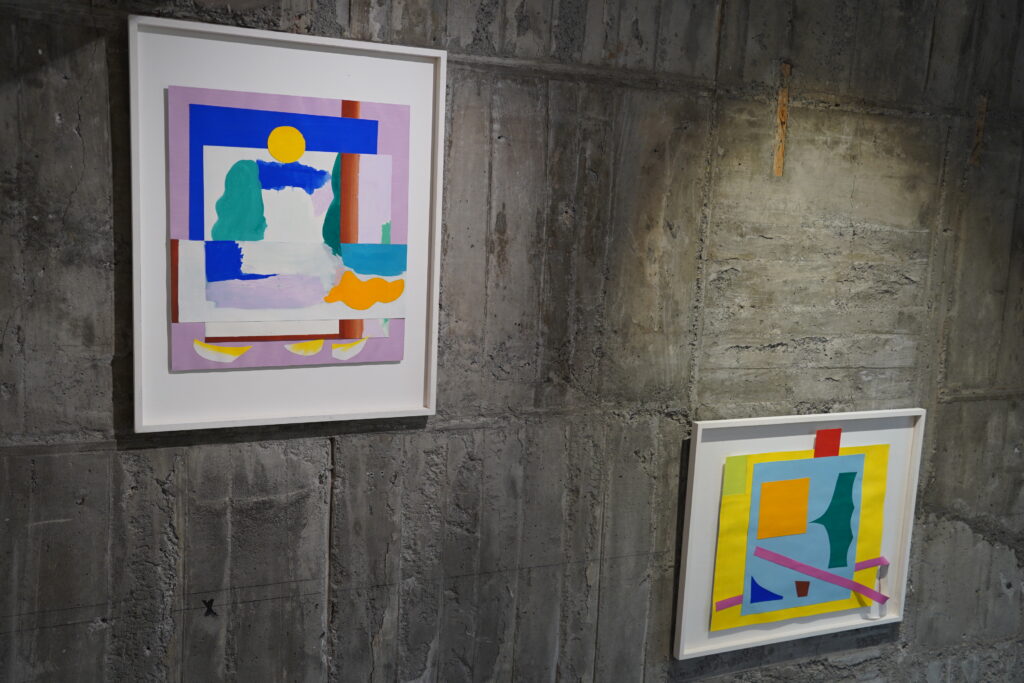
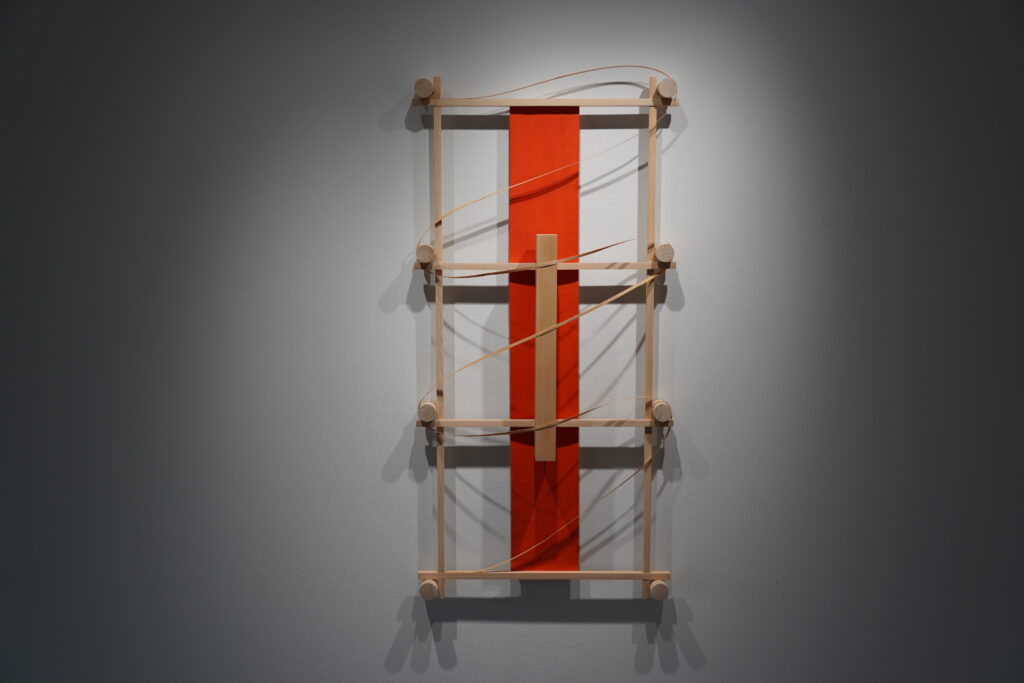
作品の捉え方についても関係性や状態がすごく気になっていて。「これ」と一概に確定したり固定したりするのが苦手なんです。物の釣り合った張り(テンション)や、引っ張り合っている状態など、その物理的な関係性や瞬間のあり方を捉えるのが好きですね。
また、今回は絵画のエッセンスが飛び出して立体になった作品もあります。元々は一つの作品だったものが、空間に置く中で「単体の方がお互い良さそう」と離れて独立していったり。一つの作品や物の関係性を「ひとつの世界」のように捉えているので、今回の展覧会は自分にとってすごくぴったりなテーマを与えていただいたと感じています。
Ishizawa: When Ayako Tomokawa, the curator, presented me with the theme “Our Plural Forms,” I found myself once again pondering, “What exactly is a ‘plural form’?” I believe that as people possess various facets and discover diverse experiences and realities, their “plural forms” continue to multiply. Personally, I feel that I am a person with multiple facets, including in my artistic style.
I’m also very interested in how relationships and states are perceived in my work. I’m not good at definitively determining or fixing something as “this.” I like capturing the balanced tension of objects or the state of them pulling against each other—those physical relationships and the nature of a given moment.
Additionally, this exhibition features works where the essence of a painting has burst forth and taken on a three-dimensional form. Sometimes, pieces that were originally part of a single work end up separating and becoming independent after being placed in the space, as I realize, “They seem to work better on their own.” Since I view the relationships between a single work or between objects as “a single world,” I feel that this exhibition has provided me with a theme that fits me perfectly.
制作における「ときめき」とコントロールできない面白さ
The “Thrill” of Creation and the Unpredictable Fun of It All
Q:作品を作られる際、あらかじめ設計図のようなイメージを用意されているのですか?
Q: When you create a piece, do you have a mental image—like a blueprint—ready in advance?
石澤:あんまりないですね。やりながらできてくる感じです。
制作には時間をかけますが、やってみて「ときめいたらやる」というのが自分の基準なんです。ピタッと心が決まったら進めるのですが、思っていたのと違うなとなると一度置きっぱなしにしたり、壊したりすることもあります。だからアトリエには未完のものがたくさんありますね。
また、立体作品などで使っているカーボンファイバーや竹籤、薄い布の張りなども、自分がすべてをコントロールして面白いものを作るのには限界があると感じているからです。コントロールしきれない何かが起こったときや、自分以外の要素が作ってくれた状態に興味があります。かっちり固定するのではなく、素材のキャラクター同士のぶつかり合いが表面に出てくる「関係性の状態」が好きなんです。
Ishizawa: Not really. It just sort of comes together as I work.
I do spend a lot of time on my pieces, but my personal rule is: “If it makes my heart flutter, I’ll go with it.” Once I’m completely sold on it, I move forward, but if it doesn’t turn out the way I imagined, I might set it aside for a while or even destroy it. That’s why there are so many unfinished pieces in my studio.
Also, when it comes to materials I use in three-dimensional works—like carbon fiber, bamboo skewers, and thin stretched fabric—I feel there are limits to what I can control to create something truly interesting. I’m interested in what happens when something beyond my control occurs, or in the state created by elements other than myself. Rather than fixing things rigidly in place, I like a “state of relationship” where the clash between the characteristics of the materials comes to the surface.
言葉になる前の世界と、作家としての確信
The World Before Words and My Conviction as a Writer
Q:コラージュや色・形を使った現在の作風は、どのようにして生まれたのでしょうか?
Q: How did your current artistic style—which incorporates collage, color, and shape—come about?
石澤:コラージュ自体は子供の頃から好きでやっていましたが、本格的に作品として作り始めたのはコロナ禍で時間ができた5年ほど前からです。
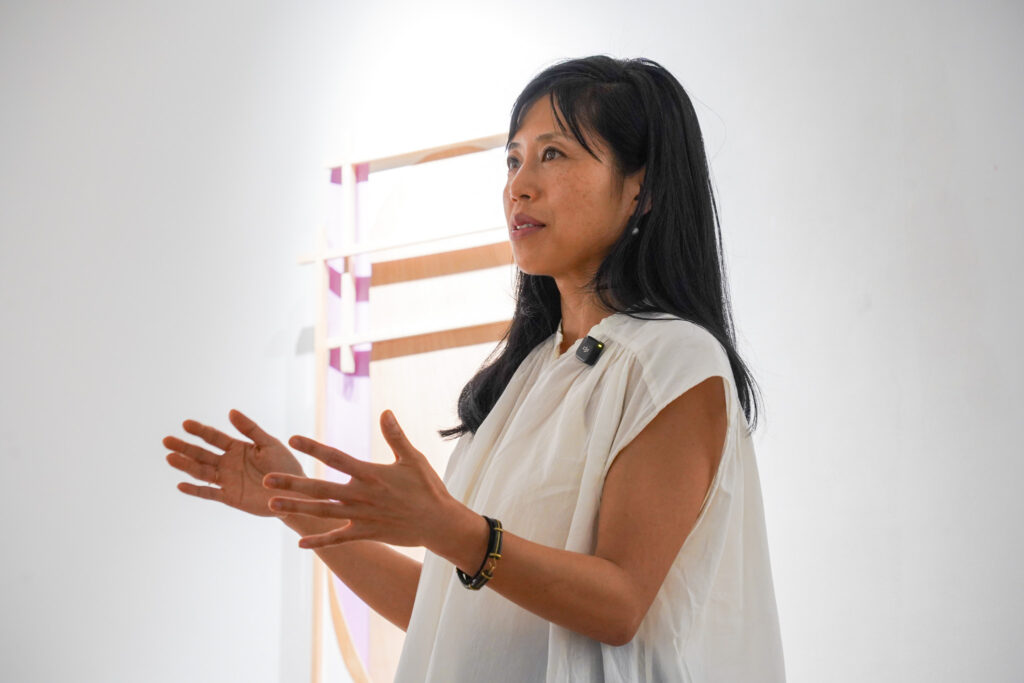
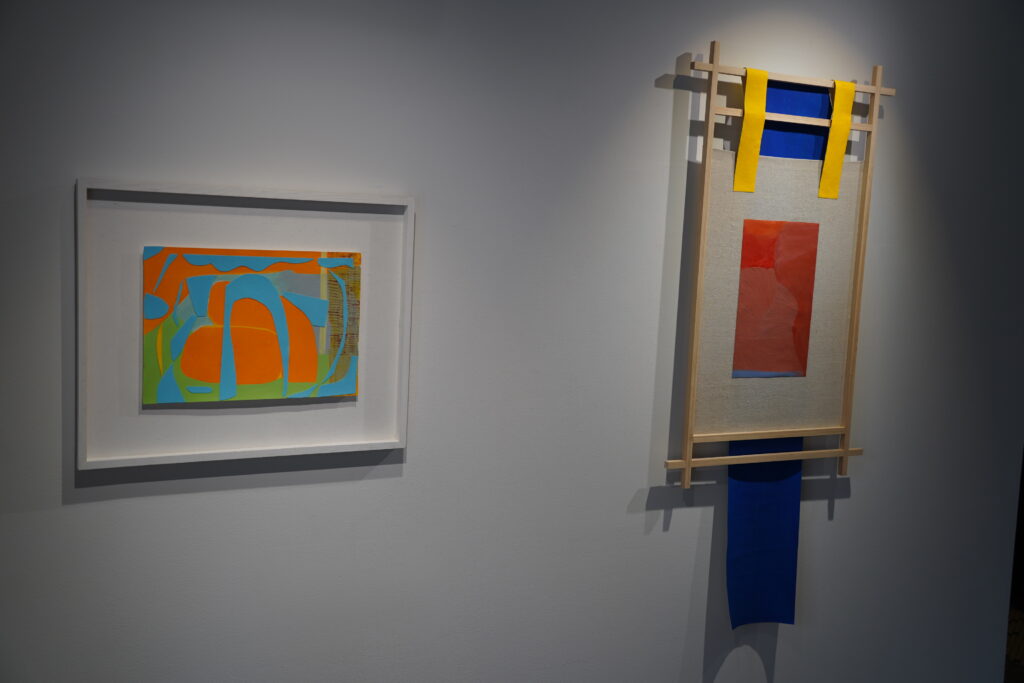
私は「言葉になる前の世界」がすごく好きなんです。言葉でこれと定義したくない。色って見ているだけでもワクワクしますし、一つの色ではなく、色の組み合わせによってまったく別の意味や世界が立ち現れてくる。その瞬間にしかできないポジションに出会えたとき、気持ちが弾む感覚があります。
オランダの大学で学んでいた時期は、コンセプチュアルな思考に煮詰まって「自分がアーティストと言っていいのかわからない」と孤独に葛藤した時期もありました。ですが、自分の作品を見て喜んでくれたり、展示で涙を流してくれる人に出会ったとき、「作品を通して誰かの役に立っているんだ」と確信できるようになりました。
Ishizawa: I’ve loved making collages since I was a child, but I didn’t start creating them seriously as artworks until about five years ago, when I had more free time during the COVID-19 pandemic.
I really love the “world before words.” I don’t want to define it with words. Just looking at colors excites me, and it’s not just a single color—the combination of colors brings forth entirely different meanings and worlds. When I find a perspective that can only exist in that moment, I feel a sense of elation.
When I was studying at a university in the Netherlands, there was a period when I became so bogged down in conceptual thinking that I struggled in solitude, wondering, “Can I really call myself an artist?” However, when I met people who were delighted by my work or even moved to tears at an exhibition, I became convinced that “I’m making a difference in someone’s life through my art.”
100年後にも残ってほしい「見えない文化」と精神性
“Invisible Culture” and Spirituality We Hope Will Endure 100 Years from Now
Q:弊社(株式会社アトム)では「Imagine 100 Years」を掲げていますが、石澤さんが思う「100年後にも残ってほしいもの」は何でしょうか?
Q: Our company (Atom Co., Ltd.) has adopted the slogan “Imagine 100 Years.” What do you, Mr. Ishizawa, think are the things you’d like to see still around 100 years from now?
石澤:形のあるものもそうですが、目に見えない人々の「安心感」や繊細な文化が残ってほしいと思います。
今住んでいる田舎の村だと、みんなが家族のように支え合うゆるやかな繋がりや安心感があります。すべてを割り切らず、お互いを思いやるような感覚は一回失われると取り戻すのが難しく、壊れるのは一瞬です。
東洋の歴史の中で培われてきた心のあり方や精神性、目に見えない繊細な文化のようなものが、100年後の未来にも失われずに受け継がれていってほしいなと思います。
Ishizawa: While tangible things are important, I also hope that the “sense of security” people feel—even if it’s invisible—and the delicate cultural traditions will endure.
In the rural village where I live now, there’s a sense of security and loose-knit bonds where everyone supports one another like family. That sense of not being overly calculating and of caring for one another is difficult to regain once lost—and it can be shattered in an instant.
I hope that the mindset, spirituality, and subtle, intangible cultural elements cultivated throughout Eastern history will be passed down to the future 100 years from now without being lost.
友川綾子インタビュー:「100年育つ種」を撒く
Interview with Ayako Tomokawa: Sowing “Seeds That Will Grow for 100 Years”
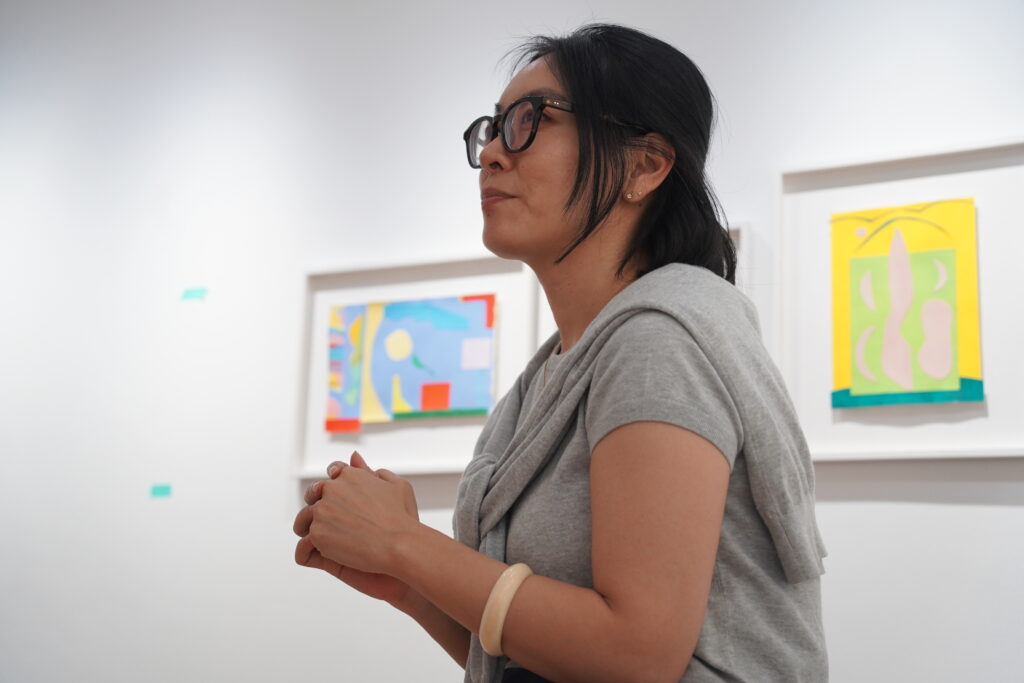
「私たちの複数形」というテーマと企画の背景
The Theme “Our Plural” and the Background of the Project
Q:今回、石澤英子さんとはまぐちさくらこさんのお二人を迎え、「私たちの複数形」というタイトルで展覧会を企画された経緯をお聞かせください。
Q: Could you tell us how you came to organize this exhibition, titled “Our Plural,” featuring Eiko Ishizawa and Sakurako Hamaguchi?
友川:gallery ayatsumugiとして活動を始めて6年目になりますが、これまで展覧会を重ねる中で「友川さんの企画は女性作家が多いね」と言われることがよくありました。意図して性別で選んでいたわけではなく、シンプルに「本当に良い」と思える作品を選んできた結果だったのですが、確かに自分の琴線に触れる部分が女性作家の表現にあったのだと思います。
近年、世界的なアートシーンでもジェンダーのバランスが見直され、フェミニズムという枠組みだけに依拠せず、作品の実力によって正当に評価される時代へと変化してきました。ただ、女性の中にも男性的な力強さ(マスキュリンな部分)があり、男性の中にも女性的な繊細さがあるように、人は誰しも内側に多様な性質を抱えて生きています。
「私たちの複数形」というタイトルには、そうした人それぞれの内側にある多様な面を切り落とさず、そのままの状態で肯定し、社会と繋げていきたいという思いを込めています。個性が持つ多様さをそのまま祝福していくためのアプローチです。
Tomokawa: It’s been six years since I started working as “gallery ayatsumugi,” and throughout the many exhibitions I’ve organized, I’ve often been told, “There are a lot of female artists in your exhibitions.” I wasn’t intentionally selecting artists based on gender; it was simply the result of choosing works that I genuinely believed were “truly good.” However, I do think that the expressions of female artists resonated with me on a deeper level.
In recent years, the global art scene has been reevaluating gender balance, shifting toward an era where works are fairly evaluated based on their merit, rather than relying solely on the framework of feminism. However, just as women possess a masculine strength and men possess a feminine sensitivity, everyone lives with a diverse range of qualities within themselves.
The title “Our Plural” embodies my desire to embrace the diverse facets within each individual—without cutting any of them away—and to connect them to society as they are. It is an approach aimed at celebrating the diversity of individuality in its raw form.
キャリアの変遷と、作品に対する「フィジカルな手応え」
The Evolution of My Career and the “Physical Sensation” I Get from My Work
Q:20代でコマーシャルギャラリー、30代で地域アートプロジェクト「3331」などに携わり、その後gallery ayatsumugiを立ち上げられたきっかけは何だったのでしょうか?
Q: You worked at a commercial gallery in your 20s and on the local art project “3331” in your 30s. What prompted you to launch gallery ayatsumugi afterward?
友川:20代はコマーシャルギャラリーで高額な絵画の取り扱いを経験し、30代では一転して地域に開かれたアートプロジェクトやNPOでの広報・マネジメントなど、全く異なる世界に携わってきました。
自分自身も「複数形」の人間で、興味の向くまま様々な現場に足を突っ込んできましたが、40代を迎えてコロナ禍を経験した際、「もっと自分の手で企画し、良いと思える作家と直接仕事をしたい」と強く思うようになったんです。
また、20代の頃に歴史的価値のある作品を緊張感持って手で触れ、丁寧に梱包した時の「フィジカルな物理的手応え」が、自分の中に原体験としてずっと残っていました。画面や美術館で見るだけではない、作品との距離の近さをもう一度味わいながら、作家と伴走したいと感じたのがgallery ayatsumugiのスタートです。
Tomokawa: In my 20s, I gained experience dealing with high-priced paintings at a commercial gallery, and in my 30s, I made a complete shift to work in a completely different world—handling public relations and management for community-oriented art projects and NPOs.
I’ve always been a “multifaceted” person myself, diving into various fields wherever my interests led me. But when I entered my 40s and experienced the COVID-19 pandemic, I began to feel a strong desire to “plan more projects on my own and work directly with artists I admire.”
Furthermore, the “physical sensation” I felt in my twenties—when I handled historically significant works with a sense of reverence and carefully packed them—has remained with me as a formative experience. The desire to once again savor that closeness to the artwork—beyond simply viewing it on a screen or in a museum—and to walk alongside the artists was the starting point for gallery ayatsumugi.

個人のスキルを生かし、新しいシーンへ伴走する
Leveraging individual skills to support others as they venture into new horizons
Q:今後の活動の展望や、友川さんとしての目指す姿について教えてください。
Q: Please tell us about your future plans and what you hope to achieve as Tomokawa.
友川:gallery ayatsumugiという活動を自分のベースとして大切に持ち続けながら、自分が役に立てることであれば、肩書きにこだわらず柔軟に関わっていきたいと思っています。
展覧会を作る過程では、企画や広報、マネジメントなど多様な技能を使っています。作家さんやプロジェクトに対して自分の技能が役に立ち、gallery ayatsumugiの活動と良いシナジーが生まれるのであれば、積極的に新しいことへ挑戦していきたいです。
この展覧会やギャラリーの活動自体が自分にとっても名刺代わりのようなものですので、これを軸としながら、作家さんたちと一緒に新しいシーンへ飛翔していけるような環境を作っていきたいですね。
Tomokawa: While continuing to cherish “gallery ayatsumugi” as my foundation, I want to remain flexible and get involved in any way I can be of help, without getting hung up on titles.
In the process of putting together an exhibition, I draw on a wide range of skills, including planning, public relations, and management. If my skills can be of use to artists or projects and create positive synergy with the activities of “gallery ayatsumugi,” I’m eager to actively take on new challenges.
Since this exhibition and the gallery’s activities themselves serve as a kind of calling card for me, I’d like to use them as a foundation to create an environment where we can soar into new horizons together with the artists.
100年愛されるアートと、未来へ受け継ぐ「種」
Art That Will Be Loved for 100 Years, and the “Seeds” We Pass On to the Future
Q:弊社では「Imagine 100 Years」という言葉を掲げていますが、友川さんにとって「100年後にも残るもの、残ってほしいもの」は何でしょうか?
Q: Our company has adopted the slogan “Imagine 100 Years.” What do you think, Mr. Tomokawa, are the things that will—or that you hope will—remain 100 years from now?
友川:実は6年前にgallery ayatsumugiを立ち上げた際、ビジョンとして掲げたのが「100年愛されるアート」という言葉でした。
セカンダリーの画廊で働いていた経験から、優れたアート作品は作家やギャラリスト、所有者の個人としての寿命を超え、100年以上の時間を旅しながら人々の間を行き来し、価値が育まれていくものだと実感しています。
いま私が行っているプライマリーの活動は、いわば「100年育つ種を撒く」仕事です。同時代を生きる私たちが作品の魅力を発見し、作家がのびのびと制作できる環境を支えることで、100年後の未来の人々にもまた新たな魅力を発見してもらえる。一人で達成できることではありませんが、色々な方と手を携えながら、100年先に繋がるような価値を育てていきたいと思っています。
Tomokawa: Actually, when I launched gallery ayatsumugi six years ago, the vision I set forth was “art that will be cherished for 100 years.”
Based on my experience working at a secondary market gallery, I’ve come to realize that outstanding works of art transcend the lifespans of the artists, gallery owners, and individual collectors; they travel through time for over 100 years, passing from person to person as their value continues to grow.
The primary gallery work I’m engaged in now is, so to speak, the work of “sowing seeds that will grow for 100 years.” By discovering the appeal of these works as contemporaries and supporting an environment where artists can create freely, we enable people 100 years from now to discover new charms in them as well. This is not something I can achieve alone, but by joining hands with various people, I hope to cultivate value that will endure for the next 100 years.
Interviewer: Satoko Kubota