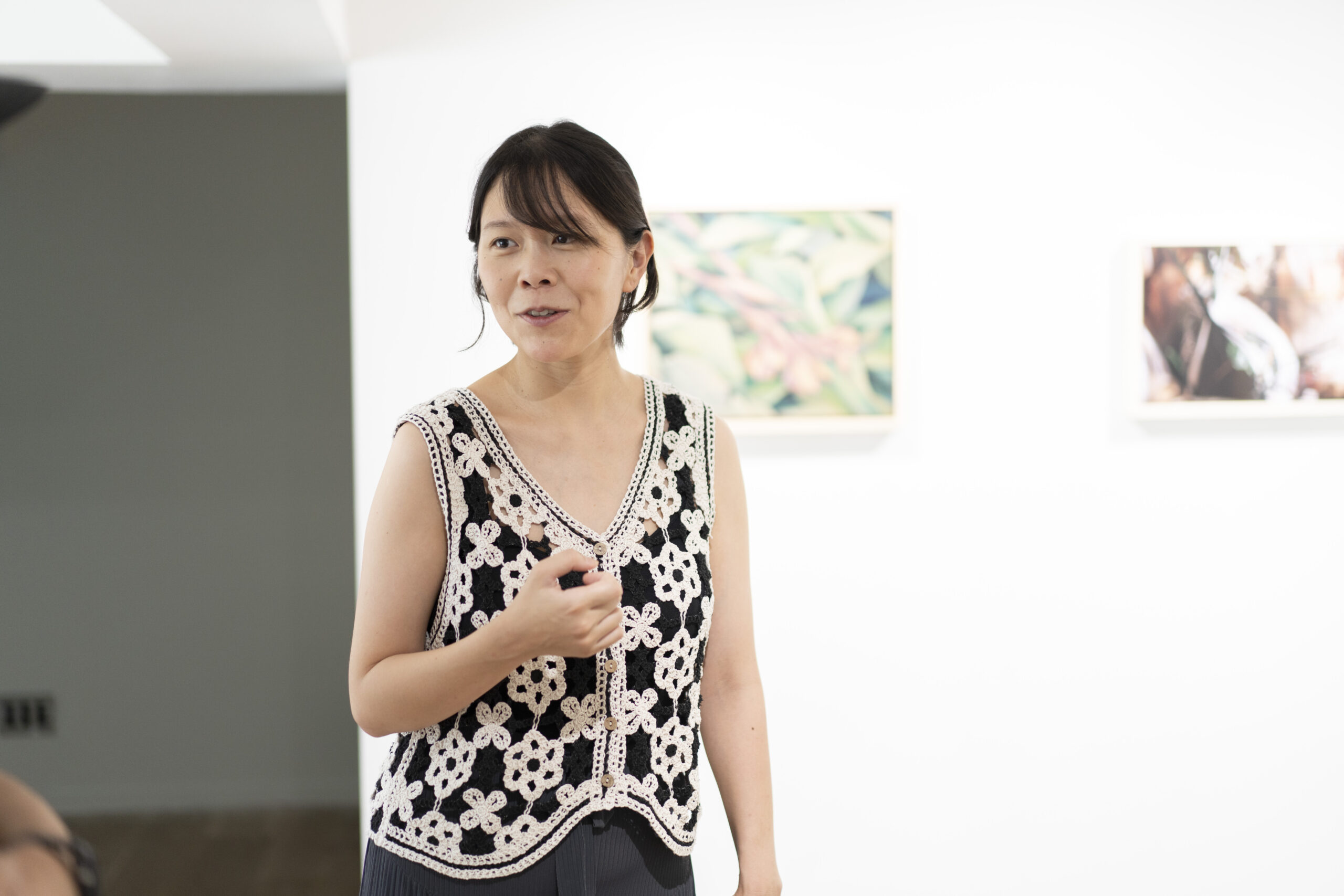
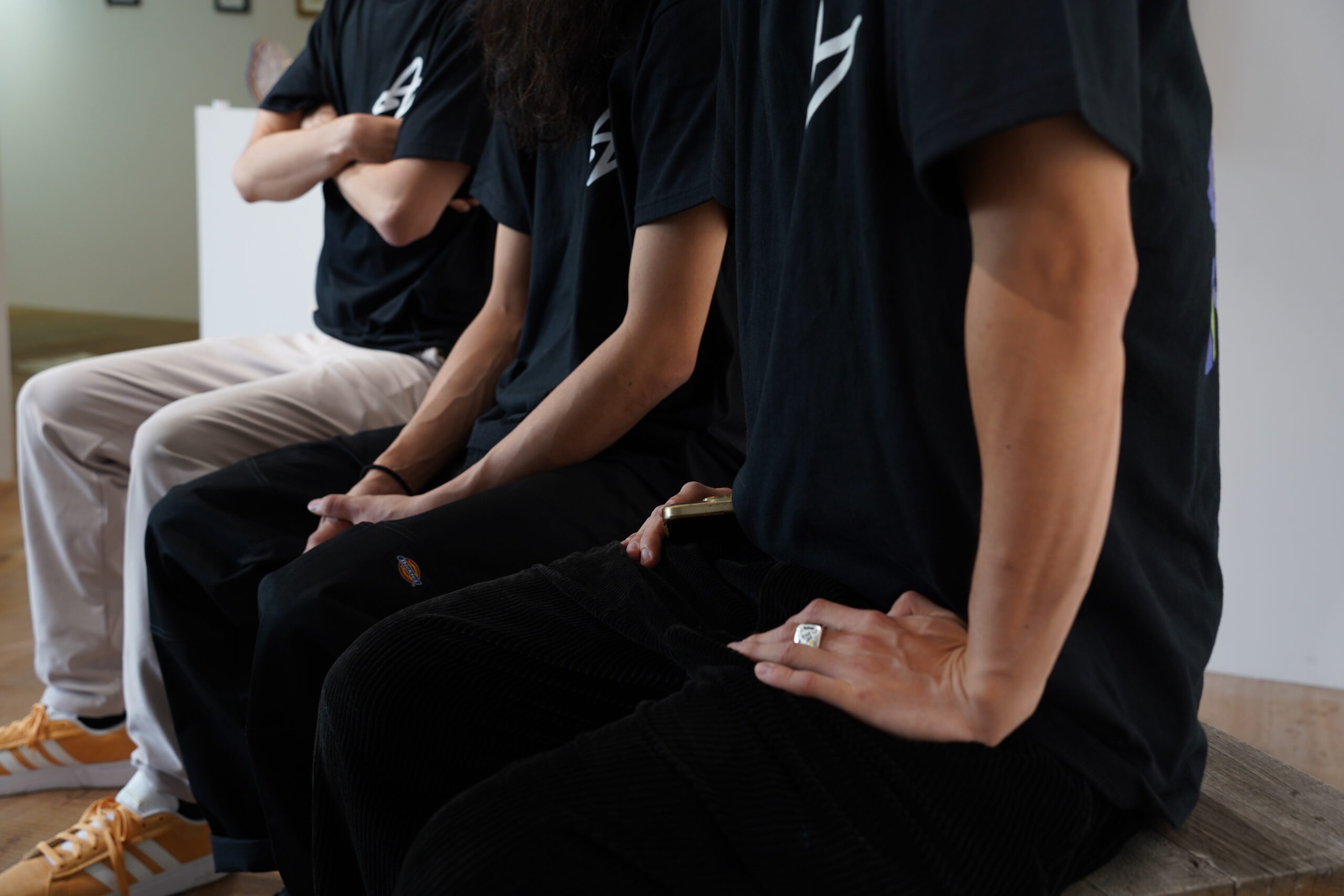
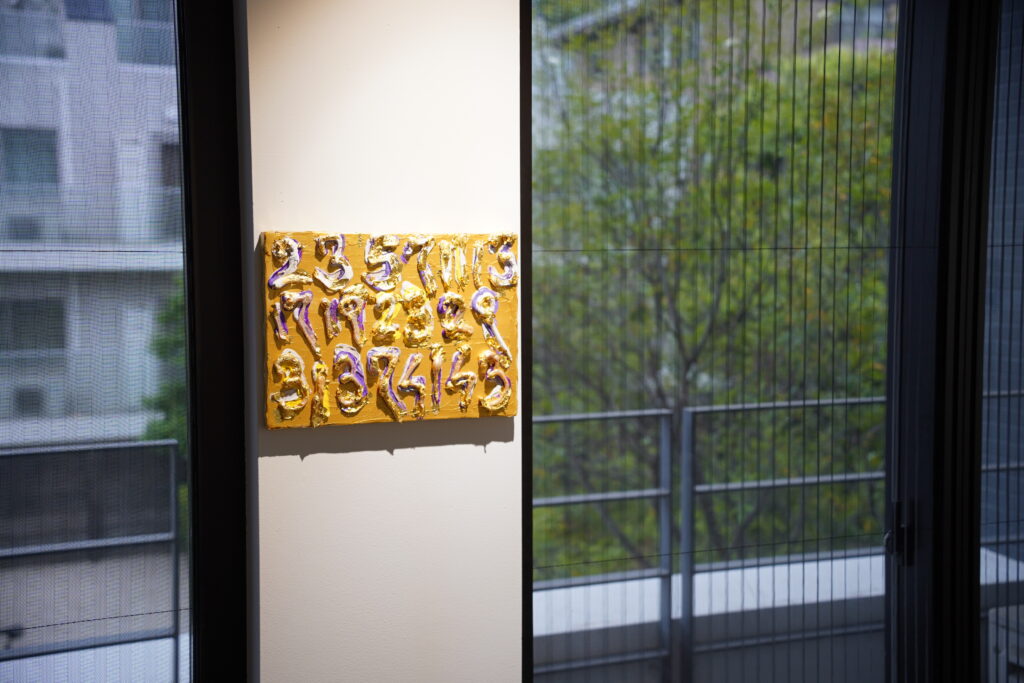
今回は、4月18日から5月1日までコートヤードHIROOガロウで作品展示を行った森内敬子さんにインタビューをさせて頂きました。
アートに触れるキッカケとなった幼少期のお話から、伝説的な美術集団「具体」の秘話、ニューヨークでの経験など大変貴重なエピソード満載となっております。是非ご一読頂ければと思います。
1. 幼少期について
Childhood
Q:先生は小さい頃から絵がお好きだったんですか?
Did you love drawing from an early age?
A: 幼稚園なんて行ってないんです。イタズラがとてつもないから親に行かせてもらえなかった(笑)。交差点の警察官に向かって石を投げたりね。でもそれは悪意じゃなくて「実験」なんです。この人が交通整理をやめたら街はどうなるんだろうって。当時は三輪車やミゼット、さらには馬まで歩いている時代。坂道を木製のローラースケートで猛スピードで滑り降りて、ポリスに「危ない!」って怒られるのが最高の遊びでした。家は忙しくて誰も遊んでくれなかったから、一人で遊ぶ方法をそうやって発明するしかなかったんです。
うちの父は日用家庭用品の大卸をやっていて、燕三条のステンレスや南部鉄器も、うちを通らないと全国へ行かないという時代でした。住み込みの丁稚(でっち)さんが大勢いるような大所帯で、みんな忙しくて誰も遊んでくれないから、一人で遊ぶ方法を工夫するしかない。3歳の頃にはもう、家中の壁にチューリップを書きまくっていました。ずっと後になってわかったことですが、イスラム教の世界では厳格に偶像崇拝が禁じられている中で、チューリップは特別な意味を持つんだそうです。幾何学模様が中心のイスラム美術においても、チューリップだけは神聖な「神の象徴」として例外的に描かれることがあるそうで。もちろん子供の頃の私は、そんな知識は全くなかったけれど、本能的に「宇宙のシンボル」としてそれを選んで描いていたんでしょうね。理屈ではなく、直感が先にあったんです。
小学校1年生の時、後にコクヨを大きくするユウキ商店のおっちゃんに呼ばれて、「このノートに自由に書いてみて」と渡されたんです。その日の夕方に全部書き上げて、「おっちゃん、これ、マスが大きいさかい、鉛筆がようけ減ってしゃあないわ」って言ったんです。子供は大きい方が豊かに、フリーに書けていいですよね。それがノートの爆発的なヒットに繋がったんじゃないかな。私は子供の頃から、そうやって時代の「モニター」みたいなことをやっていたんです。 (当時、ユウキ商店は、クツワにつぐ、関西最大の文具店でした。)
I never even went to kindergarten. My parents wouldn’t let me because I was such an outrageous troublemaker (laughs).
I’d throw stones at police officers standing in intersections directing traffic. But it wasn’t out of malice — it was an “experiment.” I wanted to know what would happen to the city if that person stopped directing traffic. Back then, the streets were full of tricycles, little three-wheeled cars, even horses. My favorite game was racing downhill at full speed on wooden roller skates and getting yelled at by the police: “That’s dangerous!”
Everyone at home was busy, and nobody had time to play with me, so I had no choice but to invent ways to entertain myself alone.
My father ran a major wholesale business for household goods. In those days, stainless-steel products from Tsubame-Sanjo and Nambu ironware practically couldn’t reach the rest of Japan without passing through our company. We had a huge household full of live-in apprentices, and everyone was constantly busy. Since nobody would play with me, I had to figure things out on my own. By the time I was three, I was already covering the walls of the house with drawings of tulips.
Much later in life, I learned that in the Islamic world — where idol worship is strictly forbidden — tulips hold a special meaning. Even within Islamic art, which is centered around geometric patterns, tulips are sometimes treated as sacred symbols of God and are exceptionally permitted as motifs. Of course, as a child I knew nothing about that. But instinctively, I must have chosen the tulip as a symbol of the universe. Logic came later — intuition came first.
When I was in first grade, an older man from Yuki Shoten — the company that would later help grow Kokuyo — called me over and handed me a notebook, saying, “Try drawing freely in this.” By that evening I had already filled every page and told him, “Mister, these grids are so big, my pencils wear down too fast!” But for children, larger spaces are better — they let you draw more freely and abundantly. I think that idea ended up leading to the notebook’s explosive success.
Even as a child, I was already acting like a kind of “monitor” for the times.
(At the time, Yuki Shoten was the second-largest stationery company in Kansai after Kutsuwa.)

2. 「具体」の裏側:豊かな貧乏が生んだ「野原のアート」
The Reality Behind GUTAI: “Field Art” Born from Rich Poverty
Q:伝説の美術集団「具体」での活動は、どのようなものだったのでしょうか。
What was it like being part of the legendary art collective Gutai?
A: みんな場所がないから、芦屋川の堤防や野原で描くしかなかった。田中敦子さんは清風高校の体育館を使っていたけど、それは校長の妹と親友だったから。元永定正さんは色水を入れたビニール袋を枝に括り付けた。結局、それをトラックで運ぶお金もないから、そこでそのまま展示しちゃう。でも、それが結果的にアートフェスティバルになったんです。それが「具体はすごい」と言われる野外展の実態。キャンバスも買えないから、大阪駅前の闇市で「キャラコ」という一番安い綿布を反物で買ってきてね。母にノリを炊いてもらって、うちの丁稚さんたちに両側から引っ張らせて釘で止める(大型キャンバスの高い時代で、“フナオカキャンバス”は学生にとっては高価だった。)。それが私のキャンバス作り。あの時代、みんな貧乏だった。その「貧乏人だけが持つ時間」が、独特の豊かな時間に変わっていった。今の西成のおじさんたちがアルミ缶を袋に入れている姿、あれだって私に言わせればアートの原風景ですよ。ジム・ダイン、ローシェンバーグの原型だと思う。その貧乏人だけが持っていた「独特の豊かな時間」が、今の「具体」の評価に繋がっているんです。
None of us had proper places to work, so we had no choice but to paint on the banks of the Ashiya River or out in empty fields. Atsuko Tanaka used the gymnasium at Seifu High School, but only because she was close friends with the principal’s sister. Sadamasa Motonaga tied plastic bags filled with colored water to tree branches. In the end, nobody even had the money to transport the work by truck, so they simply exhibited it right there on the spot. But that’s exactly what turned it into an art festival.
That’s the real story behind the outdoor exhibitions people later called “the greatness of Gutai.”
We couldn’t even afford canvases. I used to buy the cheapest cotton cloth — a fabric called calico — from the black market in front of Osaka Station. My mother would boil starch glue for me, and the apprentices at our house would stretch the fabric from both sides while I hammered it down with nails. Back then, proper large canvases like Funaoka canvases were far too expensive for students. That was how I made my canvases.
Everyone was poor in those days. But the “time that only poor people possess” gradually transformed into a uniquely rich kind of time.
Even today, when I see older men in Nishinari collecting aluminum cans into bags, I see it as the original landscape of art. To me, that’s the prototype of Jim Dine and Rauschenberg. That unique richness born from poverty is what eventually led to Gutai being valued the way it is today.
3. ニューヨーク修行
Training in New York
Q:1965年にニューヨークへ渡られたのですよね
You moved to New York in 1965, correct?
A: 1963年に吉原治良先生から「具体は国際的になっているのに具体のメンバーで誰もNYで生活した人がいないから、行ってこい」とミッションを与えられてね。アトリエの上の階にはアド・ラインハートがいたんですよ。特にその時訪れた、ポール・ジェンキンスのアトリエは忘れられません、何をみても驚かなかったけど、あのアトリエ訪問は衝撃的だった。彼は私の訪問に備えて広いアトリエ中の作品を全部白いシートで隠して、自分も全身真っ白、奥さんも全身真っ白。立派な大理石のテーブルも真っ白。出てくる料理も、真っ白なお皿にカトラリーに真っ白なコテージチーズ、卵は白く巻いている。最後に真っ赤なトマトが1個だけ出てくる。それも全部が同じ大きさになるよう複数のトマトの真ん中だけをカットしてある。「これが芸術家や」と震えました。テクニックなんて見せない、もてなしと振る舞いだけで、自分が「一流」であることを証明していた。そこで学んだのは、テクニックではなく「アートとは生き方そのものだ」ということです。
当時、ケネディ大統領が「アメリカには文化がない。急いで文化を作れ」と号令をかけていた時代です。アポロ計画で宇宙を目指し、同時にアートを推進した。リキテックス(早く乾く絵具)が開発されたのも、油絵じゃ時間がかかりすぎるから。Time is Money、何千年の歴史を持つ中国なんかに追いつくために、ケネディはアートを政治に組み込んだんです。アンディ・ウォーホルのポップアートが成功したのも、難民でも一般人も誰もが知っている「キャンベルスープ」というシンボルを使ったから。彼らは本当に賢かった。
In 1963, Jiro Yoshihara told me, “Gutai has become international, but none of its members have actually lived in New York. Go there.” It was a mission.
Ad Reinhardt had a studio upstairs from mine. But the visit I can never forget was to Paul Jenkins’ studio. Normally nothing surprised me, but that experience completely shook me.
Before I arrived, he had covered every artwork in his huge studio with white sheets. He himself was dressed entirely in white, and so was his wife. The magnificent marble table was white too. The meal they served came on white plates with white cutlery — even the cottage cheese was pure white, and the eggs were wrapped in white.
Then finally, a single bright red tomato appeared.
Even that had been meticulously prepared: the centers of several tomatoes had been cut so every slice would be exactly the same size.
I trembled and thought, This is what an artist is.
He never tried to impress me with technique. Through hospitality and behavior alone, he demonstrated what it meant to be truly first-class. What I learned there was not technique, but that art is a way of life itself.
At the time, President Kennedy was saying, “America has no culture. We must create one — fast.” It was the era of the Apollo program: reaching for space while simultaneously promoting art. Even Liquitex acrylic paint was developed because oil paint simply took too long to dry. Time is money. To catch up with civilizations like China that possessed thousands of years of cultural history, Kennedy incorporated art into politics.
Andy Warhol’s Pop Art succeeded because he used a symbol everyone knew — refugees and ordinary people alike — Campbell’s Soup. They were incredibly smart.
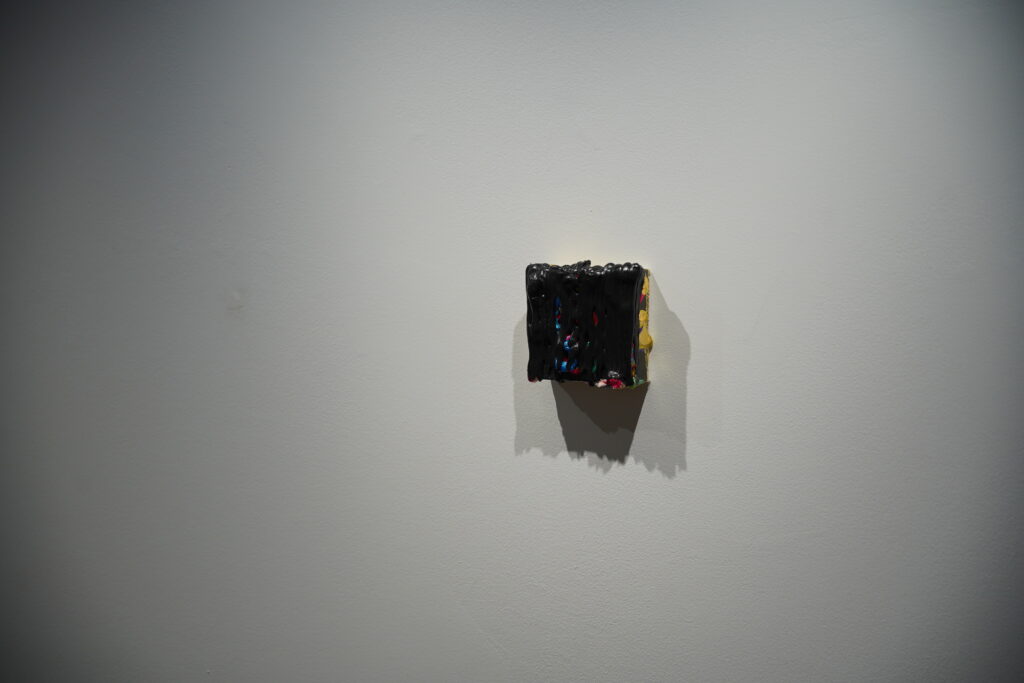
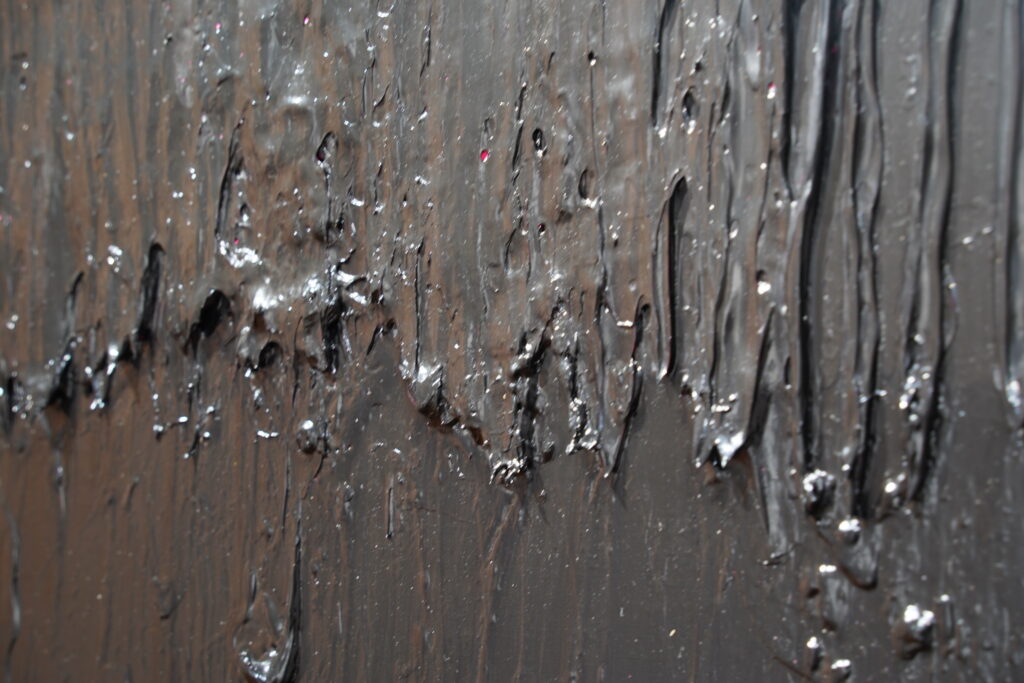
4. 異色のキャリア
An Unconventional Career
Q:先生の経歴を拝見すると、美術家以外の顔も非常に多彩ですね。
Looking at your career, you seem to have worn many hats beyond being an artist.
A: 三菱商事の依頼でパリコレの買い付けをやったり、紳士服は石津謙介さんが顧問でした。また、六本木のカフェの店舗設計をやった時は、モロッコまでアンモナイト入りの巨大な大理石を買い付けに行きました。5つの巨大な石を買って、ダイヤモンドカッターで切ってみないとアンモナイトが入っているか分からない。でも私は直感で「これとこれには入ってる」と分かる。結果、5つのうち3つに完璧なアンモナイトが入っていた。そういう自分の「直感」を信じて生きてきました。 それから当時30代後半にドイツでコンピューター学んでた時もありましたね。コンピューターがない時代にスイスのアポロ社とコネクションがあったの。「次に何が来るか」とかね、私はいろんなことをずっと、そして今も、考え続けています。
I worked on Paris Collection buying trips at the request of Mitsubishi Corporation, and Kensuke Ishizu served as an advisor for menswear. Later, when I designed a café in Roppongi, I traveled all the way to Morocco to purchase giant slabs of marble containing ammonite fossils.
I bought five enormous stones, but you couldn’t know whether ammonites were inside until you cut them open with a diamond cutter. Still, instinctively, I knew: “These ones contain them.” In the end, three out of the five revealed perfect ammonites.
That’s how I’ve always lived — by trusting my intuition.
There was also a period in my late thirties when I studied computers in Germany. This was before computers were widespread, but I already had connections with Apollo in Switzerland. I’ve always been thinking about what comes next — and I still am.
Q:急に質問が変わりますが、先生のお好きな映画はありますか?
Changing topics completely, do you have a favorite film?
A:一番はやっぱり『ネバーエンディングストーリー』。あれにはマイトレーヤ、つまり弥勒菩薩が出てくる。主人公そのものが宇宙の真理なんです。『スター・ウォーズ』のスピルバーグはやっぱり天才やね。『ハリー・ポッター』なんて、駅の柱を通り抜けるあのアイデアだけで、あとはもうダメ。宇宙の広がりを感じるものがいいと思います。
Without question, The NeverEnding Story. Maitreya — the future Buddha — appears in it. The protagonist himself embodies universal truth.
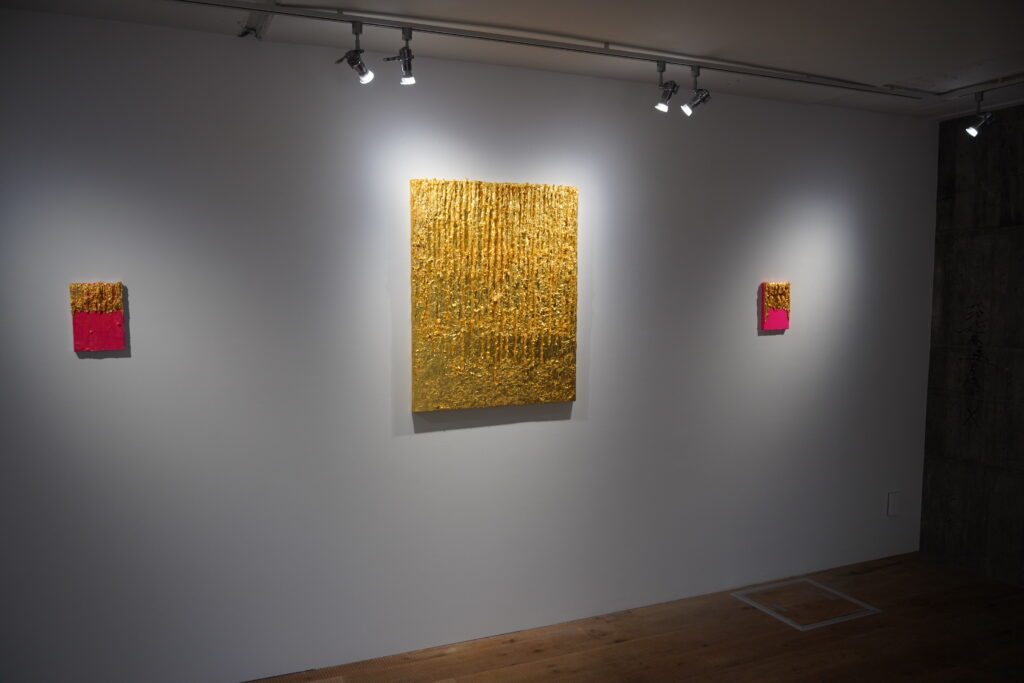
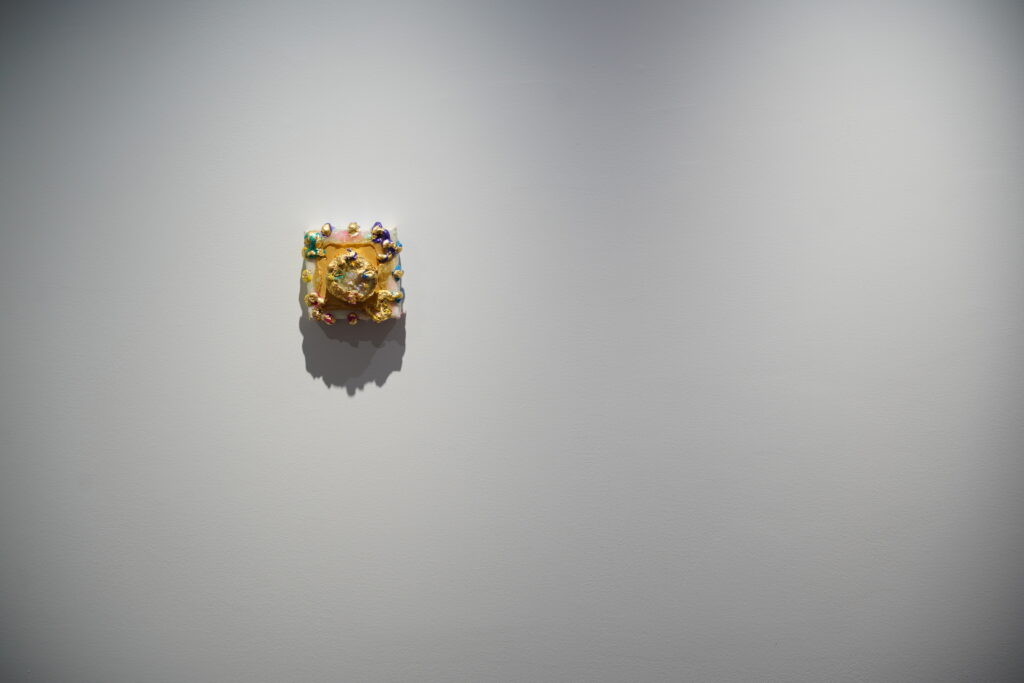
5. 宇宙と24金:AI時代を生き抜く「直感」の力
The Universe and Pure Gold: The Power of Intuition in the AI Era
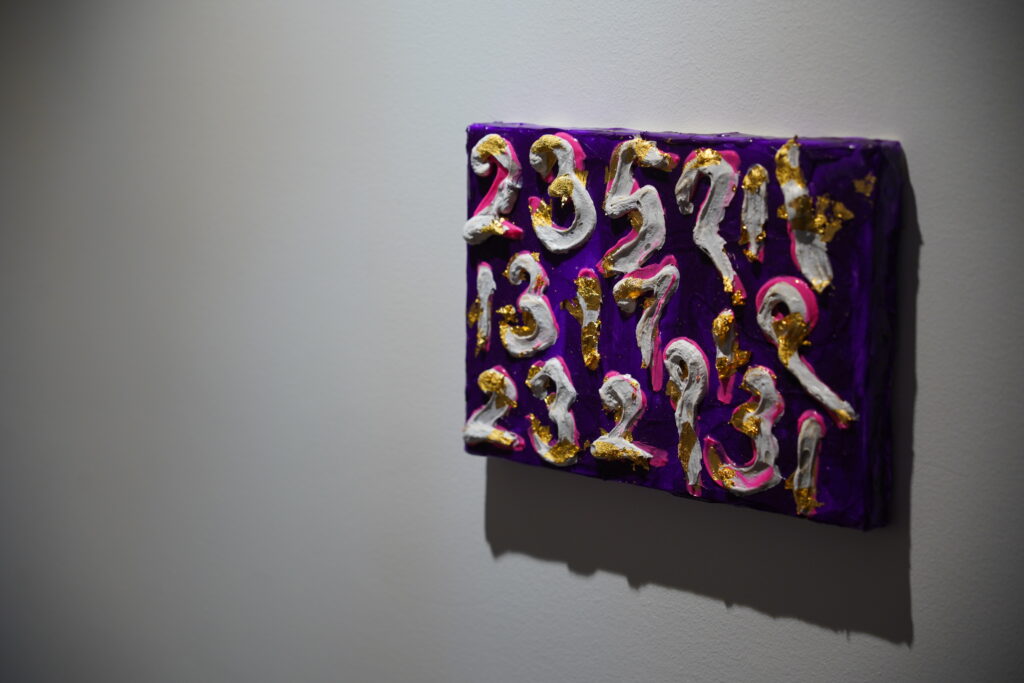
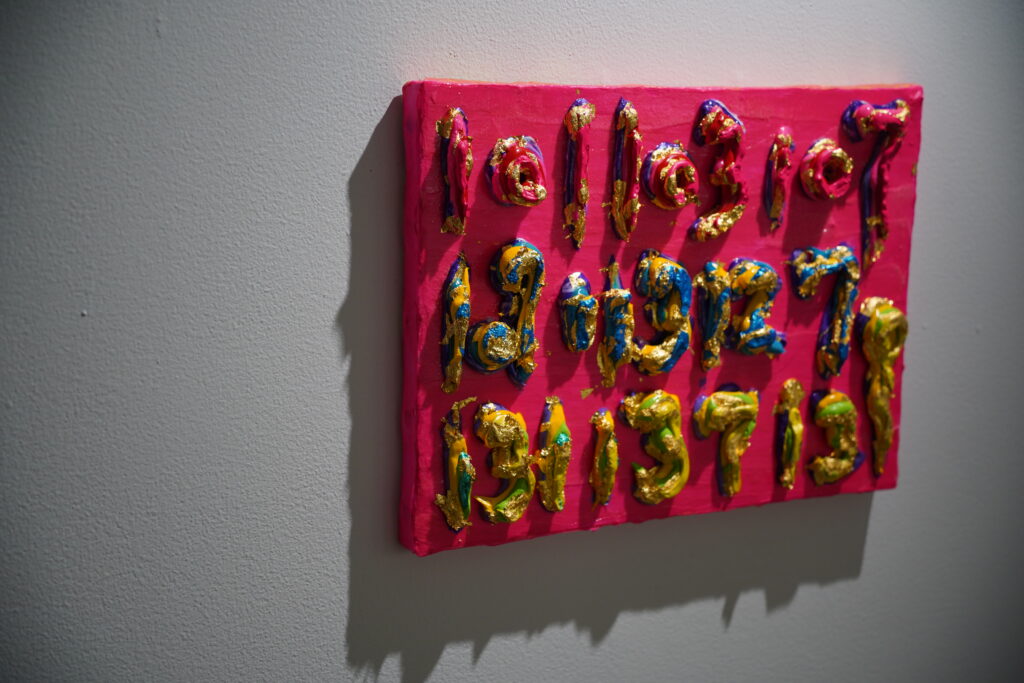
Q:宇宙との繋がりは作品のテーマなのですね。今の作品に「24金(純金)」や「素数」を使われているのはなぜですか?
The connection to the universe seems central to your work. Why do you use pure 24-karat gold and prime numbers in your recent pieces?
A: 宇宙と関係しているものが私の作品のずっと続くモチーフです。金は不滅。地球が滅んでも金は残る。私は現代アートに24金箔を使っているけれど、これは「永遠のもの」への(宇宙は時空そのものであるから)への敬意です。数字(素数)もそう。全世界共通で、誰もが分かるでしょう。宇宙とつながるポピュラーな言語だから。
あと20年もすれば、教育も病院もデパートも全部AIになってなくなります。原始時代に戻るんです。その時に残る、人間にとって一番大事なのは「自分で自分の時間を作ること」です。
Anything connected to the universe has remained a recurring motif throughout my work.
Gold is eternal. Even if the Earth disappears, gold will remain. I use pure 24-karat gold leaf in contemporary art as a gesture of reverence toward eternity — toward the universe itself, which is space-time.
Numbers, especially prime numbers, are the same. They are universal. Anyone in the world can understand them. They are a popular language that connects us to the cosmos.
In another twenty years, schools, hospitals, department stores — everything will be replaced by AI and disappear. Humanity will return to something like a primitive age. And when that happens, the most important thing left for human beings will be the ability to create their own time for themselves.
Interviewer: Satoko Kubota