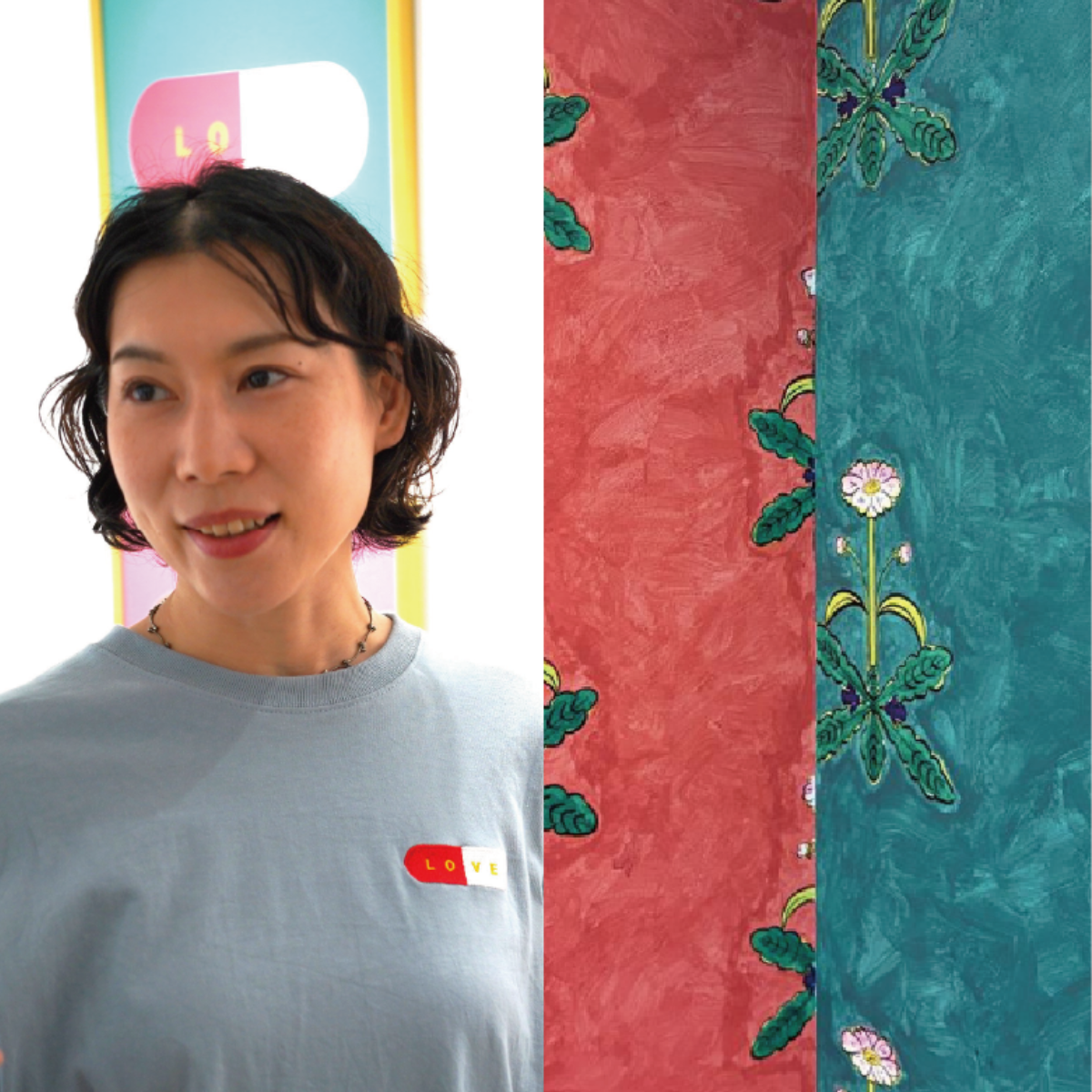
今回は、7月3日から7月25日までコートヤードHIROOガロウで展示を行ったアーティストの戸田沙也加さんにインタビューをさせていただきました。 今年「VOCA展」でグランプリを受賞し目覚ましい活躍を見せる中での個展開催。出産を経て制作された新作の舞台裏から、「沖縄」「カンナの花」をモチーフにした思考プロセス、写真と絵画の実験、そして「100年後へ残す作品」に対する想いなど、大変貴重なお話をお聞きしました。
For this feature, we interviewed artist Sayaka Toda, who held an exhibition at Courtyard HIROO Garou from July 3 to July 25. This solo exhibition comes amid her remarkable success, including winning the Grand Prix at this year’s “VOCA Exhibition.” We heard invaluable insights from her, ranging from the behind-the-scenes story of her new works created after giving birth, to her thought processes behind motifs such as “Okinawa” and “canna flowers,” her experiments with photography and painting, and her thoughts on “works to be left for 100 years from now.”

1. 展示の経緯
The Background of the Solo Exhibition
Q:今回はご出産を経ての展示となりました。念願叶っての実現となり私たちも嬉しく思っています。経緯について改めて教えてください。
This exhibition comes after you gave birth. We’re delighted that your long-cherished wish has finally come true. Could you tell us again how this came about?
A: 昨年末から1月くらいにかけて、私の方からコートヤードさんにお声がけさせていただきました。私も使わせていただけると思ってなかったので非常に嬉しかったです。
制作スピードが早いと驚かれることも多いのですが、構想自体はすごく時間をかけてずっと考えていました。手をかけた時間自体は自分としては短かったかもしれませんが、テーマを考えたり構成を練ったり、ステートメントの言語化には半年以上を費やしています。
最初から自分の中では今回の展示は「すべて新作」で臨むつもりでした。結果的にすべて新作で構成することになり、さまざまな方に観ていただきたい展覧会にできたのではないかと思っています。
Between the end of last year and around January, I reached out to Courtyard. I wasn’t expecting to be able to use their space, so I was really happy when they agreed.
People are often surprised by how quickly I produce my work, but I actually spent a great deal of time thinking through the concept itself. While the actual time I spent working on each piece may have seemed short to me, I spent more than half a year coming up with the theme, refining the composition, and putting my artistic statement into words.
From the very beginning, I intended for this exhibition to consist entirely of new works. As it turned out, the exhibition is made up entirely of new pieces, and I believe it has become an exhibition that I hope many different people will come to see.
2. 「沖縄」の記憶と「カンナの花」
Memories of Okinawa and the “Canna Flower”
Q:今回の展示のテーマや構成について教えていただけますか?
Could you tell us about the theme and structure of this exhibition?
A: 今回の展示は、2025年に横浜美術館で開催された『沈黙と花』という展覧会と深く関連しています。
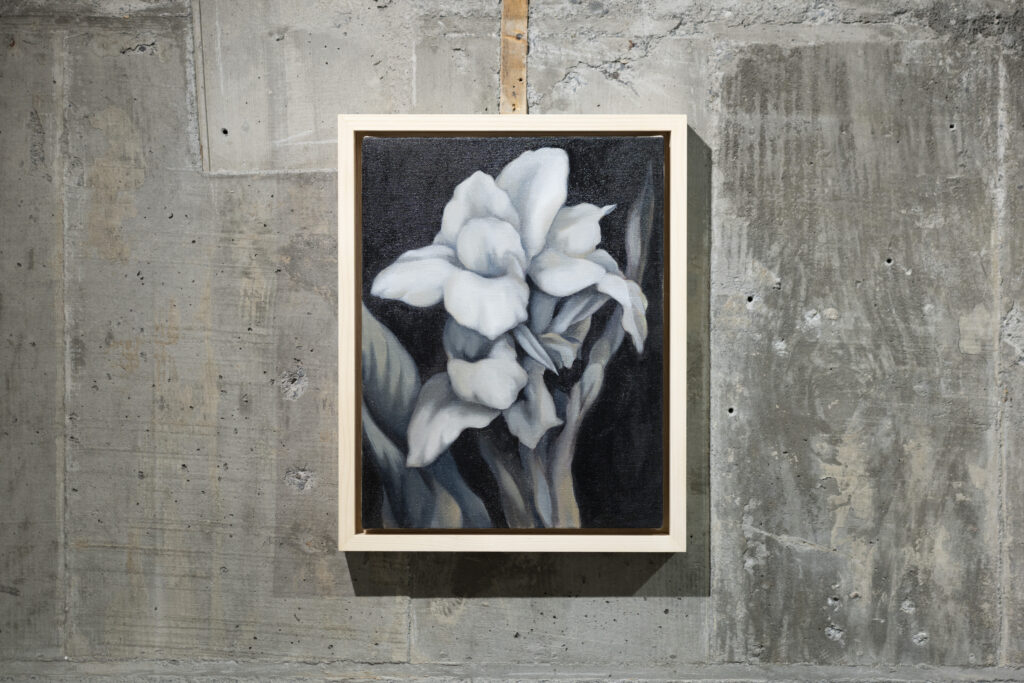
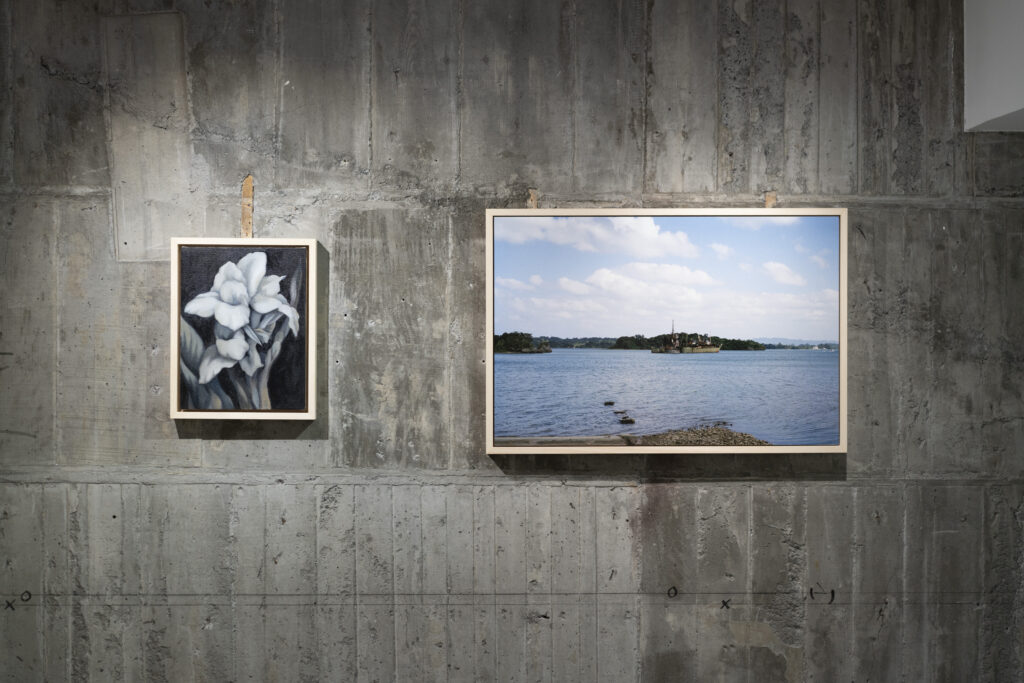
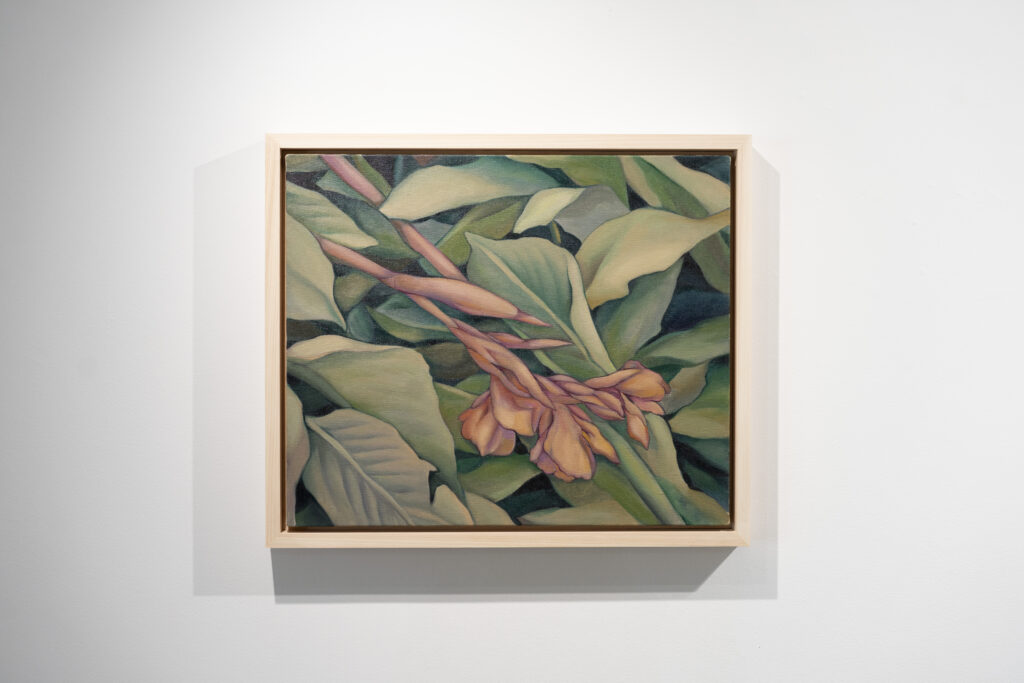
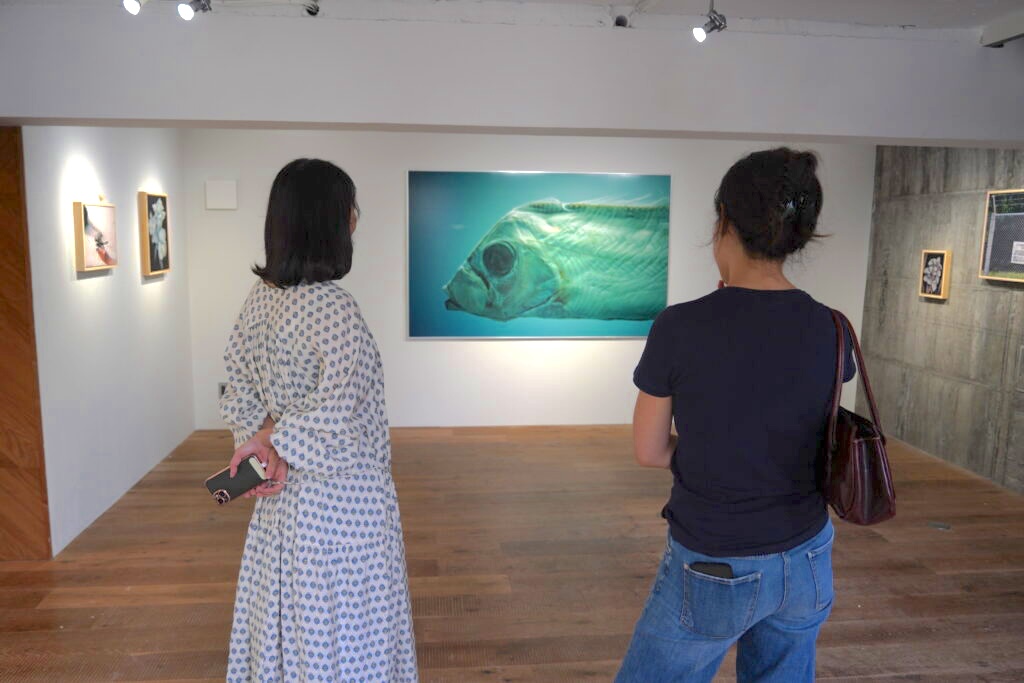
モチーフにしているのは、一昨年の11月に友人の結婚式で訪れた沖縄の写真と、その街で見かけた「カンナの花」です。モノクロの写真作品と、色鮮やかなカンナの花の絵画を対比させて鑑賞するような構成にしました。
昨年の横浜美術館の展示は「戦争と美術」が大きな主題であり、当初は沖縄についても触れる予定でした。しかし物量が多すぎて、沖縄についての作品は一度展示を見送ることになったんです。それが非常に残念で……「この構想していた沖縄の作品をどこかで展示したい」という想いがずっとありました。
非常にテーマ性の強い展覧会になると思っていたので、普通のギャラリーよりも実験的な挑戦ができるスペースを探していたときに、久保田さんにお話ししました。コートヤードさんで展示できると決まった時は、いろんな試みができるんだとワクワクしましたね。
This exhibition is closely related to the exhibition titled “Silence and Flowers,” which was held at the Yokohama Museum of Art in 2025.
The motifs are photographs I took in Okinawa during a friend’s wedding in November two years ago, and the “canna flowers” I saw in that town. I structured the exhibition so that viewers can appreciate the contrast between the black-and-white photographic works and the vividly colored paintings of canna flowers.
Last year’s exhibition at the Yokohama Museum of Art focused primarily on “War and Art,” and initially, I had planned to include a section on Okinawa as well. However, the volume of material was simply too great, so we decided to postpone exhibiting the Okinawa-related works for the time being. That was truly disappointing… and I’ve always held onto the desire to “exhibit these Okinawa works I’d envisioned somewhere.”
Since I anticipated it would be a very thematically focused exhibition, I was looking for a space where I could take on more experimental challenges than in a typical gallery, and that’s when I spoke with Mr. Kubota. When it was decided that I could exhibit at Courtyard, I was thrilled at the prospect of being able to try all sorts of new things.
3. 直感の色彩と「絞られる絵画・開かれる写真」
Intuitive Colors and “Concentrated Paintings, Open Photography”
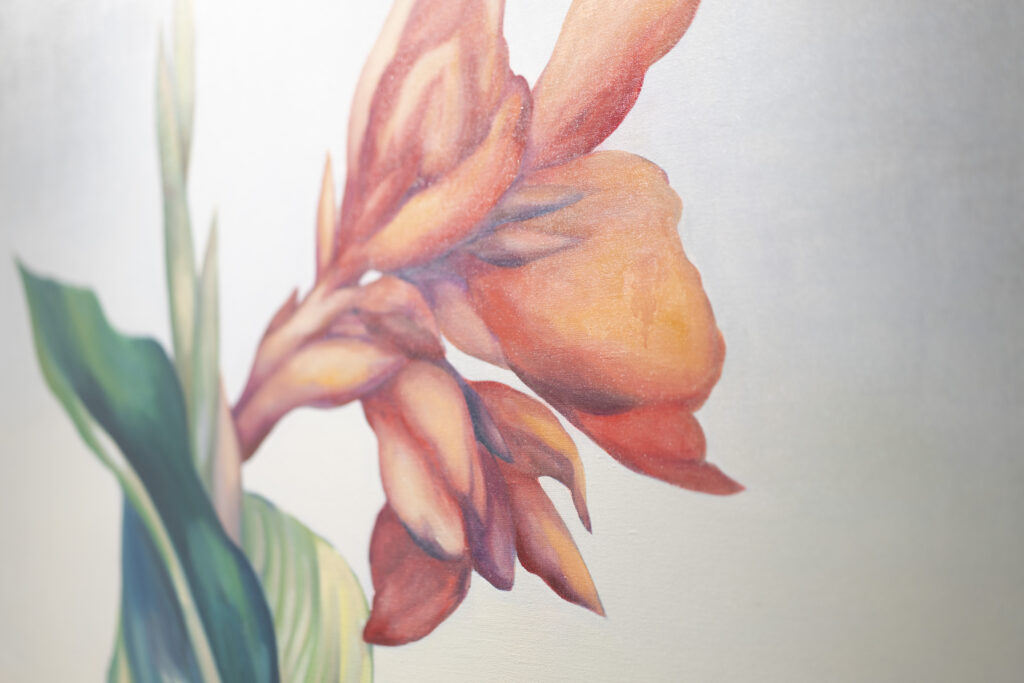
Q:会場の大きなカンナの花の絵画は非常に色鮮やかですね。制作過程での変化はありましたか?
The large painting of a canna flower at the venue is very colorful. Were there any changes during the creative process?
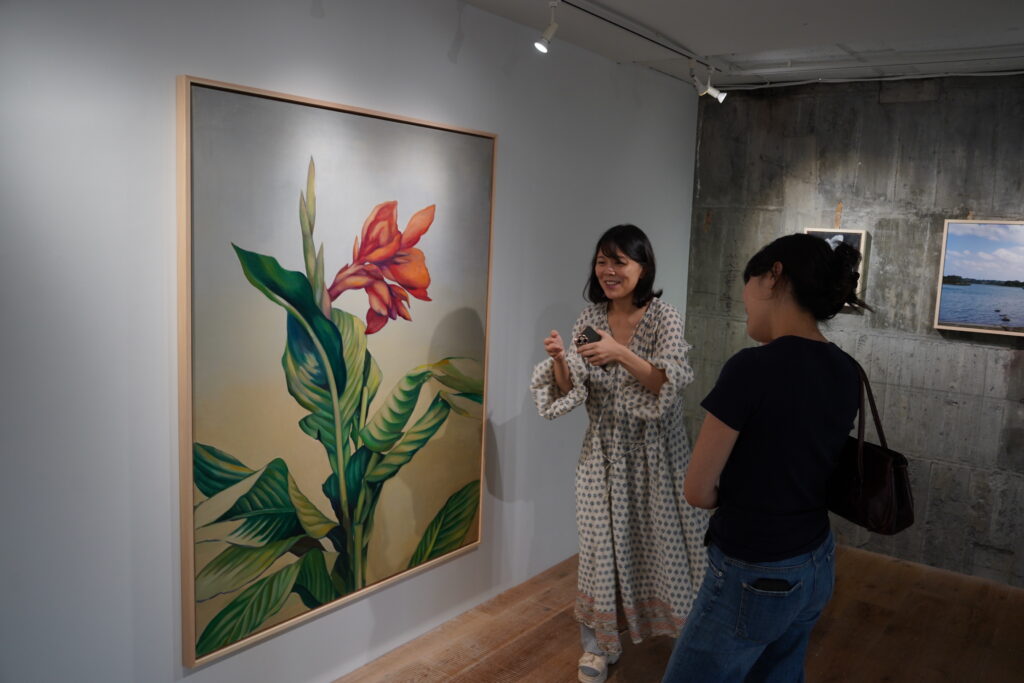
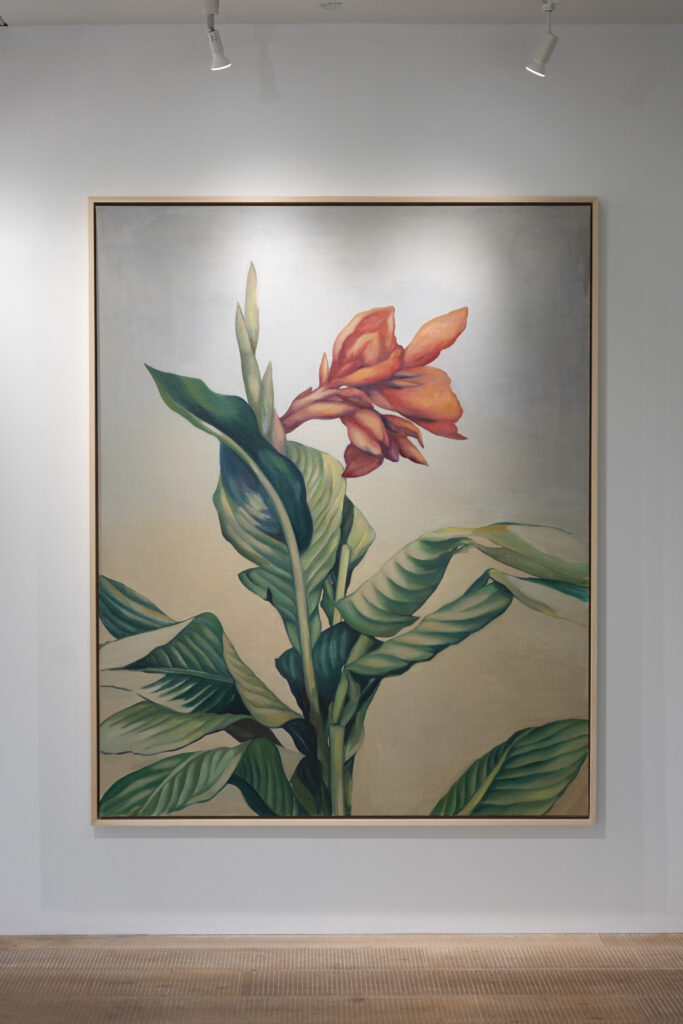
A: カンナを描くことは決まっていて、最初はすべてモノクロにしようと考えていたんです。でも描き進めていくうちに、自分でも気づかないうちに鮮やかな色になっていきました。絵を描くときは本当に感覚的で、言語化が難しいのですが、最後に仕上がった100号サイズの大きなカンナの花はなぜかすごく鮮やかになった。
下地の薄いベージュの色はモノクロ作品と同じなのですが、層を重ねていくうちにこの色に仕上がりました。横浜美術館の時も2.7メートルの大きなカンナの花を描き、展示を締めくくる象徴として飾りましたが、今回も「この展示で何を伝えたいか」を象徴するモチーフが欲しいと深層心理で思っていたのだと思います。あえて意図するというより、その時の感覚に合わせて色を決めていきました。
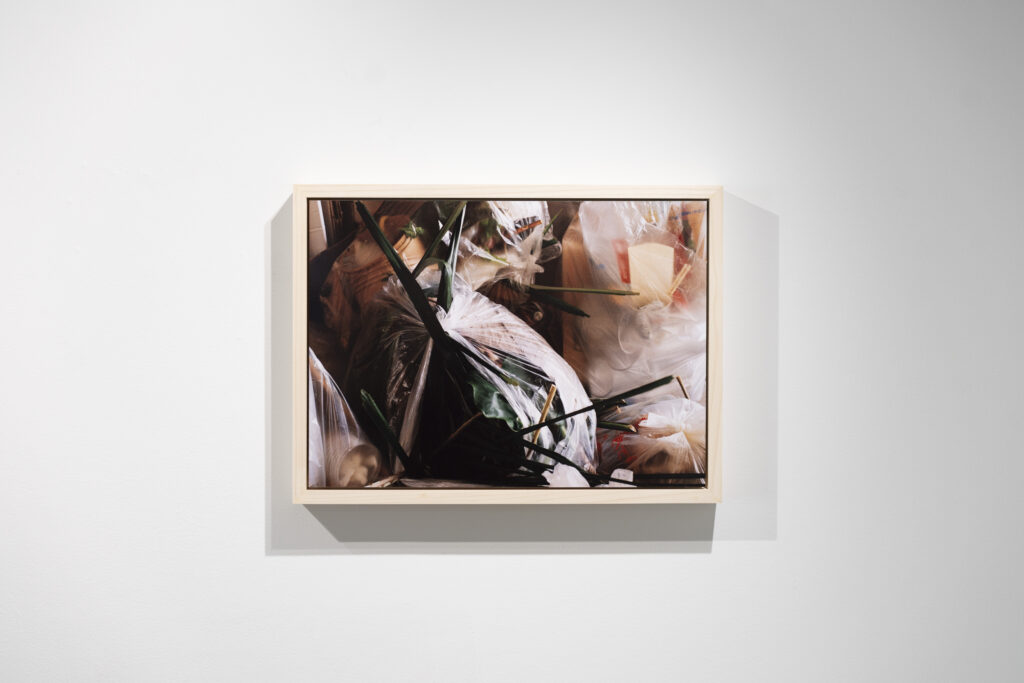
写真についても、大量のフィルムの中から「いい写真」というより「気になった写真」、そして「この空間に何が必要か」という視点で発掘していったものが並んでいます。
I had already decided to paint canna lilies, and at first, I planned to do everything in black and white. But as I continued painting, the colors became more vibrant without me even realizing it. My painting process is very intuitive—it’s hard to put into words—but for some reason, the large No. 100-sized canna lily I finished last turned out incredibly vivid.
The light beige base color is the same as in my black-and-white works, but as I layered the paint, it ended up looking like this. Back when I exhibited at the Yokohama Museum of Art, I also painted a large canna flower measuring 2.7 meters and displayed it as a symbol to conclude the exhibition. I think, on a subconscious level, I wanted a motif this time as well that would symbolize “what I wanted to convey through this exhibition.” Rather than deliberately planning it, I let my intuition guide the color choices as I worked.
As for the photographs, rather than selecting “good photos” from the vast amount of film I shot, I chose ones that “caught my attention” and those that I felt were necessary for this space.
Q:写真と絵画をペアで対比させて展示されていますが、どのような意図があるのでしょうか?
The photographs and paintings are displayed in pairs for comparison. What is the intention behind this?
A: 今年の3月に「VOCA展」で、同じサイズの絵画と写真を接近させて並べる試みを実験的に行いました。それが非常に面白い視覚的効果を生んだんです。
油絵は人の痕跡が見え、作家のイメージが凝縮されていく「より象徴的で、絞られていく媒体」です。一方で写真というのは、瞬間の切り取りであり、時間や土地、写っている情報が多様に存在する「開かれている媒体」です。
この「絞られていくもの」と「開かれていくもの」をごく近い場所に置くことで、鑑賞者に多層的な思考をもたらすのではないか。その実験をこの空間でさらに深めたいと思いました。
This past March, at the “VOCA Exhibition,” I experimentally arranged paintings and photographs of the same size side by side. This produced a very interesting visual effect.
Oil painting is a “more symbolic, increasingly refined medium” in which the artist’s traces are visible and their vision becomes condensed. Photography, on the other hand, is a “open medium” that captures a fleeting moment, containing a diverse array of information about time, place, and the subjects depicted.
By placing these “increasingly refined” and “open” elements in very close proximity, I wondered if it might prompt viewers to engage in multi-layered thinking. I wanted to further explore that experiment in this space.
4. 表現のルーツと写真との出会い
Roots of Expression and Encounter with Photography
Q:表現の原点や、写真と絵画のふたつを扱うようになったきっかけは何だったのでしょうか?
Q: What was the origin of your artistic expression, and what led you to work with both photography and painting?
A: 小さい頃から双子の妹と絵を描き合っては交換するのが大好きでした。高校では二人で吹奏楽部に打ち込んでいたのですが、妹が音大に行くと決めた時に「じゃあ私は美大にしよう」と女子美術大学の洋画専攻に入りました。
ただ、大学では油絵の具を重ねる作業がスタイルに合わず、ずっと筆ペンで絵を描いていたんです。卒業後は何を表現すべきかわからなくなっていた時期もありました。
それでも興味のあるモチーフはずっとスマホで撮り続けてInstagramに載せていたんです。そうしたら、知り合いのギャラリーの方が「インスタの写真がすごく面白いから展示しませんか」と言ってくださって。そこから慌ててカメラを買いに行き、我流で写真を撮り始めたのがきっかけです。どこで誰が見てくれているかわからないものですね。
A: Ever since I was little, my twin sister and I loved drawing pictures for each other and trading them. In high school, we were both deeply involved in the wind ensemble, but when my sister decided to go to a music college, I thought, “Well, then I’ll go to art school,” and enrolled in the Western Painting program at Joshibi University of Art and Design.
However, at university, the process of layering oil paint didn’t suit my style, so I kept drawing with a brush pen instead. After graduation, there was a period when I wasn’t sure what I should be expressing.
Even so, I kept taking photos of motifs that interested me with my smartphone and posting them on Instagram. Then, someone I knew who worked at a gallery said to me, “Your Instagram photos are really interesting—why don’t you put on an exhibition?” That’s when I rushed out to buy a camera and started taking photos entirely on my own—that was the turning point. You never know where or who might be looking at your work.
5. 平和へのメッセージと「100年後」に残るもの
Messages of Peace and What Remains “100 Years Later”
Q:カンナの花をモチーフにし続ける理由と、今後の展望について教えてください。
Could you tell us why you continue to use the canna flower as a motif, and what your future plans are?
A: カンナは広島で「平和の花」として親しまれている花です。81年前の原爆投下時、「今後75年は草木一本土が生えない」と言われた土地で、1ヶ月後に花を咲かせたという歴史があります。新聞でその写真を見た時に強い衝撃を受けました。首都圏ではその意味を知る人は少ないですが、一部で植樹活動をされている方々がいます。私自身はその運動に直接関われなくても、カンナを街で撮り、絵に描き、展示を通して見てもらうことで、平和へのメッセージを伝えられるのではないかと思ったんです。
特にここ1〜2年で強く感じているのは、「未来に残していく作品、未来の人に伝えたい」という想いです。作品制作に追われると目の前のものを消化するだけになってしまいがちですが、100年後の未来に向けて描くことがすごく大事だなと。私の肉体が滅びても作品だけは残る可能性がある。自分の思いが作品を通して次の世代に継承されていくのは、本当に素晴らしいことだと思っています。
商業的なギャラリーが多い中で、コートヤードHIROOさんのように文化や実験的な試みを大切にされているスペースは非常に貴重です。資本主義の中で維持するのは大変だと思いますが、末永く存在し続けてほしいですね。
The kanna is a flower beloved in Hiroshima as the “Flower of Peace.” It has a history of blooming just one month after the atomic bombing 81 years ago—in a place where it was said that “not a single blade of grass or tree would grow for the next 75 years.” I was deeply moved when I saw a photograph of it in the newspaper. While few people in the Tokyo metropolitan area understand its significance, there are some who are actively planting these flowers. Even if I can’t be directly involved in that movement myself, I thought I might be able to convey a message of peace by photographing cannas in the city, painting them, and sharing them through exhibitions.
What I’ve felt particularly strongly over the past year or two is the desire to “create works that will remain for the future and convey a message to future generations.” When I’m caught up in the process of creating art, I tend to just process what’s right in front of me, but I’ve come to realize how incredibly important it is to paint with the future—100 years from now—in mind. Even after my physical body is gone, there’s a possibility that my artwork alone will remain. I think it’s truly wonderful that my thoughts can be passed on to the next generation through my work.
Amid so many commercial galleries, spaces like Courtyard HIROO that value culture and experimental endeavors are incredibly rare. I imagine it’s difficult to sustain such a space within a capitalist system, but I hope it continues to exist for a long time to come.
Interviewer: Satoko Kubota