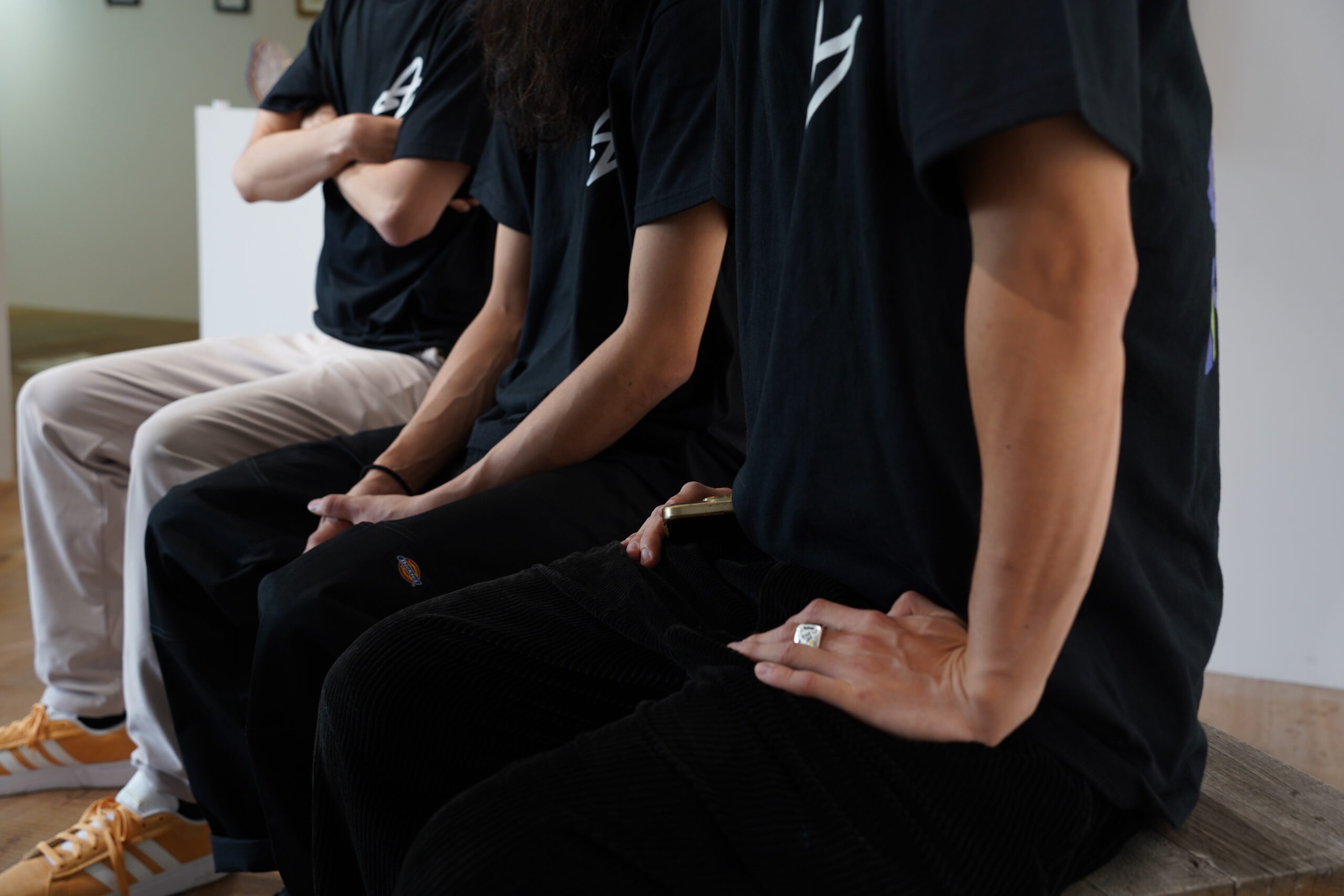
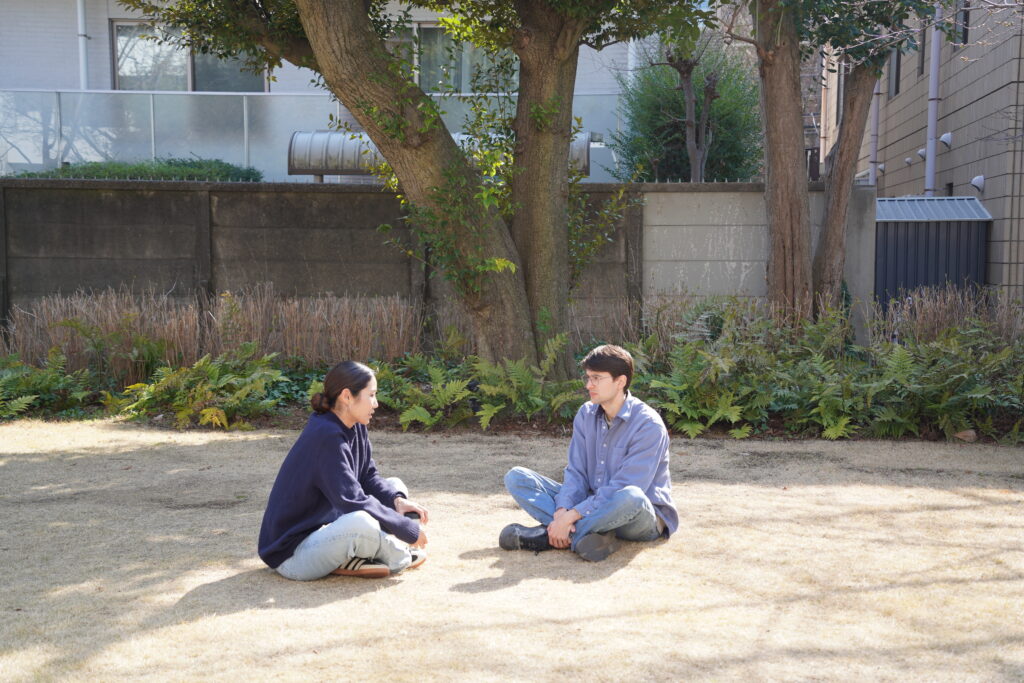
今回は、コートヤードHIROOガロウおよび富山県滑川市でアーティスト・イン・レジデンス及び作品展を行ったドイツ人アーティストのPaul Graßl(パウル グラスル)さんにインタビューをしました。
東京や滑川でのレジデンスについてのこと、彼の制作モチーフである「空き家」への興味の経緯などについてお話を伺いました。
Q: 来日後、最初に東京でのプログラムが始まりました。東京でのレジデンス
プログラムではどのように過ごしていましたか?
After arriving in Japan, your program in Tokyo was the first to begin. How did
you spend your time during the residency program in Tokyo?
Paul:
この 4 週間はあっという間に過ぎました。最初は交換留学のときのように、こ
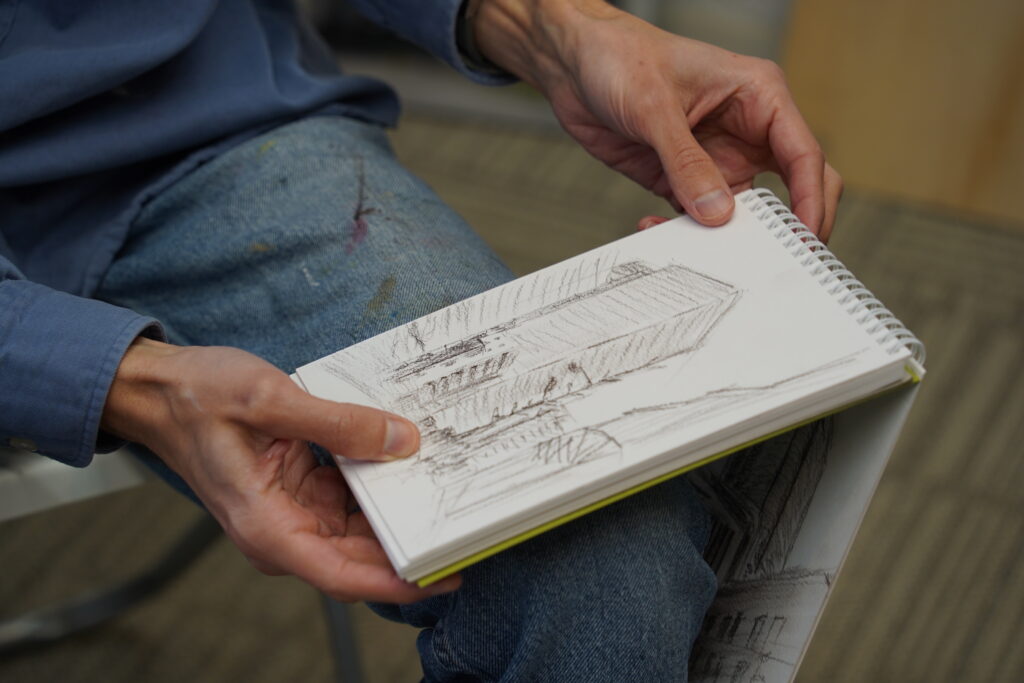
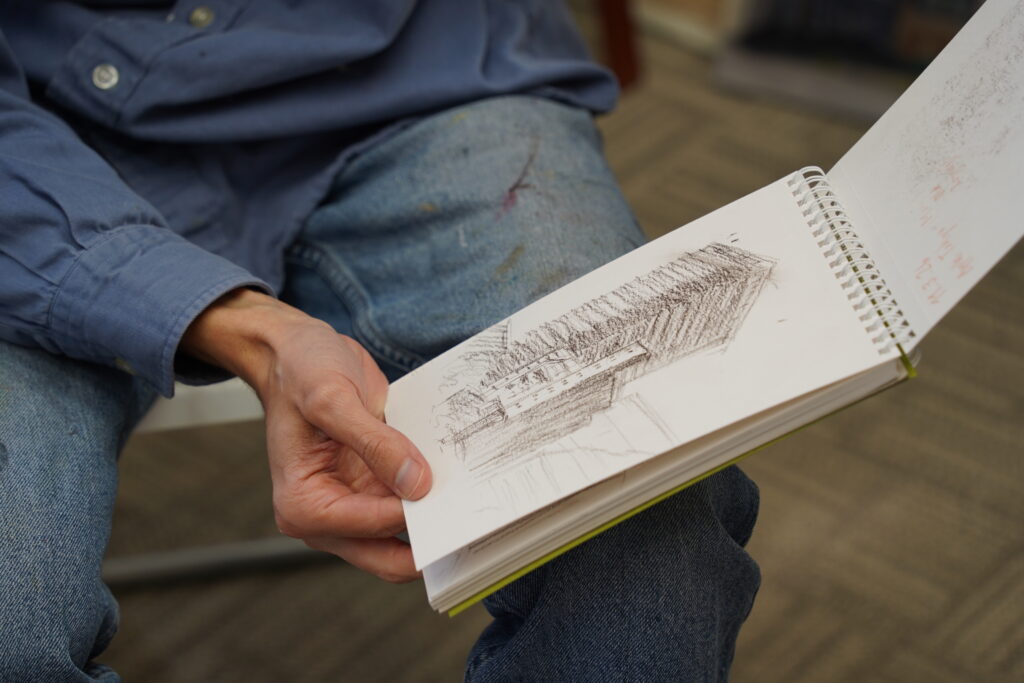
のエリアを歩き回って、写真を撮ったりスケッチをしたりしながら探索してい
ました。
今回の滞在では「空き家」というテーマを継続しつつ、版画ではなく絵画とし
て取り組みたいと考えていました。また、日本に来るたびに感じる独特の色彩
にも興味があり、それを収集することも大きな目的のひとつでした。
建物に使われている素材や色はヨーロッパと大きく異なります。木材だけでな
く、錫やプラスチックなどの素材の使われ方も印象的で、それらが独自の色の
ニュアンスを生み出しています。
滞在中はそうした要素を観察しながら、異なる家々が連なって一本の通りのよ
うに見える「空き家のシリーズ」としてまとめたいと考えていました。
The past four weeks went by very quickly. At the beginning, I spent my time
walking around the area—similar to when I was here as an exchange student—
just exploring, taking photographs, and making sketches.
For this residency, I wanted to continue working on the theme of akiya (vacant
houses), but shift my focus from printmaking to painting. Another important goal
was to collect and understand the colors I encounter in Japan, which always feel
very different from those in Europe.
The materials used in buildings here—wood, tin, plastic—are quite distinct, and
they create unique color combinations.
While observing these elements, I started thinking about creating a series of
paintings where different houses line up like a continuous street.
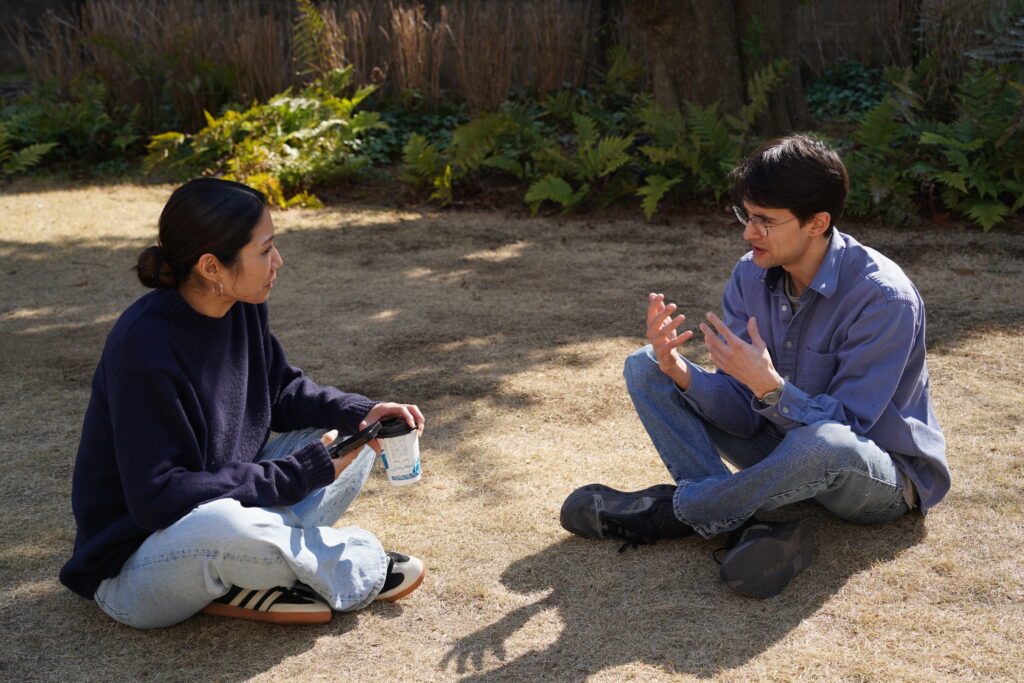
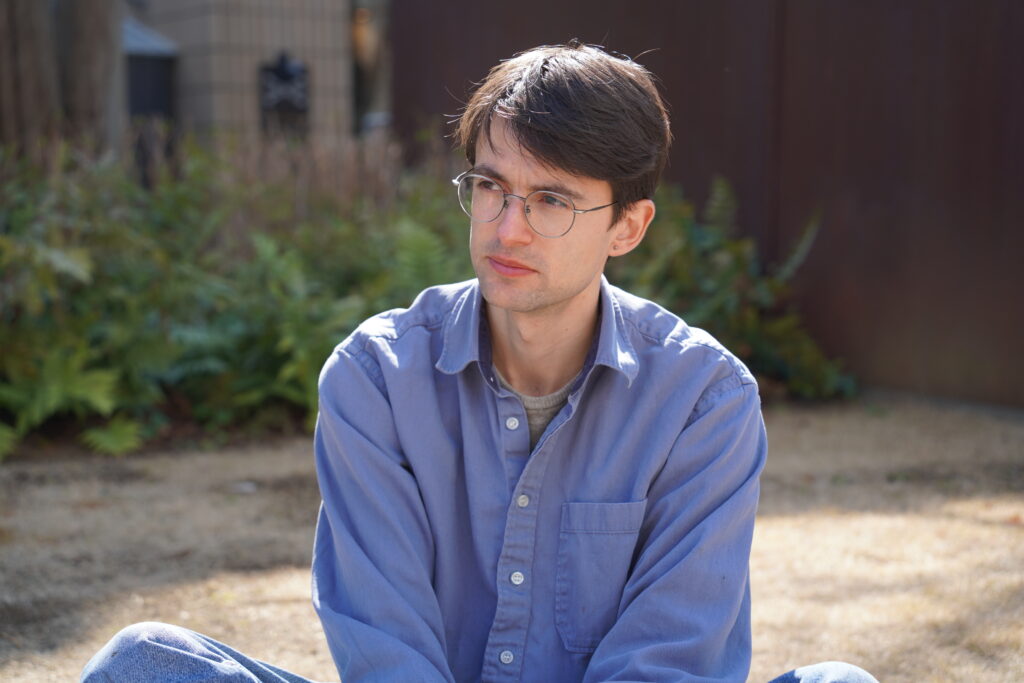
Q: なぜもともと空き家に興味を持ったのでしょうか?
What originally sparked your interest in vacant houses?
Paul:きっかけは、日本の絵巻物への興味でした。絵巻物には、平行投影や「吹抜屋
台」のように建物の内部を見せる独特の表現があります。
実際に日本に来たとき、東京のような都市に空き家が存在していることに驚
き、「なぜ誰も住んでいないのか」と疑問を持ちました。
さらに、古い絵巻物の剥落した絵肌と空き家の佇まいが重なって見え、「人の
いない絵巻物=空き家のようだ」と感じたことが、関心を深めるきっかけにな
りました。
空き家は、家でありながら誰もいない存在で、街の中の彫刻のようにも感じら
れます。それぞれに個性があり、時間の経過や人の痕跡が残っている。私にと
っては、それらはポートレートのような存在です。
It started with my interest in Japanese picture scrolls. They often use parallel
perspective and a technique called fukinuki yatai, where roofs and walls are
removed to reveal interior spaces.
When I first came to Japan, I was surprised to see vacant houses in a city like
Tokyo. I wondered why they were left empty.
I also noticed a visual connection between these houses and old picture scrolls—
the way the paint flakes off over time reminded me of aging surfaces.
To me, these houses feel almost like sculptures in the city. Each one has its own
character, shaped by time and human traces. I see them as portraits.
Q: この広尾エリアでは空き家は多く見つかりましたか?
Did you find many vacant houses in this area?
Paul:
それほど多くはありませんでした。ただし、色彩の観点では非常に興味深い場
所でした。
東京にはグレーやベージュが多い印象がありますが、実際には青みや緑みを帯
びた微妙な違いがあり、彩度の低い繊細なカラーパレットが広がっています。
Not so many. However, what I found especially interesting was the color palette.
Tokyo appears to be dominated by greys and beiges, but there are subtle
variations—bluish tones, greenish hues, and low-saturation colors.
Q: 建物への関心は日本特有のものですか?それともドイツでも同じですか?
Is your interest in architecture specific to Japan, or also present in Germany?
Paul:
ドイツ、特にミュンヘンの都市部では空き家はほとんどありません。
その代わりに、「テック企業」への関心があります。東京では Apple や
Google、Amazon、Microsoft などの企業が入る建物を見て回りました。
彼らはデジタル上ではどこにでも存在しているように見えますが、実際には物
理的な場所に存在しています。
In Germany, especially in cities like Munich, there are very few vacant houses.
Instead, I developed an interest in tech companies. In Tokyo, I visited buildings that
house companies like Apple, Google, Amazon, and Microsoft.
They seem to exist everywhere digitally, but physically they occupy specific
locations.
Q: あなたの関心は物理的な存在に向いているように感じます。
It seems your work is strongly connected to physical presence.
Paul:
そうですね。「空き家」は社会的変化が物理的に現れたものです。
一方で、テック企業のようなデジタルな存在も、最終的には建物やインフラと
して現実世界に現れます。
両者は異なるようでいて、どちらも変化が「物質」として現れている点で共通
しています。
Yes. Vacant houses represent social changes manifested physically.
At the same time, digital companies also materialize in buildings and infrastructure.
Both reflect transformation through material form.
Q: 今回の滞在で新しく得た発見はありましたか?
Did you gain any new insights during this residency?
Paul:
色の捉え方が深まりました。微妙な違いを見分け、それを絵画に落とし込む方
法について新しい発見がありました。
ドイツでは関心が薄れることもありますが、日本に来ると再び強く惹かれま
す。
I developed a deeper understanding of subtle color differences and how to
translate them into painting.
When I’m in Germany, my interest sometimes fades, but in Japan it returns
strongly.
Q: 今後の予定について教えてください。
What are your plans for the future?
Paul:
今後はテック企業というテーマをさらに深めたいです。データセンターなども
訪れたいと考えています。
デジタルの仕組みがどのように現実世界に現れるのかを探求したいです。
I want to further explore the theme of tech companies, possibly visiting data
centers.
I’m interested in how digital systems manifest in the physical world.
Q: 東京での滞在後、富山県滑川に行っていただきました。滑川ではどのよう
に過ごしていましたか?
After your stay in Tokyo, you went to Namerikawa in Toyama Prefecture. How did
you spend your time there?
Paul:
9 日間滞在しました。初日に建物フェスの法澤さんが組んでくださったツアー
に参加して、建物の内部を見ることができたのがとても印象的でした。外から
の印象と内側はまったく異なり、特に古い米蔵の構造が強く記憶に残っていま
す。
また、残された道具や生活の痕跡が、その場所の時間や物語を伝えているよう
に感じました。
I stayed for nine days. On my first day, I joined a tour organized by Mr. Hosawa
from the Building Festival, and seeing the interior of the buildings left a lasting
impression on me. The interior was completely different from what I had imagined
based on the exterior, and I particularly remember the structure of the old rice
storehouse.
I also felt that the tools and traces of daily life left behind conveyed the history and
stories of that place.
Q: 滞在中はどのような制作をしていましたか?
What kind of work did you do during your stay?
Paul:
ほとんどの時間を屋外でのペインティングに費やしました。今回は写真を使わ
ず、その場で直接描くことを重視しました。
長時間その場所にいることで、建物や環境とより直接的につながることができ
たと感じています。制作中には、通りがかりの人が声をかけてくれたり、家に
ついての話を聞かせてくれることもありました。
I spent most of my time painting outdoors, working directly on site rather than from
photographs.
By staying in one place for a longer time, I could connect more directly with the
buildings and their surroundings.
While working, local residents sometimes approached me, asked about my
paintings, or shared stories about the houses.
Q: 滑川の印象について教えてください。
What was your impression of Namerikawa?
Paul:
非常に多くの空き家があり、その存在がとても直接的に感じられました。植物
に覆われた家も多く、時間の経過が強く現れていました。
一方で、シェアオフィスのように新しい使い方が生まれている場所もあり、町
が変化の途中にあることも感じました。
There were many vacant houses, and their presence felt very immediate. Many
were overgrown with vegetation, clearly showing the passage of time.
At the same time, I saw new uses emerging, such as shared offices, which made
me feel that the town is in transition.
Q: 地方の町についてはどう感じましたか?
What were your impressions of the regional towns outside the city center?
Paul:
一見すると静かな町ですが、その中には多くの発見があります。自然環境も
豊かで、食べ物もとても魅力的でした。
都市が高騰しすぎた場合、こうした地域に人が移ってくる可能性もあると思い
ます。それぞれの町が独自の魅力を発信していくことが重要だと感じました。
At first glance, it may seem like a quiet town, but there is a lot to discover. The
natural environment is rich, and the food is very appealing.
If large cities become too expensive, people might start moving to places like this.
Each town has its own unique qualities that could be shared more widely.
Q: ツアーの後はどのように過ごしましたか?
What did you do after the tour?
Paul:
ツアーの後は一人で町を歩き回り、画材を持って観察と制作を続けました。
毎日、朝から日が暮れるまで外で描き、できるだけ多くの場所を体験するため
に、異なる場所で 1〜2 枚ずつ制作していました。
After the tour, I explored the town on my own, carrying my materials and
continuing to observe and paint.
Each day, I worked outside from morning until sunset, creating one or two
paintings in different locations to capture as many impressions as possible.
Q: 今回の滑川滞在で得たことは何ですか?
What did you gain from this experience?
Paul:
いくつかの小さな作品を完成させましたが、それ以上に大きかったのは「環境
ごと捉える視点」です。
これまでは家そのものを描くことが中心でしたが、今後は周囲の植物や風景も
含めた、より広がりのある作品に取り組みたいと考えています。
I completed several small paintings, but more importantly, I gained a new
perspective—seeing not just the house itself, but its entire environment.
In the future, I want to create works that include surrounding elements like plants
and landscapes.
Interviewer: Satoko Kubota