株式会社アトムが主催する、芸術を学ぶ全国の学生を対象とした公募展「A-TOM ART AWARD 2026」。今年は「選ぶこと、作ること」をテーマに掲げ、多数の応募の中から4名の若手アーティストが受賞しました。
Organized by Atom Co., Ltd., the “A-TOM ART AWARD 2026” is an open call exhibition for art students nationwide. This year’s theme was “Choosing and Creating,” and four young artists were selected as winners from among a large number of entries.
個人的な風景と他者との共有、光がもたらす環境の変化、何気ない形に宿る存在の意味、そして縫う行為に刻まれる身体の記憶。それぞれ異なる視点から作品と向き合う4名に、制作の背景や表現に込めた想い、これからの創作への展望、そして100年後にも残っていてほしいものについてお話を伺いました。
Personal landscapes shared with others; the changes in the environment brought about by light; the meaning of existence embodied in seemingly ordinary forms; and the bodily memories etched into the act of sewing. We spoke with four artists—each approaching their work from a different perspective—about the background of their creations, the sentiments they’ve poured into their expressions, their outlook on future creative endeavors, and what they hope will remain 100 years from now.
高橋フウカ Fuka Takahashi
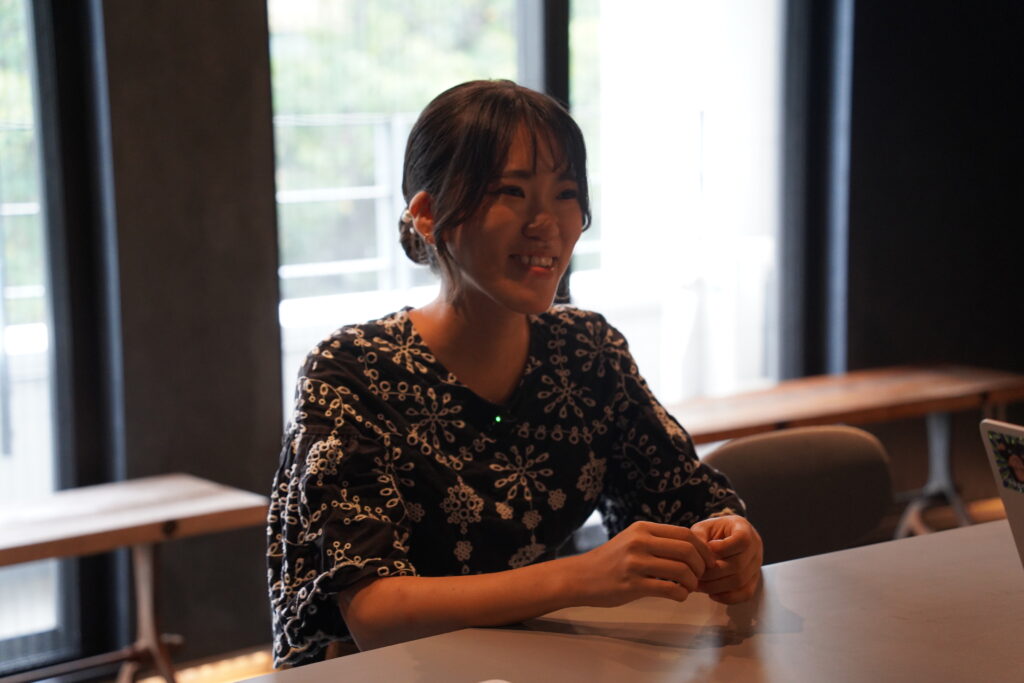
個人的な風景と、誰かと共有できる風景。そのあいだをつなぐ
Personal landscapes and landscapes you can share with others. Bridging the gap between them
Q. 今回受賞された作品のテーマについて教えてください。
Q. Could you tell us about the theme of the work that won this award?
高橋: この作品は、純粋に風景が見たいという欲求から生まれました。幼い頃、父と富士山に登ったとき、自然に触れたり、山の上から見た水がキラキラしていたのに、近づくとただの水だったり、頭の中でイメージしていた風景と実際の物質が違っていたり。そうした「見る」という行為が、自分の中で最近少なくなってきたと感じていました。
風景って面白いと思うんです。知らない場所でも「あの風景、おばあちゃんの家に行く道に似ているな」と思うことがありますよね。でも、それをわざわざ誰かに伝えるわけではない。一方で、富士山のように、多くの人が良いと感じ、共有できる風景もあります。個人的な体験でありながら、誰かと共有できるものがある。その性質に興味を持っています。
今回の作品では、自分だけが見ている風景と、みんなで共有できる風景、その二つの視点が交差するような場所をつくりたいと思いました。
Takahashi: This work was born purely out of a desire to see landscapes. When I was a child and climbed Mount Fuji with my father, I experienced nature firsthand—the water glistened from the mountaintop, but when I got closer, it was just ordinary water; the actual scenery didn’t match the image I’d formed in my mind. I’ve been feeling that this act of “seeing” has become less common for me lately.
I find landscapes fascinating. Even in unfamiliar places, you sometimes think, “That scenery reminds me of the road to my grandmother’s house,” don’t you? But you don’t go out of your way to tell anyone about it. On the other hand, there are landscapes—like Mount Fuji—that many people find beautiful and can share. There are things that, while personal experiences, can still be shared with others. I’m interested in that nature of things.
With this work, I wanted to create a space where these two perspectives—the landscape seen only by me and the landscape shared by everyone—intersect.
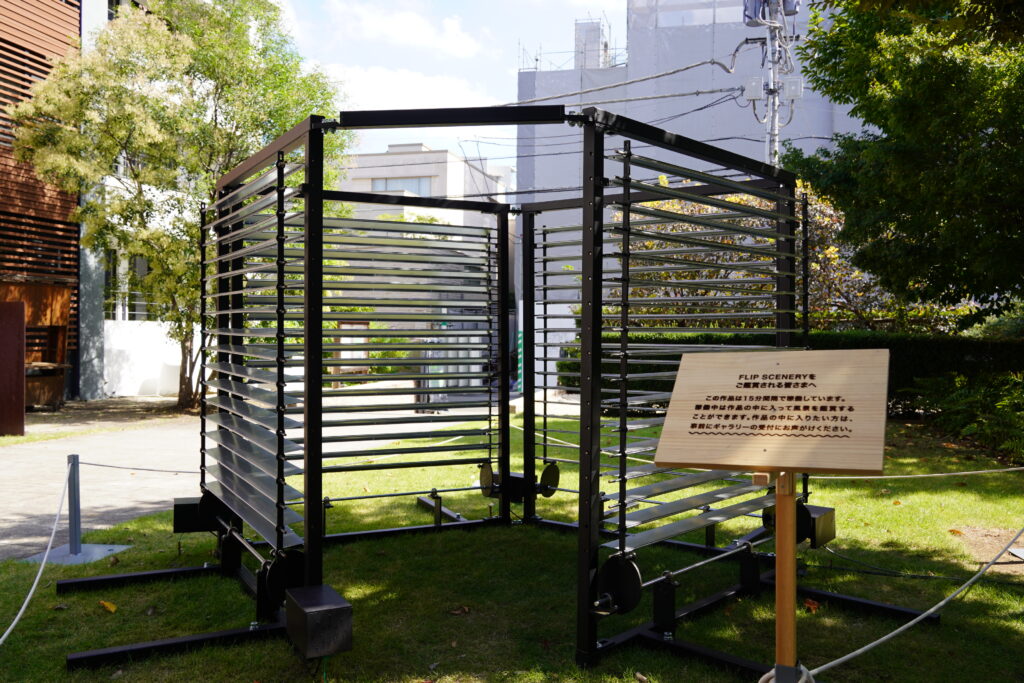
Q. そのテーマを表現するにあたって、ブラインドという形を選んだのはなぜですか?
Q. Why did you choose the form of a blind to express that theme?
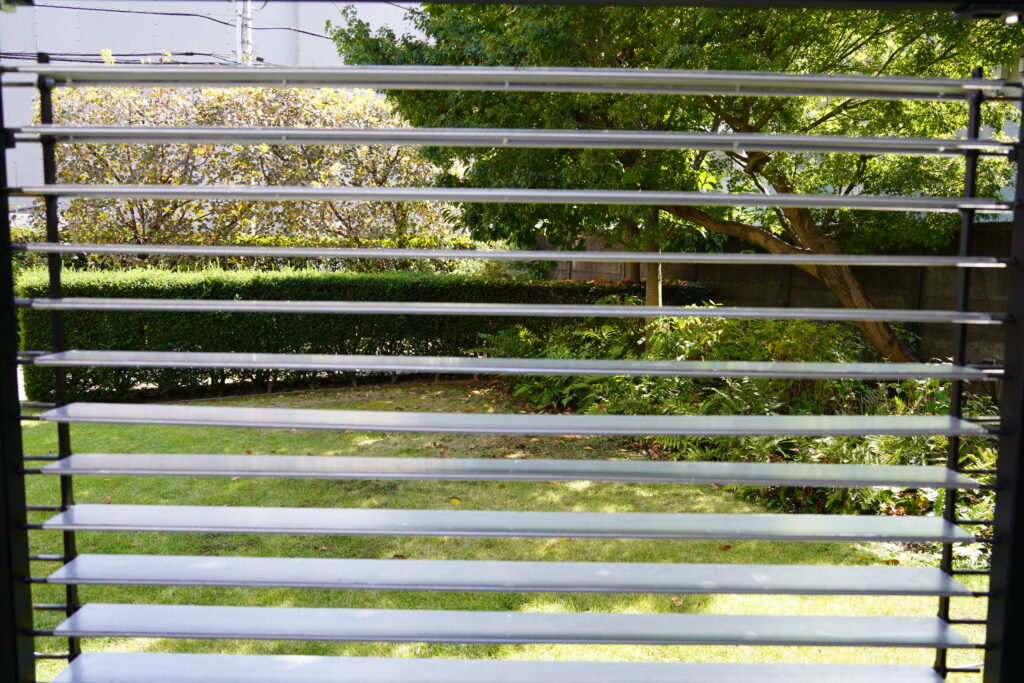
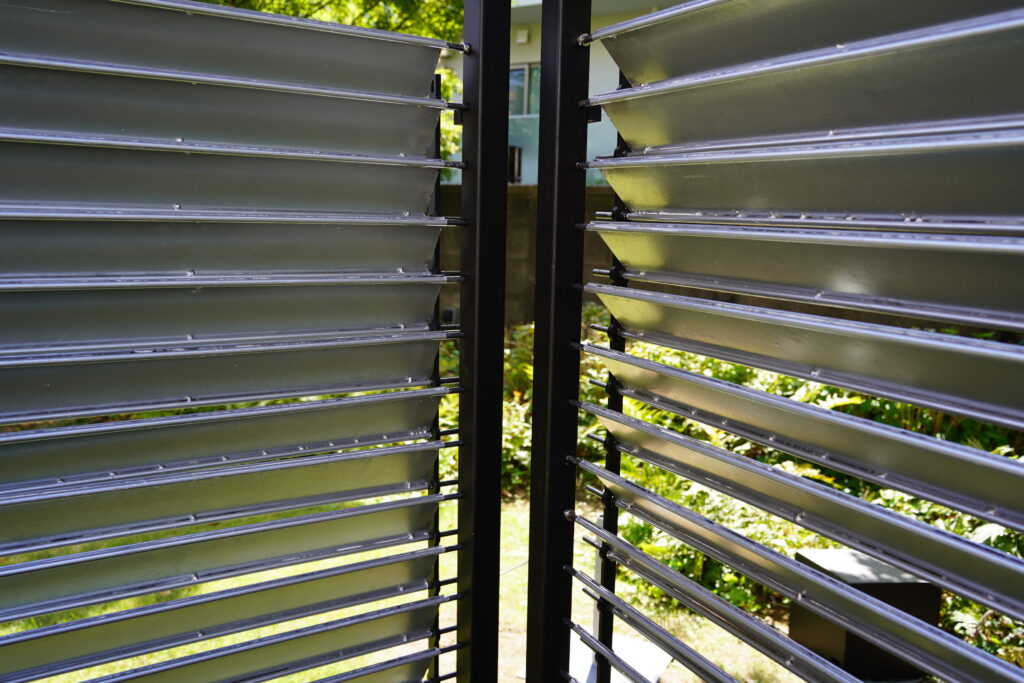
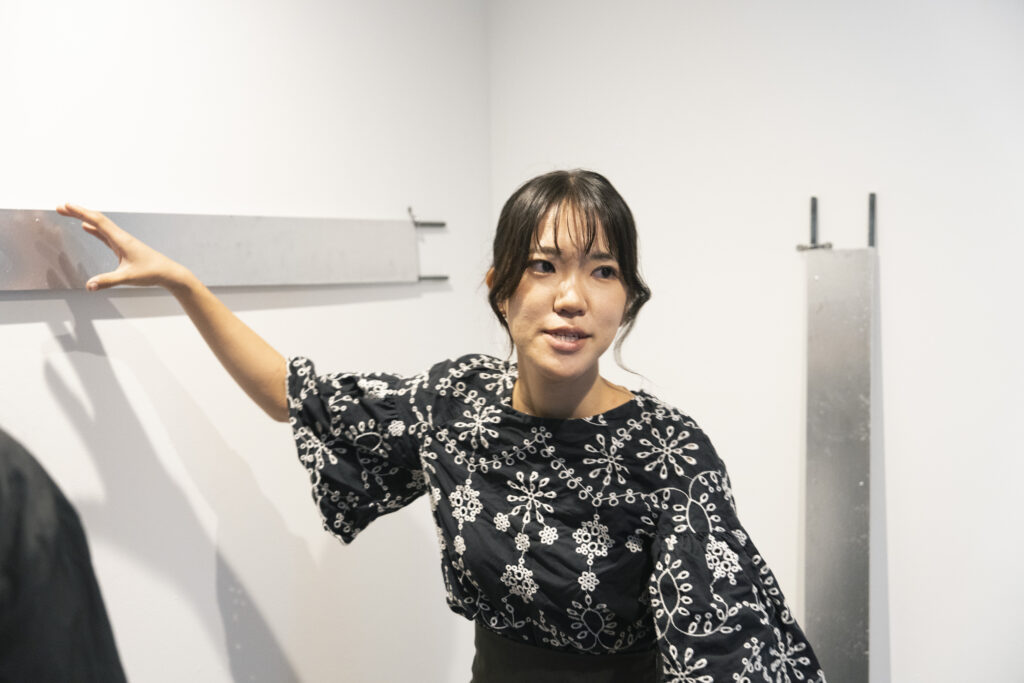
高橋: 窓から風景を見るためのものには、カーテンなどいろいろありますが、その中でもブラインドは特殊だと思っています。羽の角度によって見える場所が変わり、人の視線を操作できる。自分と外の世界との距離感を、構造として持っているものだと感じました。
ブラインドは簡単に風景を遮ることができますが、反対に、風景と自分をつなぐ装置にもなり得ると思います。今回の作品では、通常は軽いブラインドの羽を重くすることで、開くまでの時間を長くしました。
外の風景を見るまでの時間を延ばすことで、待った先に見える風景とどうつながるのか、あるいは、つながろうとする自分がいることを感じられるような装置をつくりたかったんです。
ブラインドがゆっくり開く時間は、20秒に一度という設定にしています。落ち着いて待てるけれど、嫌気が差すほど長くはない。「一瞬」というものに合ったスピード感になったと思います。
Takahashi: There are various items, such as curtains, designed for viewing the scenery through a window, but I believe blinds are unique amongst them. Depending on the angle of the slats, the view changes, and they can control where one’s gaze falls. I felt that, structurally speaking, they embody a sense of distance between oneself and the outside world.
Whilst blinds can easily block out the view, I believe they can also serve as a device that connects you to the scenery. In this piece, I have made the slats—which are usually light—heavier, thereby lengthening the time it takes for them to open.
By extending the time it takes to see the view outside, I wanted to create a device that allows you to sense how you connect with the view that awaits you after the wait—or rather, to feel the presence of your own self striving to connect with it.
I have set the blinds to open slowly once every 20 seconds. It is a pace that allows one to wait calmly, yet is not so long as to become tedious. I believe this creates a sense of tempo that suits the concept of a ‘moment’.
「選ぶこと、作ること」を、自分自身の現在地として考える
Thinking of ‘choosing and creating’ as my current position
Q. 今回、アトムアートアワードに応募したきっかけを教えてください。
Q. Could you tell us what prompted you to enter the Atom Art Award this time?
高橋: 大学の研究室の先生に勧められたことがきっかけです。先生からは「世の中のコンペというコンペに出しなさい」と言われていて(笑)。ただ、私は何でも片っ端から応募したいわけではなくて、自分の制作スタイルや考えていることと重なる部分がないと、なかなか応募する気になれないんです。
今回のテーマである「選ぶこと、作ること」は、まさに今の自分の状況と重なっていました。
もともとは大学卒業後に就職するつもりでしたが、先生から溶接を教わったことをきっかけに、ものをつくることの奥深さを知りました。もっとできることがあるのではないかと思い、就職はいつでもできるけれど、今この環境にいられることは貴重だから、やりたいことをやってみようと修士課程に進みました。
その中で、自分は何に興味があるのか、たくさんの情報の中から何を選び、表現者としてどうつくっていくのかを考えるようになりました。ものを選ぶという行為には、その人の人間性や人生、これまで無意識に積み重ねてきたことまで凝縮されていると思います。
自分がどんなアーティストになりたいのか、どんなテーマを扱いたいのかも、まだ悩んでいる途中です。だからこそ、今回のテーマに共感し、応募したいと思いました。
実は、大学4年生の頃は芸術にあまりピンときていなくて、普通に就職するつもりだったんです。でも、先生との出会いで、ものをつくる楽しさを知りました。自分が制作していると、周りの人もどんどん巻き込まれていく。一人ではつくりきれない大きな作品に取り組んでいるうちに、気づけば周りに人がいる。その光景を見て、そういうこと自体がアートなのかもしれないと、少しずつ気づき始めています。
今は、修士1年生ですが、自分の中では大学1年生のような気持ちです。新しく学び始めた感覚があって、毎日がとても楽しいですね。
Takahashi: It all started when a lecturer at my university’s research laboratory recommended it to me. He told me, ‘You should enter every competition out there’ (laughs). However, I’m not the sort of person who wants to apply for just anything; unless there’s an overlap with my own creative style or way of thinking, I find it hard to bring myself to enter.
The theme of this competition, ‘Choosing and Creating’, really resonated with my current situation.
Originally, I’d intended to find a job after graduating from university, but after my professor taught me welding, I came to realise the depth and richness of the craft of making things. I felt there must be more I could do; whilst I could always find a job later, I realised that being in this environment right now was a precious opportunity, so I decided to pursue a Master’s degree to try my hand at what I really wanted to do.
During that time, I began to reflect on what truly interested me, what to select from the vast amount of information available, and how to create as an artist. I believe that the act of selecting something encapsulates a person’s character, their life, and even the things they have unconsciously accumulated over time.
I am still in the process of figuring out what sort of artist I want to become and what themes I wish to explore. That is precisely why I resonated with this year’s theme and decided to apply.
To be honest, during my fourth year at university, art didn’t really appeal to me, and I had intended to find a regular job. However, through my encounter with my tutor, I discovered the joy of creating things. When I’m creating, the people around me gradually get drawn in too. Whilst working on large-scale pieces that I couldn’t possibly complete on my own, I find myself surrounded by others before I realise it. Witnessing this, I’m gradually beginning to realise that perhaps this very process is art in itself.
I’m currently in my first year of my Master’s degree, but I feel as though I’m back in my first year of university. It feels as though I’m starting to learn all over again, and every day is a great deal of fun.
100年後にも残っていてほしいもの
Things I hope will still be around in 100 years’ time
Q. ご自身の活動に限らず、100年後にも残っていてほしいもの、あるいは残っていると思うものはありますか?
Q. Looking beyond your own work, is there anything you would like to see still in existence 100 years from now, or that you think will still be around?
高橋: すごく抽象的ですが、何かを探究する好奇心や、芸術は100年後もなくならないのではないかと思います。
私が通っている大学のテーマも「Imagine The Future」なんです。既存のもの同士が組み合わさることで新しいものが生まれるのであって、無から何かが生まれるわけではない、という考え方があります。
そう考えると、たとえ100年後にグローバル化が進んで、どの街も同じように見えるようになったとしても、一人ひとりが持っているアイデンティティや、まだ見つかっていないもの、交わっていない視点は必ずあると思います。
人と関わると、自分にはない視点がたくさん見つかります。そこから好奇心が生まれ、それが芸術のアイデアの源にもなる。そうした一人ひとりの固有性は、ずっとなくならないのではないでしょうか。
人と人が関わることで好奇心が生まれ、それが単なる消費ではない何かにつながっていく。そうなってほしいという希望も込めて、100年後も捨てたものではないと思っています。
今回のレジデンスも、とても楽しみにしています。普段の生活では、大学に行けば同じ顔ぶれがいて、知らない人と関わる機会は意外と少ないと感じています。だからこそ、日常の枠から一歩外に出て、人と関わる経験をしてみたいです。
その場所が、自分にとって第二の帰る場所になったらいいなと思っています。
Takahashi: It’s rather abstract, but I don’t think the curiosity to explore things, or art itself, will disappear even 100 years from now.
The theme of the university I attend is ‘Imagine The Future’. There is a philosophy that new things are born from the combination of existing elements; nothing is created from nothing.
When you think about it that way, even if globalisation progresses over the next 100 years and every city comes to look the same, I believe there will always be the unique identities of each individual, things yet to be discovered, and perspectives that have not yet intersected.
When we interact with others, we discover many perspectives that we ourselves do not possess. This gives rise to curiosity, which in turn becomes a source of ideas for art. I believe that such individual uniqueness will never disappear.
Interaction between people sparks curiosity, which leads to something more than mere consumption. With the hope that this will indeed come to pass, I believe that even 100 years from now, this will still be a worthwhile endeavour.
I am very much looking forward to this residency. In my everyday life, when I go to university, I see the same faces, and I feel that opportunities to interact with people I don’t know are surprisingly few. That is precisely why I would like to step outside the confines of my daily routine and experience connecting with others.
I hope that this place will become a second home for me.
佐藤芽維 Mei Sato
光の蓄積を、ミシンの動きによって記録する
Recording the accumulation of light through the movement of a sewing machine
Q. 今回受賞された作品のテーマについて教えてください。
Q. Could you tell us about the theme of the work that won the award this time?
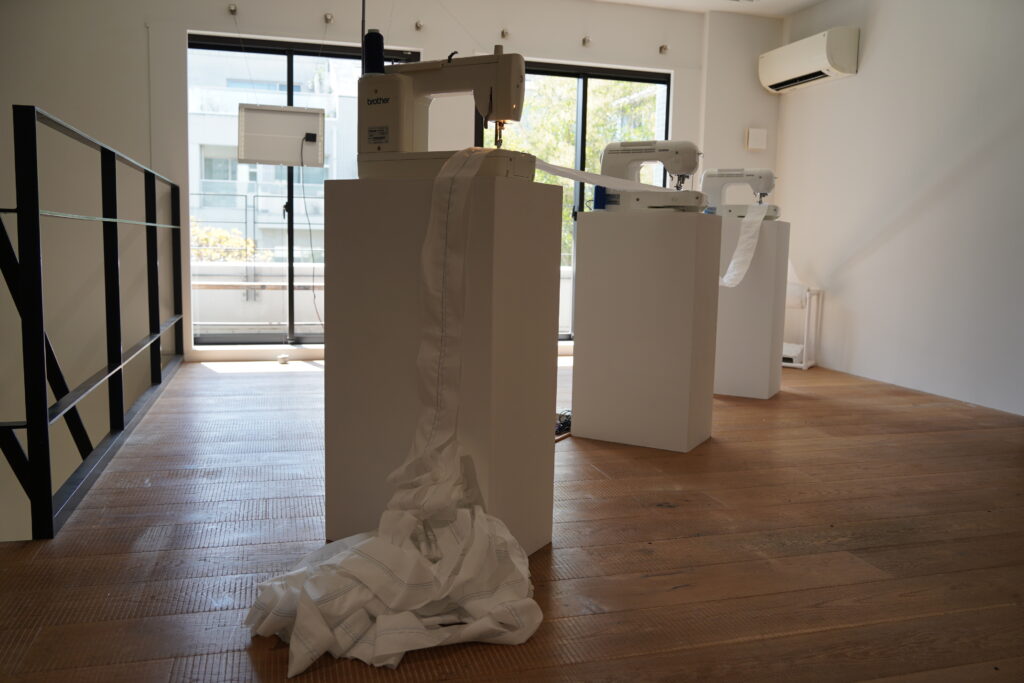
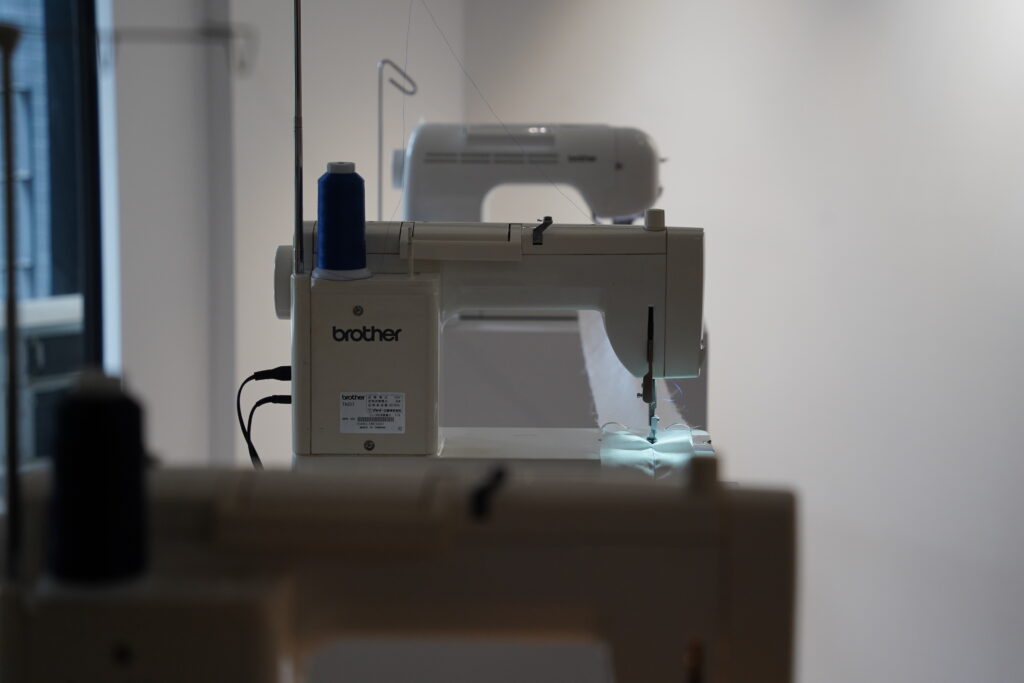
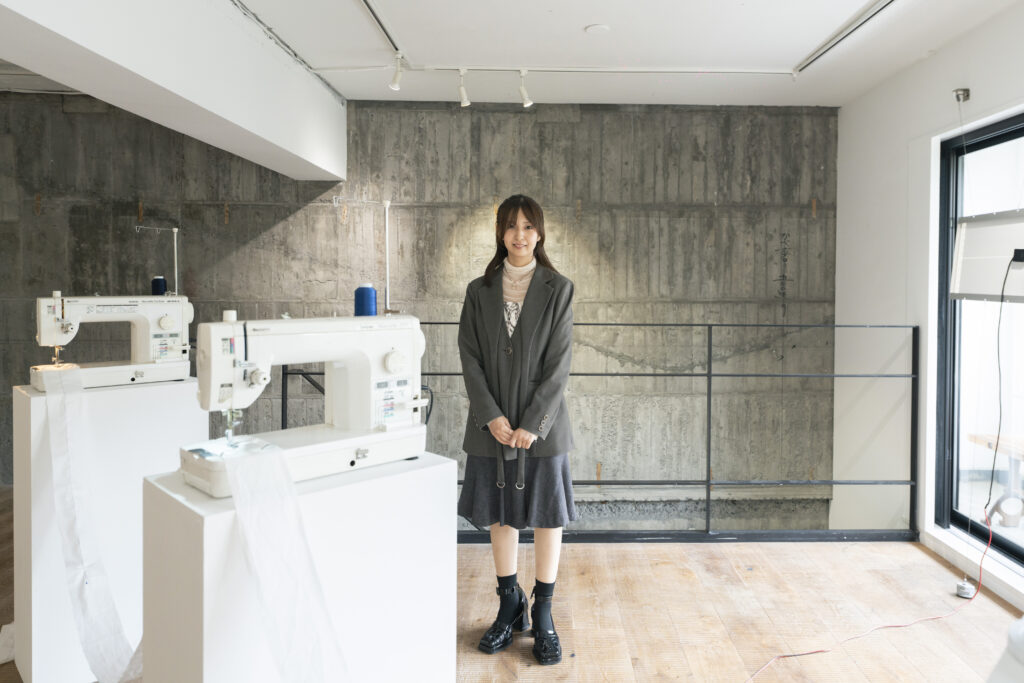
佐藤: 今回の作品は《Solar Brain 》というタイトルで、太陽光を受けるためのソーラーパネルと、3台のミシンによって構成されたインスタレーションです。
ミシンは、太陽光から得られる電力や明るさなどの数値に応じて、不規則に動いたり止まったりします。その動作を通して、時間の経過や環境の変化が布に記録されていく仕組みです。
作品をつくろうと思ったきっかけは、地元である秋田の環境でした。秋田は日照時間が少なく、曇りの日には自分自身もなかなか動けなかったり、周りの人にも活気がないように感じたりすることがあります。
もちろん、科学的な因果関係を証明したいわけではありません。ただ、光の少なさが身体や気分に何らかの影響を与えているのではないか、という実感がありました。
そうした、日々の生活の中で少しずつ蓄積されていく環境の影響を、振り返ることができる作品にしたいと思いました。
Sato: This work is titled *Solar Brain* and is an installation comprising solar panels designed to capture sunlight and three sewing machines.
The sewing machines move and stop erratically in response to measurements such as the electrical power and brightness derived from sunlight. Through this movement, the passage of time and changes in the environment are recorded on the fabric.
The inspiration for creating this work came from the environment of my home region, Akita. Akita has few hours of sunshine, and on cloudy days I sometimes find it difficult to get myself moving, and I feel that the people around me lack vitality too.
Of course, I am not trying to prove any scientific causal relationship. However, I had a real sense that the lack of light might be having some sort of effect on my body and mood.
I wanted to create a work that allows us to reflect on these environmental influences, which accumulate little by little in our daily lives.
Q. 目に見えない環境の変化を、作品として可視化しようと思ったのはなぜですか?
Q. Why did you decide to visualise invisible changes in the environment through your artwork?
佐藤: 目に見えないものって、少し怖いと思うんです。自分の身体に何が起きているのか、何が影響しているのかは、なかなかわからないですよね。
自分が暮らしてきた地域だからこそ感じられることもあると思います。何も言わなければ、その環境が当たり前のものとして受け入れられてしまうかもしれません。
地域の環境は、個人の生活だけでなく、社会的な問題にもつながる可能性があります。だからこそ、目に見えない変化を作品として見える形にし、それについて考え直すきっかけをつくりたいと思っています。
また、同じ装置でも、設置する地域によってミシンの動き方が変わる可能性があります。場所ごとの環境の違いが、作品の記録として現れてくることにも興味があります。
Sato: I think things we cannot see are a little frightening. It’s not always easy to know what’s happening to our own bodies or what’s affecting them, is it?
I believe there are things one can only sense because of the area in which one has lived. If we say nothing, that environment might simply be accepted as the norm.
The local environment has the potential to affect not only individual lives but also broader social issues. That is precisely why I want to give visible form to these invisible changes through my work, and create an opportunity for people to reflect on them anew.
Furthermore, even with the same apparatus, the way the sewing machine moves may vary depending on the location where it is installed. I am also interested in how the differences in the local environment at each site are reflected in the work itself.

場所や人と関わることで生まれる作品をつくりたい
I want to create works that emerge from my engagement with places and people
Q. 今回、アトムアートアワードに応募したきっかけを教えてください。
Q. Could you tell us what prompted you to enter the Atom Art Award this time?
佐藤: 友人が応募していたことがきっかけで、このアワードを知りました。特に魅力を感じたのは、地方でのレジデンスプログラムです。
私は、自分の地元のような、いわゆる地方と呼ばれる場所に強い関心があります。そこで地域の人たちと関わりながら、その土地に根ざした作品をつくることに、とても意義を感じています。
作品を発表するだけではなく、制作の過程で地域の人たちと関わり、コミュニケーションが生まれることが、自分の制作意欲にもつながると思っています。
これまでは、自分の作品をつくることに意識が向いていましたが、これからは、誰かと一緒につくることや、地域との関わりの中で生まれる表現にも取り組んでみたいです。
Sato: I first learnt about this award when a friend applied for it. What particularly appealed to me was the residency programme in regional areas.
I have a keen interest in so-called ‘regional’ areas, such as my own hometown. I find it deeply meaningful to create works rooted in that land whilst engaging with the local community.
I believe that it is not merely the presentation of my work, but the interaction with local people during the creative process—and the communication that arises from it—that fuels my own creative drive.
Until now, my focus has been on creating my own work, but from now on, I would like to explore creating in collaboration with others and the forms of expression that emerge from engaging with the local community.
100年後にも残っていてほしいもの
Things I hope will still be around in 100 years’ time
Q. ご自身の活動に限らず、100年後にも残っていてほしいもの、あるいは残っていると思うものはありますか?
Q. Looking beyond your own work, is there anything you would like to see still in existence 100 years from now, or that you think will still be around?
佐藤: 私のルーツにも強く関わっている、縫うという手仕事は残っていてほしいと思います。
裁縫は、祖母から母へ、母から次の世代へというように、家庭の中で受け継がれてきた身近な技法だと思います。私自身、祖母や母から教わり、近所に友人があまりいなかった頃には、それが遊びの一つでもありました。
今は、手縫いやミシンを使う機会が少なくなっているかもしれません。それでも、誰かが必ず受け継いでいるものだと思うし、私自身も残ってほしいと願っています。
手仕事は、もっと貴重なものになり、価値のあるものとして求められるようになるかもしれません。そうなってほしいと思います。
私にとって、縫うことは食べることや眠ることと同じくらい、生活の一部になっています。単に何かを実用的につくるための技法というだけではなく、自分の身体感覚や生活感覚を投影できる、自分自身に近い表現方法でもあります。
布を身体のメタファーとして捉えることもありますし、縫うという行為を通して、自分の感情を作品に込めています。手仕事が持つ歴史や、誰かから誰かへ受け継がれていく営みそのものも、100年後に残っていてほしいものの一つです。
Sato: I hope that the craft of sewing—which is so deeply connected to my own roots—will live on.
I believe sewing is a familiar skill that has been passed down within families, from grandmother to mother, and from mother to the next generation. I learnt it myself from my grandmother and mother, and back when I didn’t have many friends in the neighbourhood, it was one of my pastimes.
Nowadays, there may be fewer opportunities to sew by hand or use a sewing machine. Even so, I believe there is always someone carrying on the tradition, and I, too, hope it will endure.
Handicrafts may become even more precious and come to be sought after as something of real value. I hope that will be the case.
For me, sewing has become as much a part of daily life as eating or sleeping. It is not merely a technique for making practical items; it is also a form of expression that is close to my very self, one through which I can project my physical sensations and sense of daily life.
I sometimes view fabric as a metaphor for the body, and through the act of sewing, I infuse my emotions into my work. The history of handicrafts, and the very act of passing them down from one person to the next, is something I hope will still be with us a hundred years from now.
佐藤結希乃 Yukino Sato
何でもない形を見つめ、存在そのものを捉え直す
Gazing at an ordinary shape, re-examining existence itself
Q. 今回受賞された作品のテーマについて教えてください。
Q. Could you tell us about the theme of the work that won the award this time?
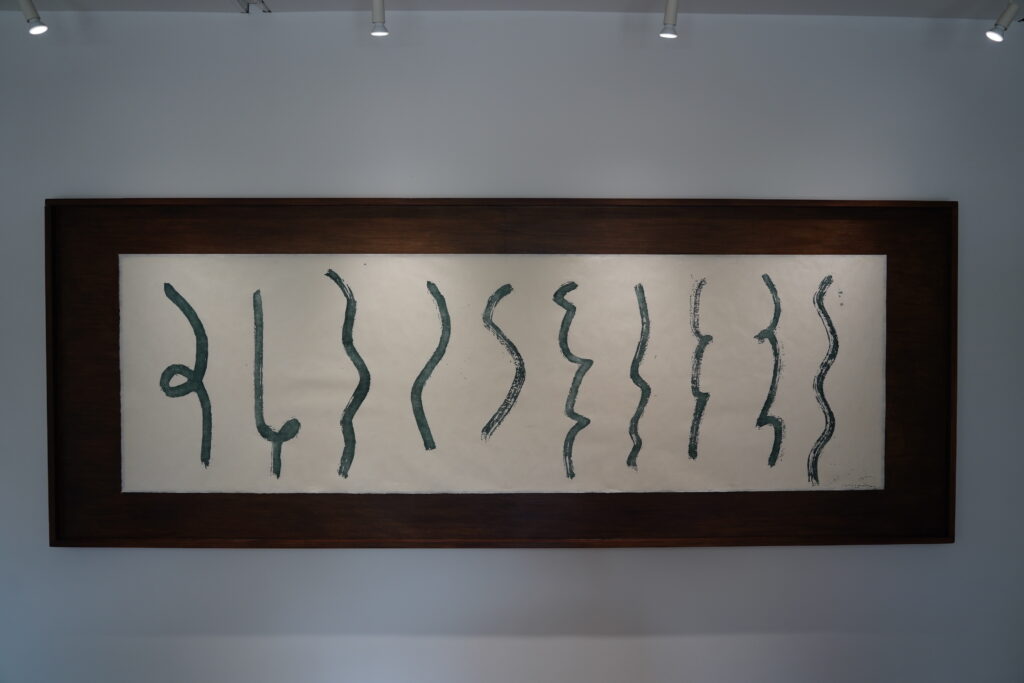
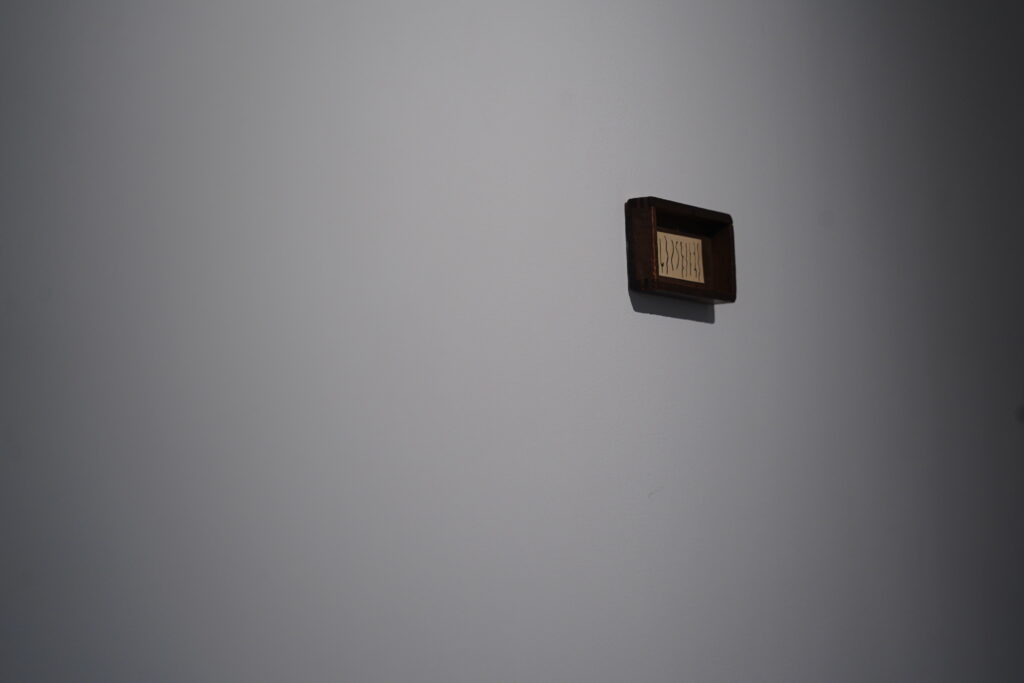
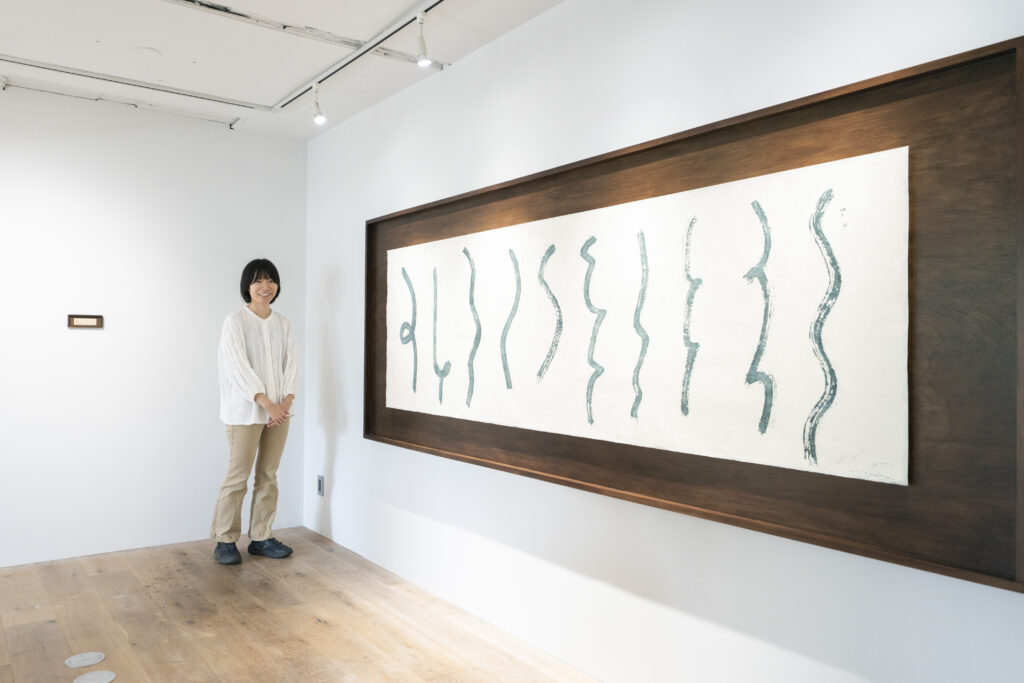
佐藤: 《試し書き》という作品で、目の前にある存在そのものを見つめることをテーマにしています。
普段、作品にしようと思って描くものではなく、何気なく紙に描かれた試し書きを大きくした作品です。何かを表現するために描かれたわけではない形を拡大してみると、意図していなかった豊かな形が現れてきました。
何かを表すためにつくられたわけでも、誰かに見られるためにつくられたわけでもない。その形を見て、存在そのものを感じました。
木版画では、彫刻刀を使って少しずつ形を捉え直しながら、版をつくっていきます。その工程自体が、私にとって存在そのものを見つめる行為になっています。見る人にも、ただそこにあるものを、ゆっくりと見つめるような感覚を持ってもらえたらと思っています。
Sato: My work *Test Drawing* explores the theme of contemplating the very essence of what exists right before one’s eyes.
These are not pieces I set out to create with a specific work in mind; rather, they are enlarged versions of casual sketches drawn on paper without a second thought. When I magnified these shapes—which were not drawn to express anything in particular—a rich array of forms emerged that I had not intended.
They were not created to represent anything, nor were they made to be seen by anyone. Looking at those shapes, I sensed existence itself.
Q. 試し書きを拡大するという発想は、どこから生まれたのでしょうか?
Q. Where did the idea of enlarging a sample piece of writing come from?
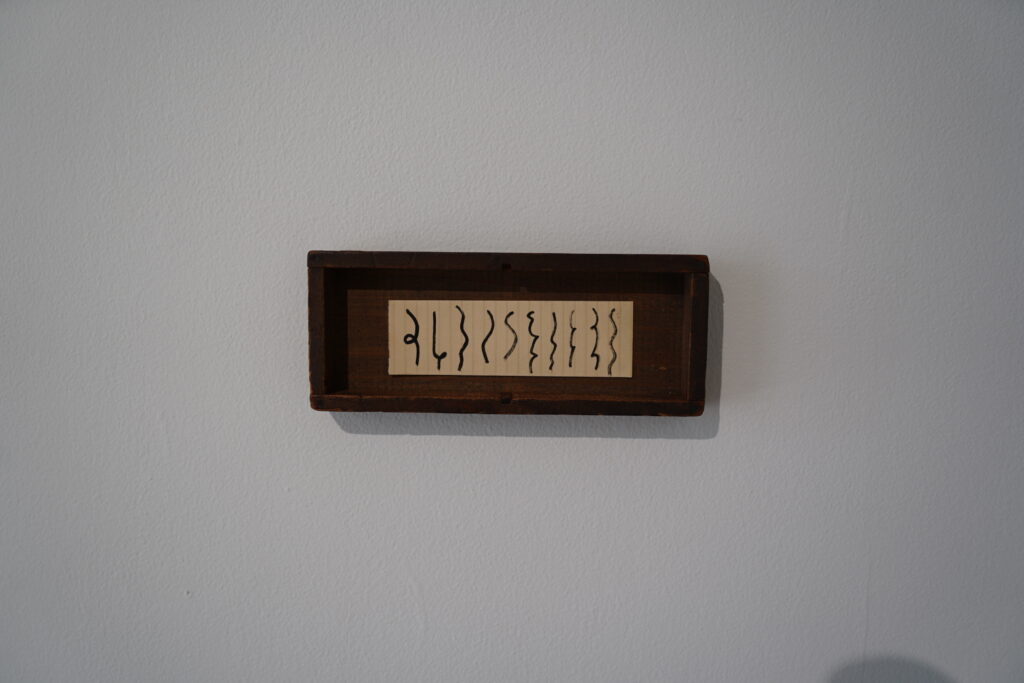
佐藤: もともとは、木版画の制作で、大きな作品をつくることがうまくできなかったのがきっかけです。大きな紙に描こうとしても、思うように線を描くことができませんでした。
そこで、小さなノートをつくり、何度失敗してもいいように、散歩中などにも気軽に描ける環境を自分でつくりました。そうして小さなものを描くようになり、そこから拡大して大きな作品をつくるという方法を考えるようになりました。
今回の《試し書き》も、最初から作品にしようと思っていたわけではありません。何気なく描かれたものを見て、これを大きくしたら面白いのではないかと思い、まずはやってみることにしました。
実際に拡大してみると、自分がつくったものなのに「なんだ、この形は」と思うくらい、意図していなかった形が現れてきました。それがとても嬉しかったです。
自分が存在そのものを見たいと思うのは、まだ十分に見られていないからなのかもしれません。拡大することで、普段は見過ごしてしまう形を捉え直すことができる。今回の制作を通して、そうした見方を足がかりに、これからも世界を捉え直していけるのではないかと感じました。
Sato: It all started because I was struggling to produce large-scale works when I was creating woodblock prints. No matter how hard I tried to draw on large sheets of paper, I couldn’t get the lines to turn out the way I wanted.
So, I made myself a small notebook and created an environment where I could draw casually—even whilst out for a walk—without worrying about how many times I might fail. That’s how I began drawing small pieces, and from there I started to think of a method where I could enlarge them to create larger works.
Even with this piece, *Test Drawing*, I didn’t intend it to be a work of art from the outset. I happened to glance at something I’d drawn casually and thought it might be interesting to enlarge it, so I decided to give it a go.
When I actually enlarged it, shapes emerged that I hadn’t intended—to the point where, even though I’d created it myself, I found myself thinking, ‘What on earth is this shape?’ I was delighted by that.
Perhaps the reason I want to see existence itself is that I haven’t yet seen it fully. By enlarging things, I can re-examine shapes that I would normally overlook. Through this creative process, I felt that, using this perspective as a starting point, I might be able to continue re-examining the world from now on.
場所が変われば、作品の見え方も変わる
When the setting changes, so does the way the artwork is perceived
Q. 今回、アトムアートアワードに応募したきっかけを教えてください。
Q. Could you tell us what prompted you to enter the Atom Art Award this time?
佐藤: 大学の友人が以前このアワードを受賞していて、その方から教えていただいたことがきっかけです。特に、レジデンスでの滞在制作に興味がありました。
自分の作品と、その場所や人がどう関わっていくのかを知りたいと思っていた時期だったので、とても魅力的なプログラムだと感じました。
私は、散歩をしながら風景に感化された形をノートに描いたり、壁や床の凹凸に紙を当てて鉛筆などで形を写し取る「フロッタージュ」という技法を試したりしています。
その場所にあるものを、そのまま捉えるような制作がとても楽しいんです。
同じ場所であっても、訪れた時期や、そこで出会う人、そこで起きた出来事によって、見え方や捉え方は変わると思います。いろいろな場所に行くことで、新しい視点を得られるのではないかと期待しています。
また、同じ作品でも、展示する場所によって見え方が変わることにも興味があります。場所と作品の関係を、これからもっと考えていきたいです。
Sato: A friend from university had previously won this award, and it was through them that I first heard about it. I was particularly interested in the opportunity to create work whilst in residence.
It was a time when I was keen to explore how my work might interact with a particular place and the people there, so I found the programme very appealing.
I often sketch shapes inspired by the landscape whilst out walking, or try a technique called ‘frottage’, where I press paper against the uneven surfaces of walls or floors and trace the shapes with a pencil or similar.
I really enjoy creating work that captures the essence of a place just as it is.
I believe that even in the same place, the way I see and perceive things changes depending on the time of year I visit, the people I meet there, and the events that take place. I hope that by visiting various places, I will be able to gain new perspectives.
I am also interested in how the same artwork can appear differently depending on where it is exhibited. I would like to explore the relationship between place and artwork further in the future.
100年後にも残っていてほしいもの
Things I hope will still be around in 100 years’ time
Q. ご自身の活動に限らず、100年後にも残っていてほしいもの、あるいは残っていると思うものはありますか?
Q. Looking beyond your own work, is there anything you would like to see still in existence 100 years from now, or that you think will still be around?
佐藤: 人々がつながる文化が残っていてほしいと思います。
私は11月3日の文化の日がとても好きなんです。文化の日は、日本国憲法が公布された1946年11月3日に由来しています。個人が主体となり、一人ひとりが文化を享受できるという考え方に、希望を感じます。
美術をやっていると、一人ひとりがそれぞれの存在として認められることや、個人が何かを表現できることが、とても大切だと感じます。
自分の制作と、そうした文化のあり方をまだうまく結びつけられているわけではありません。でも、自分が何かをつくり、表現していることにも、きっと意味があると思っています。
何か特別なことを成し遂げるだけではなく、そこに存在していること自体にも意味がある。そうした文化が、100年後にも残っていてほしいです。
Sato: I hope that a culture in which people connect with one another will endure.
I am very fond of Culture Day on 3 November. Culture Day originates from 3 November 1946, the date on which the Constitution of Japan was promulgated. I find hope in the idea that the individual takes centre stage and that each person can enjoy culture in their own way.
As an artist, I feel it is very important for each person to be recognised as an individual in their own right, and for individuals to be able to express themselves.
I haven’t yet managed to successfully link my own creative work with that kind of cultural ethos. However, I do believe that there is certainly meaning in the very act of creating and expressing myself.
It’s not just about achieving something special; there is meaning in simply being there. I hope that such a culture will still be with us 100 years from now.
武井織る子 Oruko Takei
縫う時間を積み重ね、身体の記録をつくる
Building up hours of sewing to create a record of the body
Q. 今回受賞された作品のテーマについて教えてください。
Q. Could you tell us about the theme of the work that won the award this time?
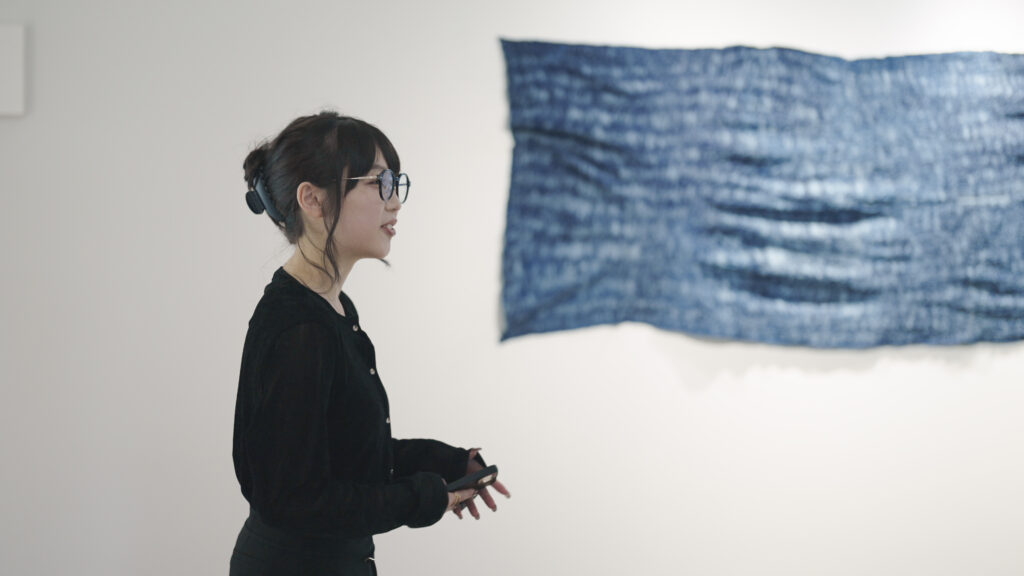
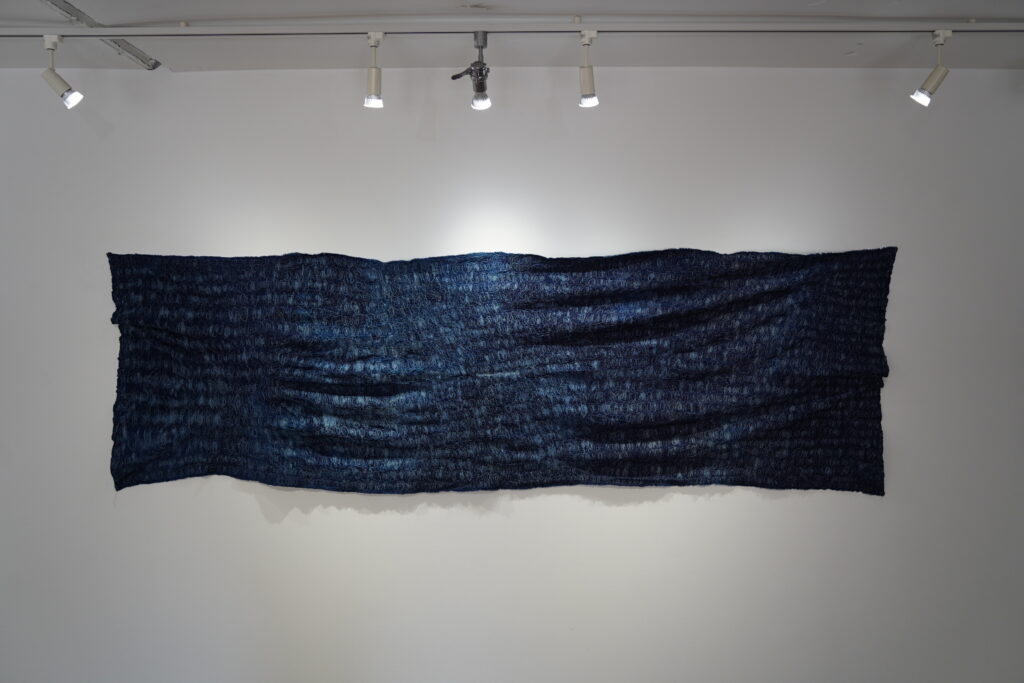
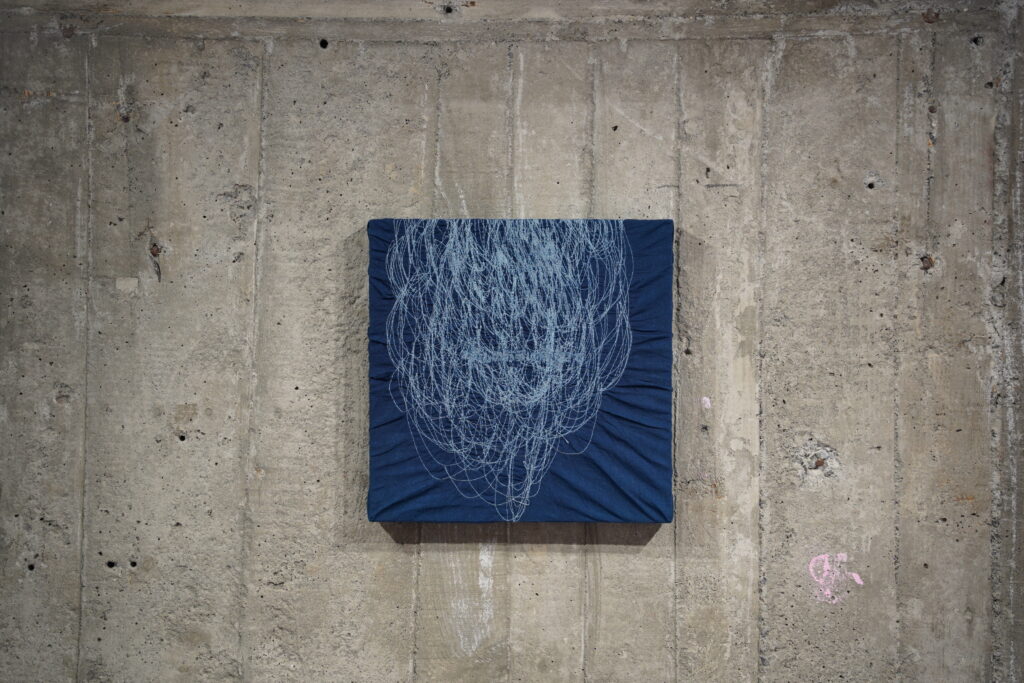
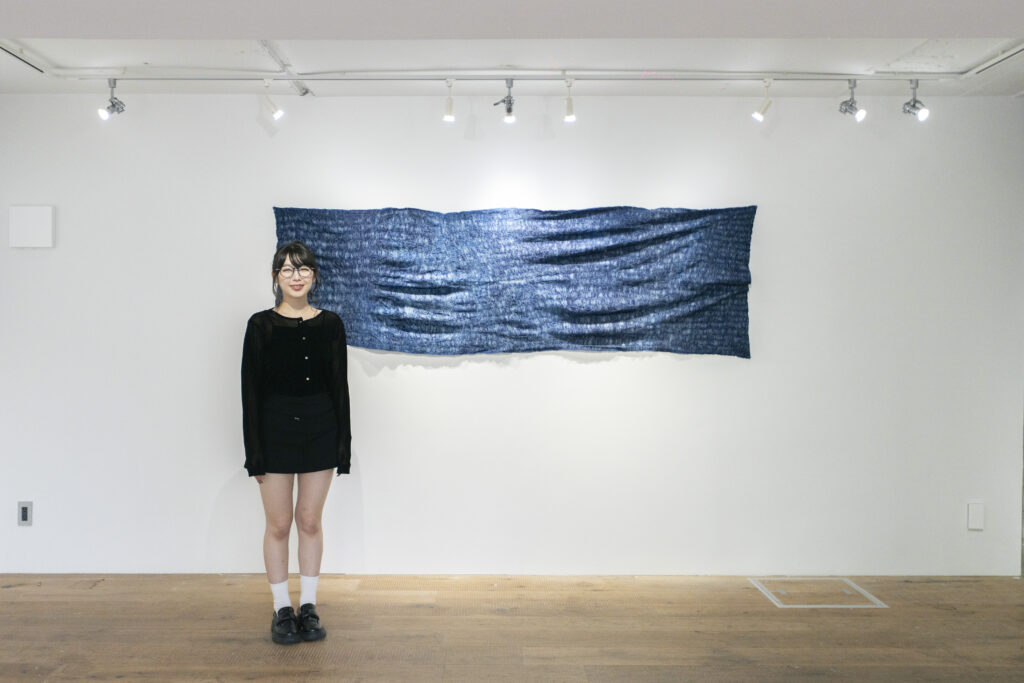
武井: フリーモーション刺繍を使って、自分の身体の記録をつくっています。
ミシンで長い時間、ずっと縫い続けていると、そのときの体調や気持ちが形に現れると思うんです。楽しいときもあれば、落ち込んでいるときもある。そうしたものが全部、作品の中に記録されていると感じています。
刺繍自体は大学2年生の夏頃から取り入れ始めましたが、今回のように刺繍そのものを作品の中心に据えたのは、大学3年生になってからです。
それまでは、もう少し構成やつくり方を考えながら制作していました。でも今回は、そうしたことをできるだけ削ぎ落として、ただぐるぐると縫い続けることをしたいと思いました。
白い布に白い糸で縫い、ミシンも部屋の壁も白い。目の前がすべて白い状態で、1日6〜7時間、毎日縫い続けていました。ぼーっとできるから楽なところもありますが、同時に、気が狂いそうになるような感覚もあります。
何かを考えるというより、心を無にして整える時間というか、写経に近い感覚かもしれません。
Takei: I use free-motion embroidery to create a record of my own body.
I feel that when I spend a long time sewing continuously on the machine, my physical condition and state of mind at that moment are reflected in the work. Sometimes I’m happy, and other times I’m feeling down. I feel that all of these things are recorded within the work.
I started incorporating embroidery around the summer of my second year at university, but it wasn’t until my third year that I began to place the embroidery itself at the centre of my work, as I have done here.
Up until then, I’d been creating whilst giving more thought to composition and technique. This time, however, I wanted to strip those elements down as much as possible and simply keep sewing round and round.
I sewed with white thread on white fabric; the sewing machine and the walls of my room were all white too. With everything in front of me a sea of white, I sewed for six to seven hours a day, every day. Whilst it’s relaxing in a way because I can just zone out, at the same time, it gives me a feeling as if I might go mad.
Rather than thinking about anything in particular, it’s a time to clear my mind and find inner calm—perhaps a sensation similar to copying sutras.
Q. 白い糸で縫ったあとに染めるという工程には、どのような意図があるのでしょうか?
Q. What is the purpose of the process of sewing with white thread and then dyeing the fabric?
武井: 最初は、色のついた糸で縫うことも考えました。でも、糸に色がついていると、どうしても線がはっきり見えてしまいます。そうすると「ここはもっと密度を上げたい」とか「ここはもう少しこうしたい」とか、細かいことが気になってしまうんです。
そうではなくて、できるだけ意識を向けずに縫い続けたかった。白い布に白い糸で縫えば、自分でもどこを縫っているのか、どれくらい縫えているのか、わからなくなるような状態になります。
そして、縫い終わってから布を染めると、それまで自分が積み重ねてきた時間が、初めて目に見える形で浮かび上がってきます。
染めた布を引き上げた瞬間が、一番好きです。その瞬間は自分にしか見ることができないので、少し特別な時間でもあります。
これからは、もっと大きな作品にも取り組んでみたいです。大きな作品が好きですし、縫う時間をもっと積み重ねていきたいと思っています。
Takei: At first, I did consider sewing with coloured thread. But when the thread is coloured, the lines inevitably stand out clearly. When that happens, I find myself getting hung up on the finer details—thinking things like, ‘I want to increase the density here’ or ‘I’d like to tweak this bit a little more’.
Instead, I wanted to keep sewing without focusing on it as much as possible. If I sew with white thread on white fabric, I reach a state where even I can’t tell where I’m sewing or how much I’ve done.
And when I dye the fabric after I’ve finished sewing, the time I’ve spent building it up gradually only then emerges in a visible form.
My favourite moment is when I pull the dyed fabric out of the dye bath. As that moment is something only I can witness, it’s also a rather special time.
Going forward, I’d like to try my hand at larger works. I love large pieces, and I want to continue accumulating more time spent sewing.
自分の内側から、社会や人との関わりへ
From within oneself, to one’s relationship with society and others
Q. 今回、アトムアートアワードに応募したきっかけを教えてください。
Q. Could you tell us what prompted you to enter the Atom Art Award this time?
武井: 同じ大学の先輩がInstagramに投稿していたことがきっかけで、このアワードを知りました。ホームページを見て、こんなプログラムがあるんだと思いましたし、特にレジデンスが楽しそうだと感じました。
私は普段、一人で制作することが多く、人と一緒に何かをつくる経験がほとんどありません。大変そうだとは思いますが、だからこそやってみたいと思いました。
これまでは、自分の気持ちや内面に目を向けながら作品をつくってきました。でも、これから生きていく中では、もっと社会とつながっていく必要もあると思っています。人と関わることで何かを生み出すことにも挑戦してみたいんです。
自分一人ではなかなか踏み出せないことでも、こうした機会があるならやってみたい。普段とは違う環境に身を置き、人と関わりながら制作することで、自分の中にも新しい変化が生まれたらいいなと思っています。
Takei: I first found out about this award after seeing a post on Instagram by a senior student from my university. When I looked at the website, I realised there was a programme like this, and I thought the residency in particular looked like great fun.
I usually work on my own, so I’ve hardly ever had the experience of creating something with others. I imagine it will be challenging, but that’s precisely why I want to give it a go.
Up until now, I’ve created my work whilst focusing on my own feelings and inner world. However, as I move forward in life, I feel I also need to connect more with society. I’d like to try my hand at creating something through interaction with others.
Even if it’s something I’d find hard to take the first step towards on my own, I’d like to give it a go if an opportunity like this arises. I hope that by placing myself in an environment different from my usual one and creating whilst interacting with others, I’ll experience some new changes within myself.
100年後にも残っていてほしいもの
Things I hope will still be around in 100 years’ time
Q. ご自身の活動に限らず、100年後にも残っていてほしいもの、あるいは残っていると思うものはありますか?
Q. Looking beyond your own work, is there anything you would like to see still in existence 100 years from now, or that you think will still be around?
武井: 食べ物です。おいしい食べ物とお酒が好きなので(笑)。ビールとお肉があればいいですね。
制作しているときも、毎日家で一人、ご飯とお酒を楽しみに学校へ行っています。旅行も好きなのですが、土地ごとのおいしいものや、その地域のお酒も好きです。
その土地に行かないと味わえないものがあるのって、いいですよね。100年後も、そういうおいしい食べ物や、その土地ならではの楽しみが残っていてほしいです。
Takei: Food. I love good food and drink (laughs). As long as I’ve got beer and meat, I’m happy.
Even whilst I’m working on a project, I look forward to my meal and a drink every day at home before heading off to school. I love travelling too, and I enjoy trying the local specialities and regional drinks wherever I go.
It’s lovely that there are things you can only experience by visiting a particular place, isn’t it? I hope that even 100 years from now, such delicious food and the unique pleasures of each region will still be around.
Interviewer:Satoko Kubota