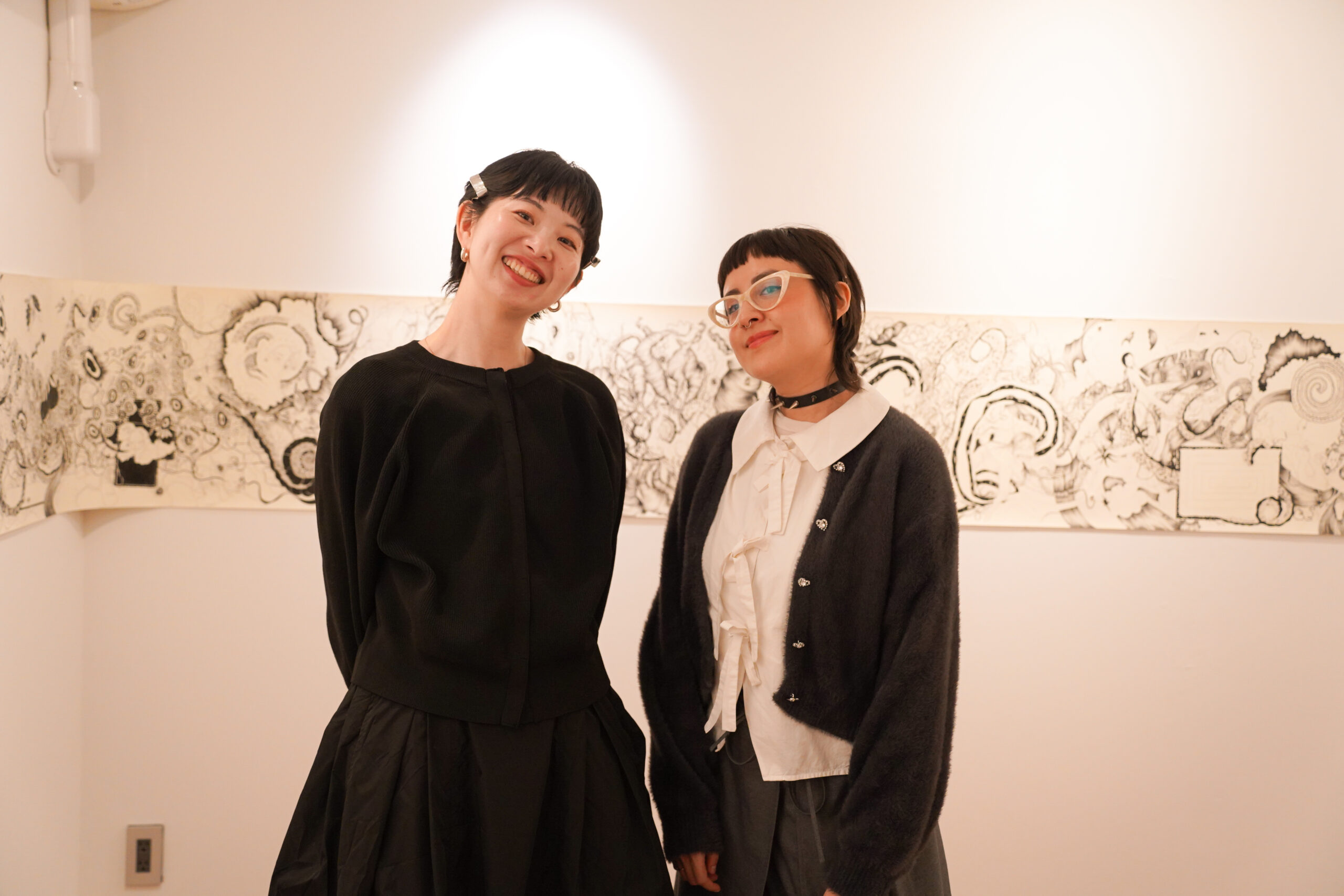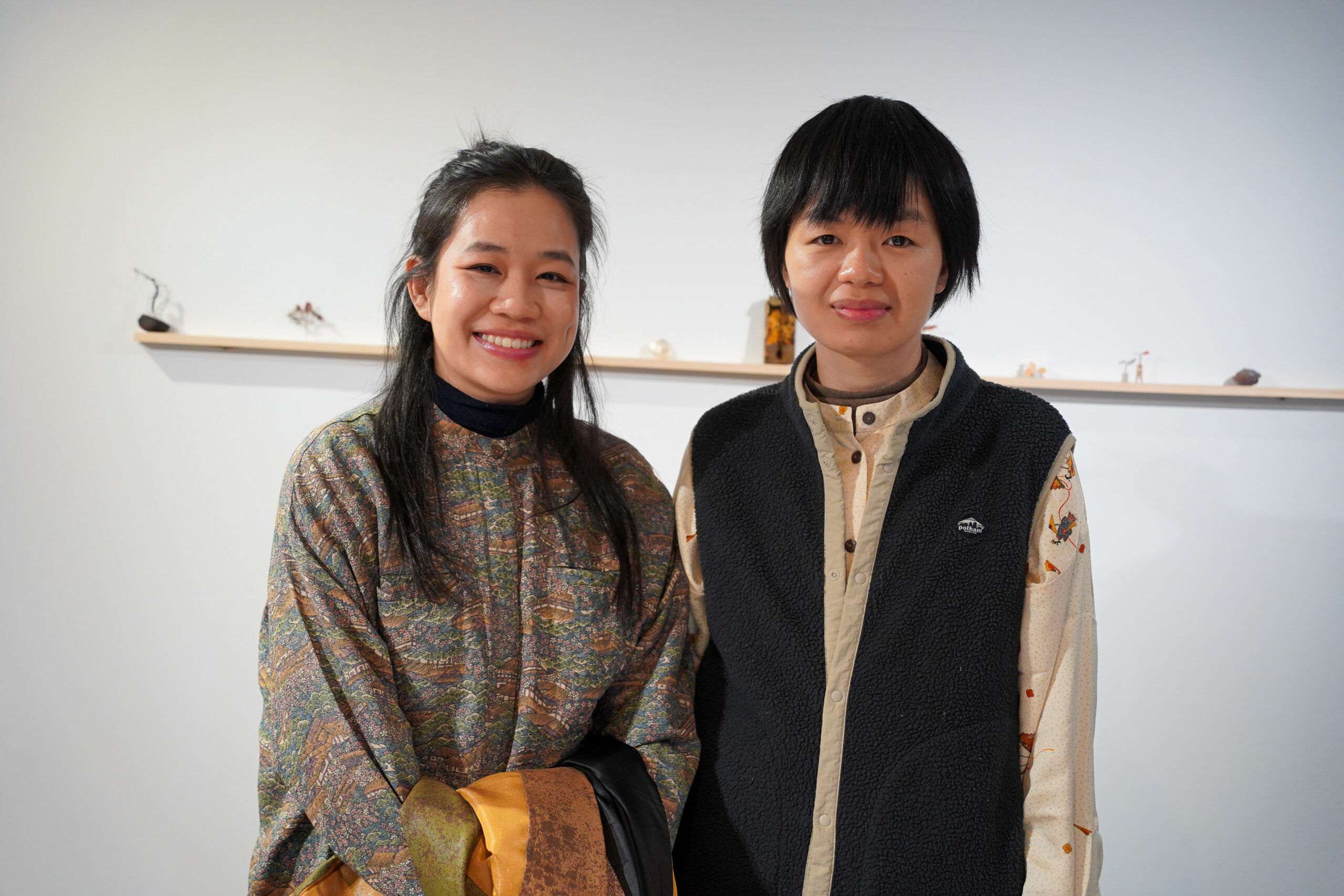
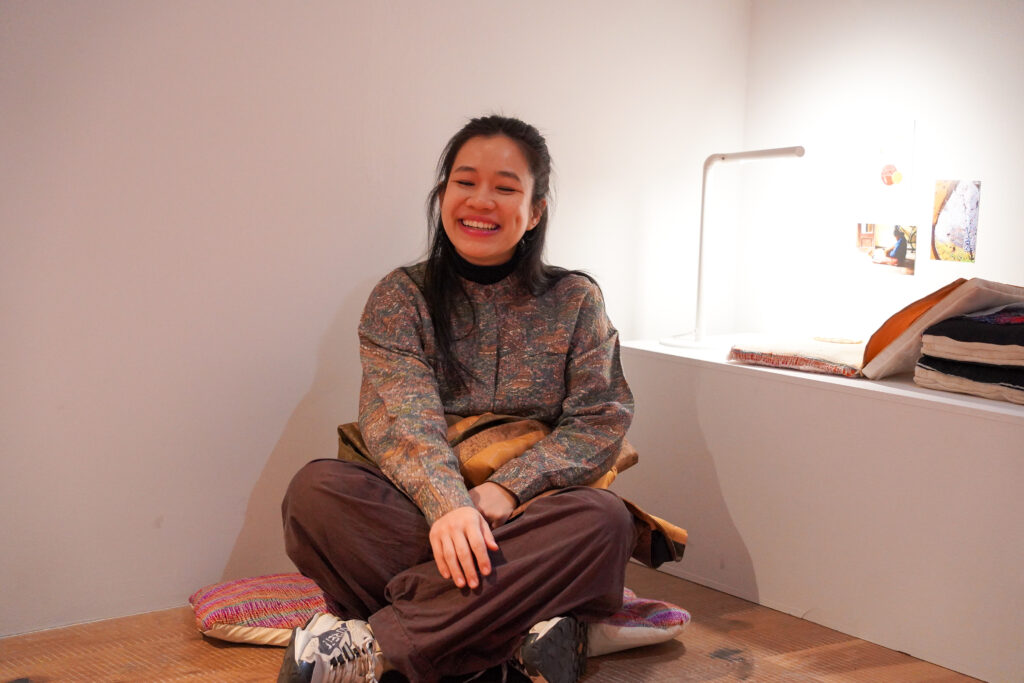
今回は、2025年に富山県で開催したアーティスト・イン・レジデンスの企画をきっかけに実現することになった日本での初個展を開催するTrần Thảo Miênさんと、AiRViNe (Artist-in-Residence Vietnam Network)代表Nguyễn Vũ Tú Hằngさんにインタビューをしました。
アートの道に進んだきっかけやAIR活動などを伺いました。
アーティスト:Trần Thảo Miênへのインタビュー
Q: これまでのキャリアについて教えてください。
Please tell us about your career to date.
A: ロンドンでファッション・テクノロジーを学んだ後、ロンドンやハノイのファッション業界で働いていました。ロンドン・ファッション・ウィークのデザイナーブランドや、当時のベトナムのユニクロのような大規模なアパレル企業での経験があります。
After studying fashion technology in London, I worked in the fashion industry in both London and Hanoi. My experience includes working with designer brands at London Fashion Week and large-scale apparel companies in Vietnam, such as what was then the Vietnamese equivalent of UNIQLO.
Q:なぜファッション業界からアートの道へ転身したのですか?
Why did you switch from the fashion industry to the art world?
A: 大量生産の裏側にある「無駄」を目の当たりにしたことがきっかけです。ある工場では、保管コストを抑えるために、1日に150kgもの新品の糸を焼却処分していました。大量発注した方が安上がりなため、例えば800kg必要なのに1000kg注文し、余った分は保管コストを嫌って燃やしてしまうのです。
私はたまらずトラックを呼び、燃やされるはずだった糸を自宅へ運び込みました。その糸を使って作品を作り続けていますが、10年経った今でもまだ使い切れていません。中規模の工場ですらこれほどの無駄がある現実に耐えられず、ファッション業界を離れる決意をしました。
ファッション業界を辞めた後、24歳だった私は、自分がまだ「失敗しても大丈夫な若さ」だと思い、3年間ほどフリーランスをしながら一人旅をしていました。3ヶ月旅をしては戻るという生活を繰り返していましたが、ただ各地を見て回るだけでは物事が「深く」見えてこないと感じ、旅を止めてテキスタイル(織物)の表現に向き合うことにしたのです。その頃、大学の卒業制作を見たキュレーターから「ベトナムではテキスタイルを媒体とするアーティストが少ないから、挑戦してみないか」と励まされたことが転機となりました。
My awareness began when I witnessed the “waste” behind mass production at a company where I used to work. At a medium-sized knitting factory, they once incinerated about 150 kilograms of brand-new thread in a single day simply to reduce storage costs. Because bulk orders were cheaper, the factory would purchase 1,000 kilograms even when only 800 were needed, and the surplus was burned rather than stored.
That experience made me realize that no matter how much effort I put into using sustainable materials or achieving a zero-waste process, the deeper issue was the mindset of consumerism itself. The problem was not only production, but how society values consumption.
I eventually left the fashion industry, although I still love textiles. In my mid-twenties, feeling somewhat lost, I spent three years traveling alone in search of answers. I lived in a cycle: three months of slow travel followed by three months of freelance work. Toward the end of this journey, I stayed on a tiny island called Kapalutan in Sulawesi, Indonesia. There, we actually lived what could be called a true zero-waste life — catching fish for each meal with a handmade spear, drinking fresh water from the ground, and living without electricity or internet.
One day, while sailing between two islands, a large wave hit our small wooden boat. The boatman calmly told us to be ready to swim back to shore because, in recent years, the waves had grown stronger and these handmade boats were easily overturned. At that moment I understood something very clearly: the everyday lives of people in cities — including my former coworkers, friends, and family — were probably contributing to the disappearance of these ways of living. I decided to return and use art as a way to express this realization. That was my turning point.
Q: 今回のコートヤードHIROOでの展示作品のテーマは何ですか?
What is the theme of the works exhibited at Courtyard HIROO this time?
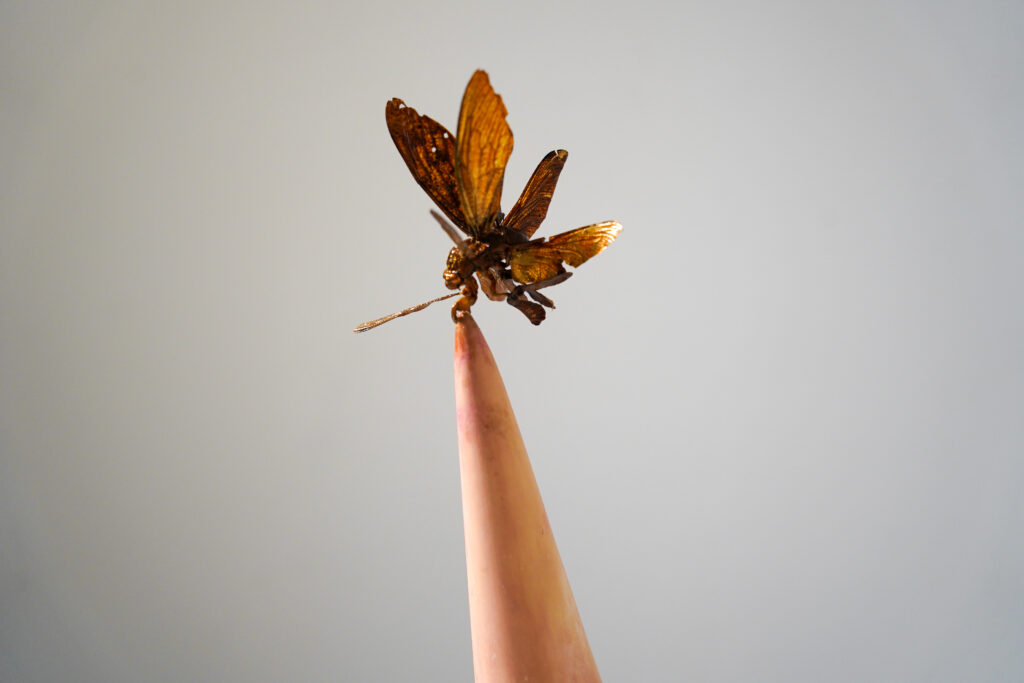
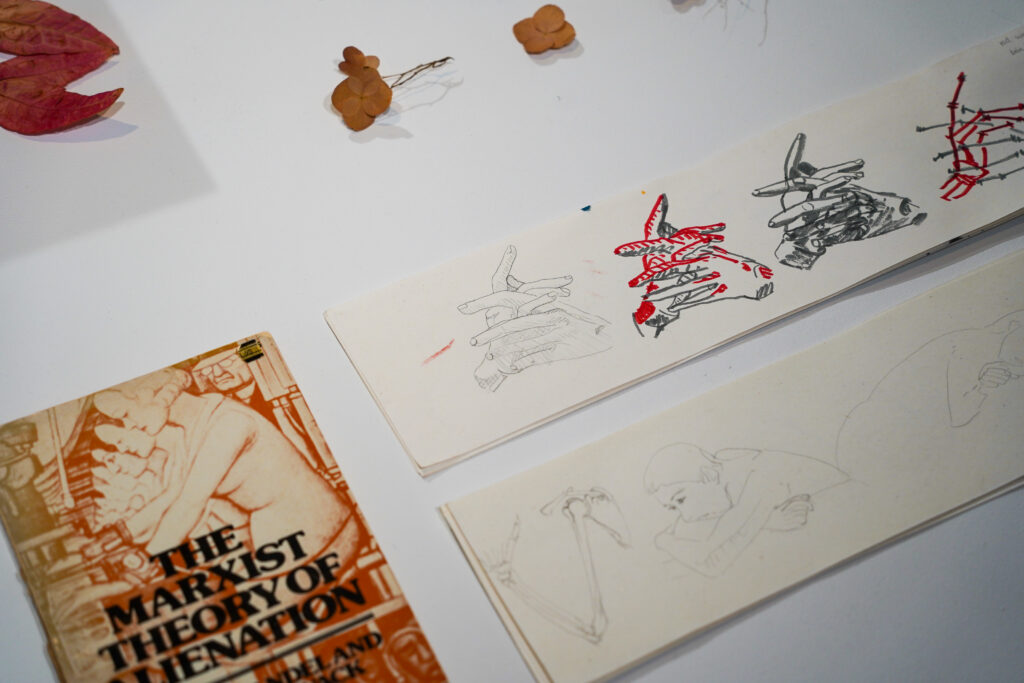
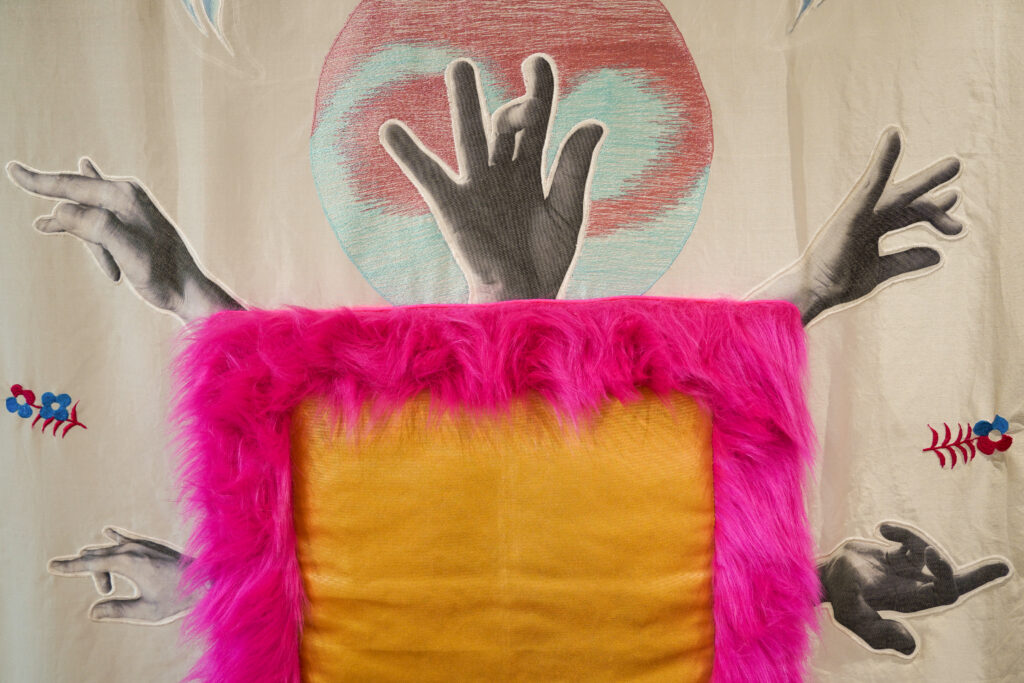
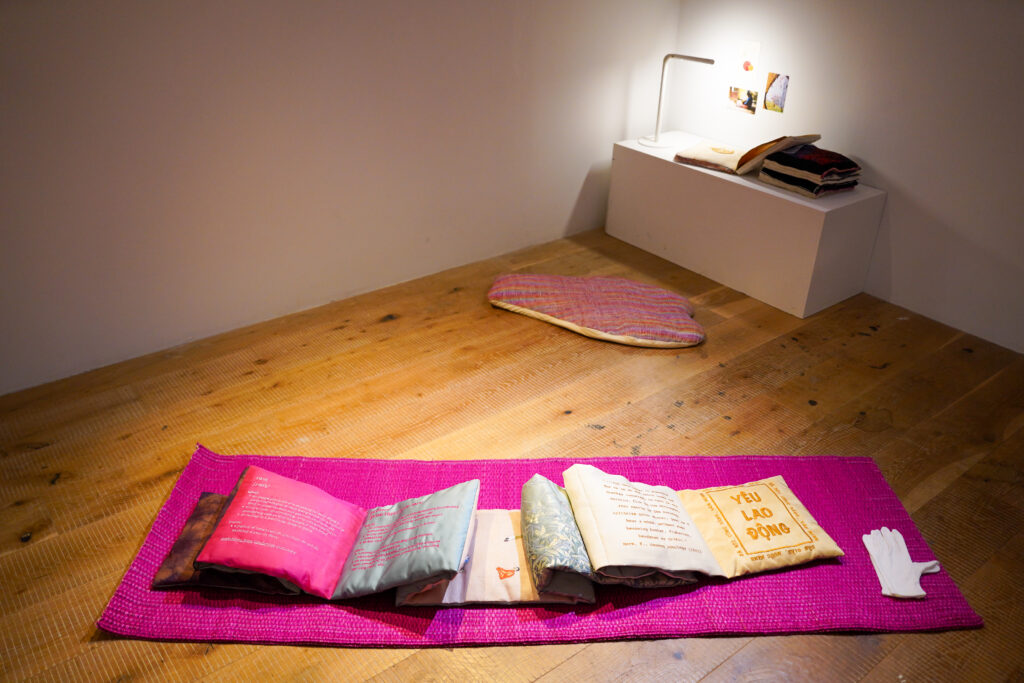
A: ドイツの哲学者カール・マルクスの「疎外された労働(Alienated Labor)」という概念に着想を得ています。
私たちは情熱を持ってアートや創作を始めますが、競争や需要、自己アピールの必要性に追われるうちに、いつの間にか自分自身が「人間が必要とするものを生み出す機械」のように感じられてしまいます。
仕事に時間を売り渡し、自分自身や自分の時間から疎外されていく感覚――これはアート業界で働く友人たちにも共通する、現代の切実な問題だと感じています。
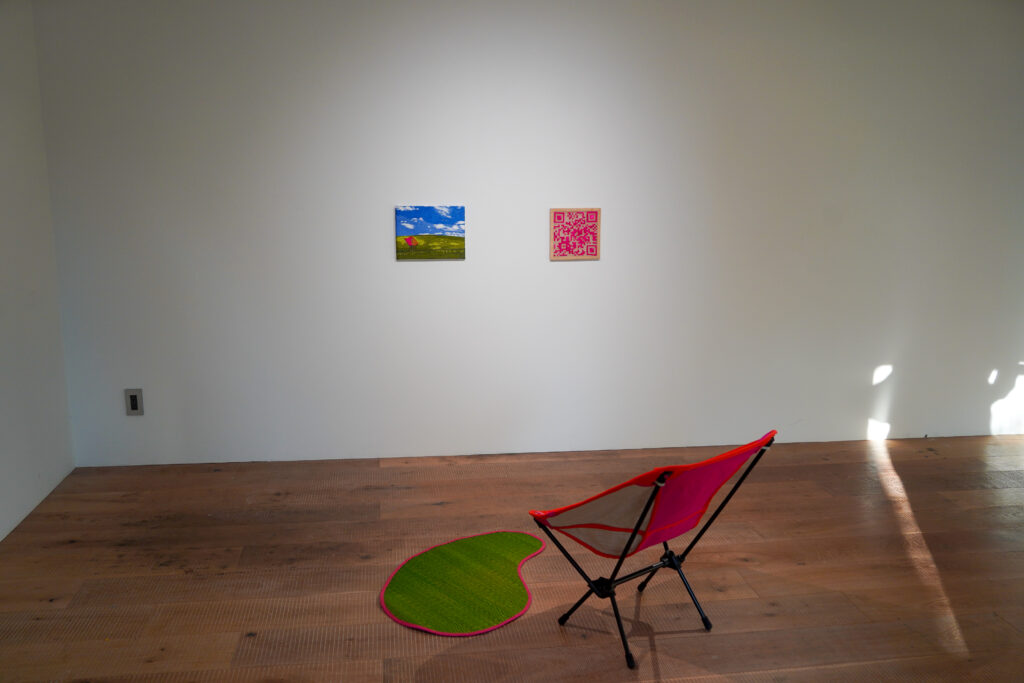
展示会場には、ただ作品を素早く眺めて通り過ぎる(スキャンする)のではなく、人々が腰を下ろして休息し、対話できるような場所を作りたいと考えました。
It draws inspiration from German philosopher Karl Marx’s concept of “Alienated Labor.”
We begin art and creation with passion, but as we get caught up in competition, demand, and the need for self-promotion, we gradually start to feel like “machines producing what humans need.”
This sense of selling our time to work and becoming alienated from ourselves and our own time—I feel this is a pressing contemporary issue, and many of my friends share the same concern — even those working in the art world.
For the exhibition space, I wanted to create a place where people could sit down, rest, and engage in conversation—not just quickly glance at the works and move on (scanning).
Q: 今後の予定を教えてください。
Please tell us about your future plans.
A: まずは、自分自身に「本当に良い休息」を与えたいと思っています。展示の後は北海道へ行き、ゆっくりと休息をとりながら、10年前に一人旅をしていた頃に出会った友人たちと再会するつもりです。
また、休息についての思索を深めるため、ドイツ在住の韓国人哲学者ハン・ビョンチョルの「不活動(Inactivity)」に関する本を読み直したいと考えています。現代人はリラックスしている時でさえ、Instagramに投稿するために何かを「活動」しなければならないという強迫観念に駆られています。
「目的地に向かって歩いているなら、それは単なる「歩行」である。しかし、もし目的地なく歩いているのであれば、それは「ダンス」である。」という言葉のように、私自身のこのアート活動も、最終的にどこへ行き着くのかはまだ分かりません。ですが、効率や成果ばかりを求める現代の「活動」から離れ、あえて目的を定めずにこのテーマを続けていきたいと考えています。
Right now, what I want most is to experience a truly good rest. Yet I am not sure how to do that, since I am currently on a six-month research trip with AiRViNe. I hope during this time I can reconnect with people I met during my solo travels ten years ago and ask them how they have learned to rest over the years.
Also, to deepen my reflection on rest, I want to reread Korean philosopher Han Byung-chul’s book on “Inactivity.” Modern people feel compelled to be “active” even when relaxing, driven by the obsession to post something on Instagram.
There is a saying:, “If you are walking toward a destination, you are walking. But if you are walking to-no-end, thus your body learn how to dance.” In the same way, I still do not know where my artistic practice will ultimately lead. What I do know is that I want to step away from the modern culture of constant activity — the pressure for efficiency and measurable results — and continue exploring this theme deliberately, without setting a fixed goal.
Q: 最後にメッセージをおねがいします。
A: Have a good rest!
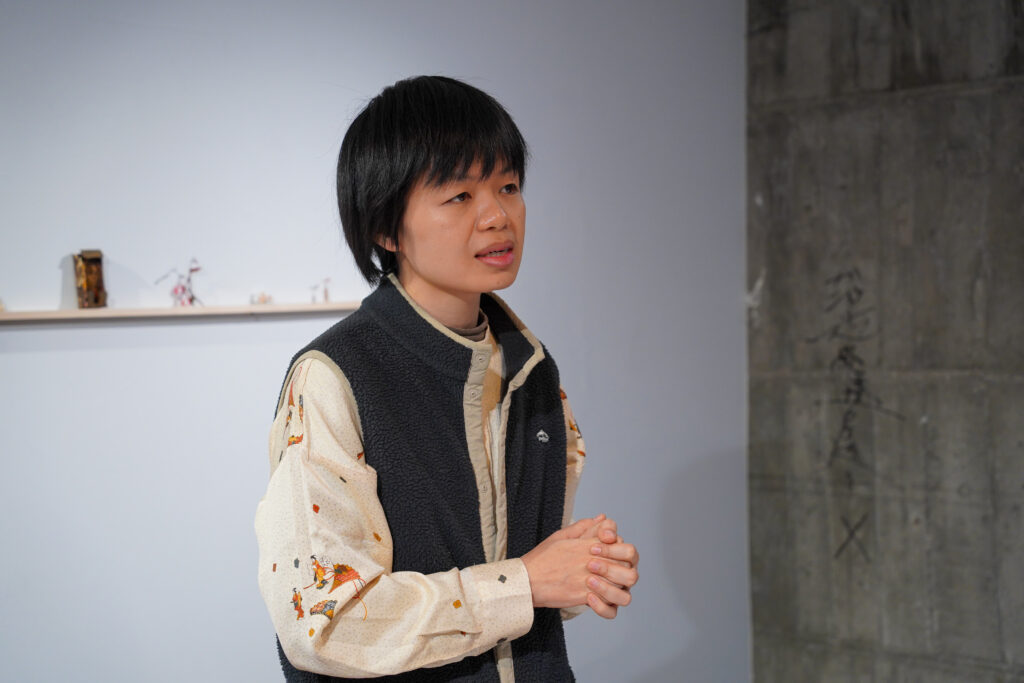
AiRViNe (Artist-in-Residence Vietnam Network)代表Nguyễn Vũ Tú Hằngへのインタビュー
Q: ご自身の活動について教えてください。
Please tell us about your activities.
A: AiRViNe (Artist-in-Residence Vietnam Network)を運営し、ベトナム国内外でのアーティスト・イン・レジデンス(滞在型制作)やベトナムのアーティストを海外へプロモートする活動を行っています。
Together with Miên, I run AiRViNe (Artist-in-Residence Vietnam Network). Our work focuses on researching artist-in-residence programs both within Vietnam and internationally, promoting Vietnamese artists abroad, and operating our own residency program.
Q: なぜその活動を始めたのですか?
Why did you start this initiative?
A:ベトナムでは、海外留学経験者などの一部のアーティストしか国外へ出る機会がありません。ベトナム語しか話せず、現地の大学で学んだ才能あるアーティストたちが、世界へつながるためのネットワークを作りたいと考えたからです。
私のもともとの専攻は国際貿易で 、長らく事務管理やマネジメントの仕事に携わってきました。かつてはベトナムにある日本の貿易会社で働いていたこともあります。組織の構造や運営に非常に興味があり、飲食業界や旅行・観光業界など、多様な分野でキャリアを積んできました。
アートへの関心は、日本への留学時代に六本木の森美術館へ通い、視覚的なイメージから仕事のインスピレーションを得ていたことが始まりです。当時は「仕事中毒(ワーカーホリック)」でしたが、稼いだお金で旅に出て、旅の途中で美術館に立ち寄ることで、静寂の中でリラックスし、再び仕事に向き合う活力を得ていました。
パンデミック中、自宅で趣味の時間を過ごす中で、ベトナム最大級のアートセンターでの仕事を得たことが転機となりました。「ベトナム国内で学び、ベトナム語しか話せない才能あるアーティスト」でも海外へ羽ばたけるよう、他国の組織とネットワークを構築したいと考えました。
In Vietnam, only certain artists—such as those with overseas study experience—have opportunities to go abroad. I want to create a network that connecting talented artists who do not speak foreign language and studied at local universities to the wider world.
My academic background is in international trade, and I have long worked in administrative management and operational roles. Earlier in my career, I worked for a Japanese trading company in Vietnam, and I have since built experience across diverse fields, including the F&B and travel industries. These experiences shaped how I approach cultural work today, particularly in terms of sustainability and organization.
My interest in art began while I was studying in Japan, where art felt much more accessible in everyday life. Whenever I went to Tokyo, I visited the Mori Art Museum in Roppongi, and I often found inspiration through visual imagery there. At the time, I was a workaholic, and I spent most of the money I earned on traveling. Visiting museums during these trips allowed me to slow down, enjoy moments of quiet, and recharge before returning to work.
During the pandemic, while spending more time at home and taking art-related courses, I was offered a position at one of Vietnam’s largest art centers. That experience became a turning point for me. After several years working in the field, I began to feel a strong desire to build networks with stakeholders outside of Vietnam, in order to better support Vietnamese artists and help them expand their practices internationally.
Q: アーティストのTrần Thảo Miên氏とはどのように協力しているのですか?
How do you collaborate with artist Trần Thảo Miên?
A: 私たちは非常に良いコンビネーションですが、スタイルは対照的です。私はビジネスのバックグラウンドがあるため、常にタイムライン(期限)を重視し、非常に速いペースで仕事を動かそうとします。対してMien氏は、よりインスピレーションや創造性を大切にするアーティストのペースで動きます 。かつてはアーティストを「予測不能な人々」だと思っていましたが、彼女と一緒に活動することで、創造性をビジネスに組み込むことが未来の生き方を変える可能性を感じ、バランスを保てるようになりました。
We make a very good combination, but our styles are contrasting. With my business background, I always prioritize timelines and deadlines, pushing to move work forward at a very fast pace. In contrast, Mien works at an artist’s pace, valuing inspiration and creativity more. I used to think artists were “unpredictable people,” but working with her has shown me how integrating creativity into business could transform future ways of living, and I’ve learned to maintain that balance.
Q: 今回の日本訪問の目的について教えてください。
What is the purpose of your visit to Japan this time?
A: 日本のレジデンス・モデルを研究するためです。ベトナムや東南アジアのレジデンス(滞在型制作施設)は、5年以上続くことが難しく、短命に終わってしまうケースが非常に多いという課題があります。一方で、日本のレジデンスを調査すると、行政主導のものだけでなく、アーティストや民間組織が自ら立ち上げ、30年以上も継続している独立系のモデルが数多く存在することを知りました 。「どうすればこれほど長く、自立して組織を運営できるのか?」というサステナビリティ(持続可能性)の秘訣を学ぶために日本へやってきました。
My current research focuses on studying Japan’s artist-in-residence models. In Vietnam—and I believe this is true for many Southeast Asian countries—residency programs face significant challenges. Many struggle to continue beyond five years and often end up being short-lived. In contrast, my research in Japan has revealed a wide range of independent residency models, not only government-led initiatives. Many of these programs were established by artists or private organizations and have been sustained for 20 to 30 years.
Q: 具体的にはどのような視点で調査しているのでしょうか?
What specific perspectives are you investigating?
A: 私は国際貿易やマネジメントのバックグラウンドを持っているので、アーティストとしての視点よりも、「組織構造」や「ビジネスモデル」の観点から調査を行っています。台湾のレジデンスの多くは政府から多額の助成金を受けて運営されていますが、日本の場合は、2年目以降も自分たちの力でどのように資金を調達し、多様なステークホルダーから協力を得ているのか、その実務的な運営手法をインタビューして回っています。現場を巡る中で、単に施設を運営するだけでなく、アートコーディネーターがいかに重要な「キープレイヤー」であるかを再認識しています。
I came to Japan to learn the foundations of this sustainability—specifically, how these organizations manage to operate independently over such long periods. Given my background in international trade and management, I approach this research from the perspectives of organizational structure and business models, rather than solely from an artist’s point of view.
While many residency programs in Taiwan rely heavily on government subsidies, in Japan we are interviewing organizers to understand the practical methods they use to secure funding beyond the second year and to build cooperation with a wide range of stakeholders. Visiting these sites has reinforced my belief that art coordinators play a crucial role—not just as facility managers, but as key cultural mediators and connectors.
Q: この日本での経験を、今後どのように活かしたいと考えていますか?
How do you plan to utilize this experience in Japan going forward?
A: 今回のリサーチ成果を地図(マッピング)のようにまとめ、「コーディネーター同士のネットワーク」を作りたいと考えています。例えば「インドネシアでプロジェクトをしたいなら、この人に連絡すればいい」と即座にわかるような繋がりがあれば、アーティストが一人ですべてを背負わずに済み、プロジェクトもより円滑に進みます。日本で学んだ知見を東南アジアに持ち帰り、将来的には東南アジアのアーティストが日本へ、日本のアーティストが東南アジアへ、より活発に行き来できるような仕組みを構築することが私のビジョンです。
I hope to compile the findings from this research into a map-like resource and to build a “network of coordinators.” For example, if someone wanted to initiate a project in Indonesia, there could be a clear contact point—someone who understands the local context and can support the process. This would reduce the burden placed on artists and allow projects to develop more smoothly.
My long-term vision is to bring the knowledge gained in Japan back to Southeast Asia and to gradually build a system that enables Southeast Asian artists to work in Japan, and Japanese artists to engage more actively with Southeast Asia.
Interviewer : Satoko Kubota