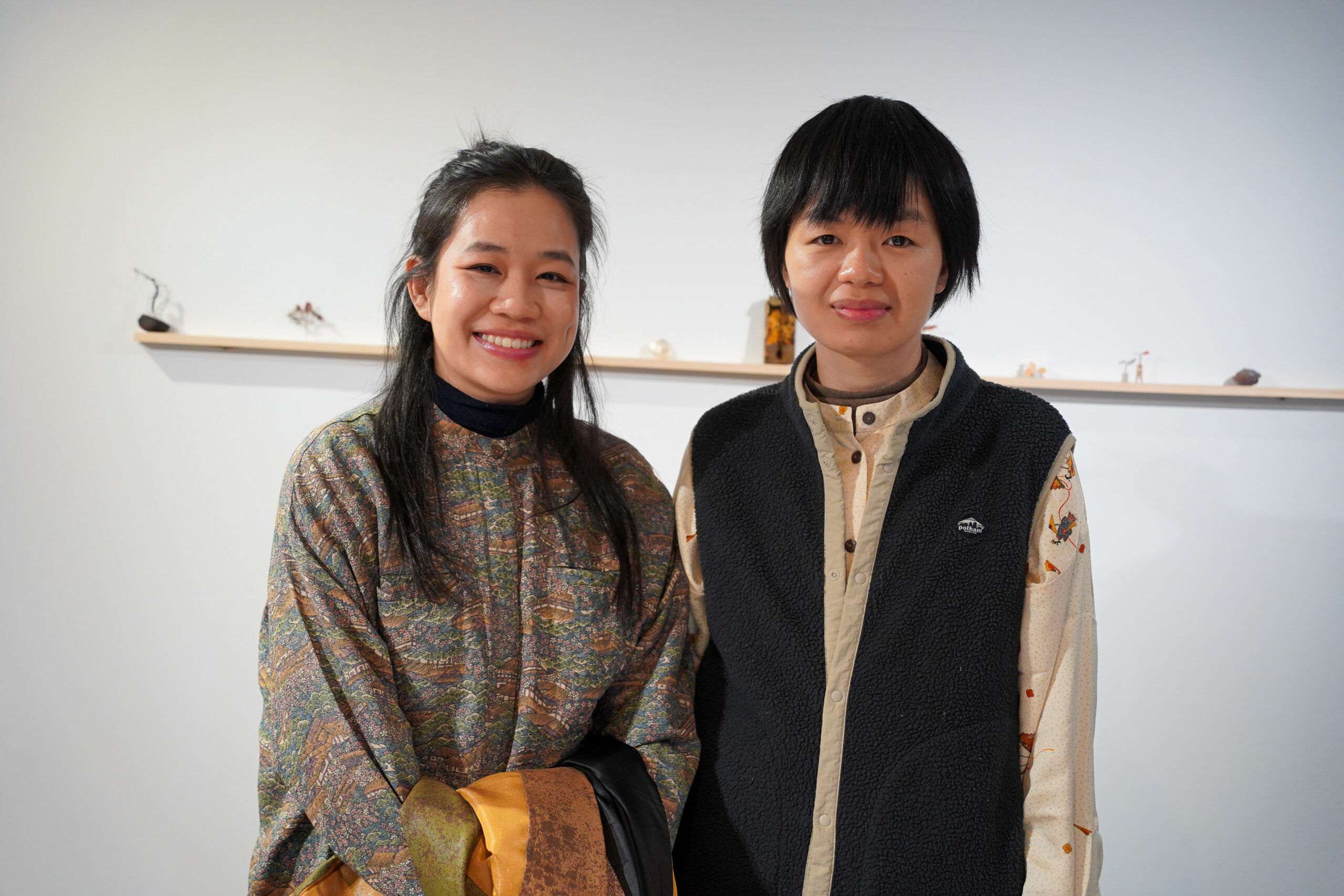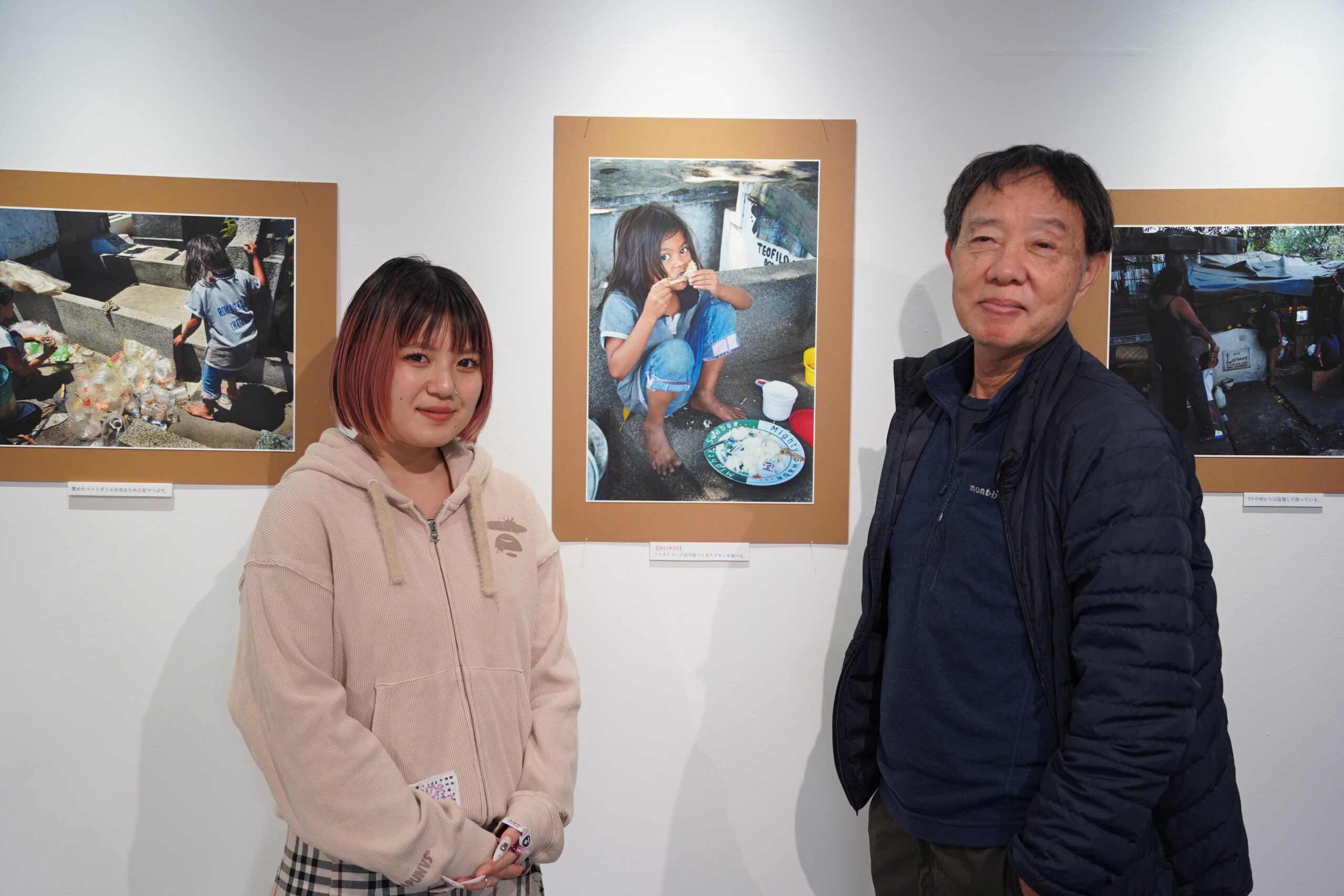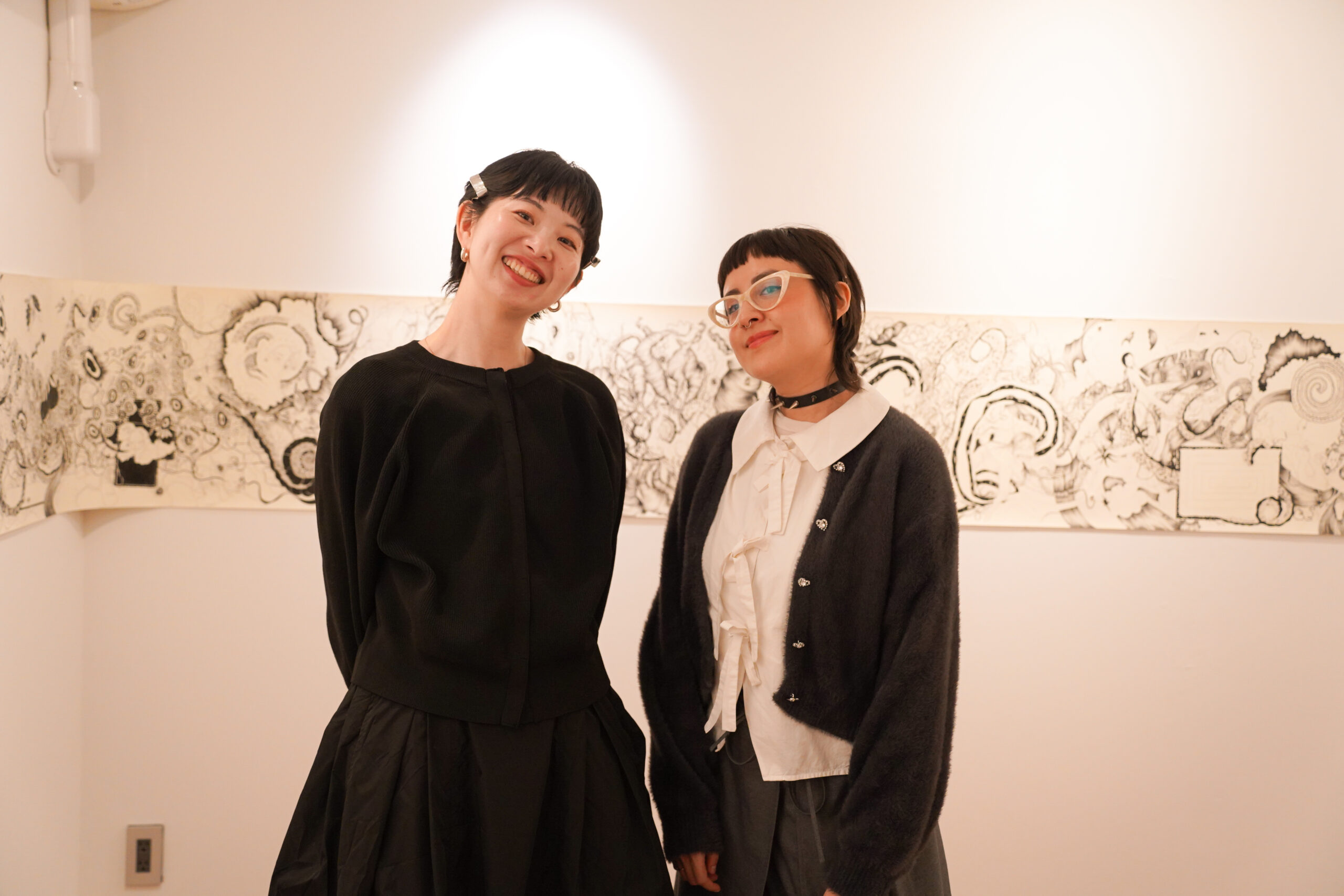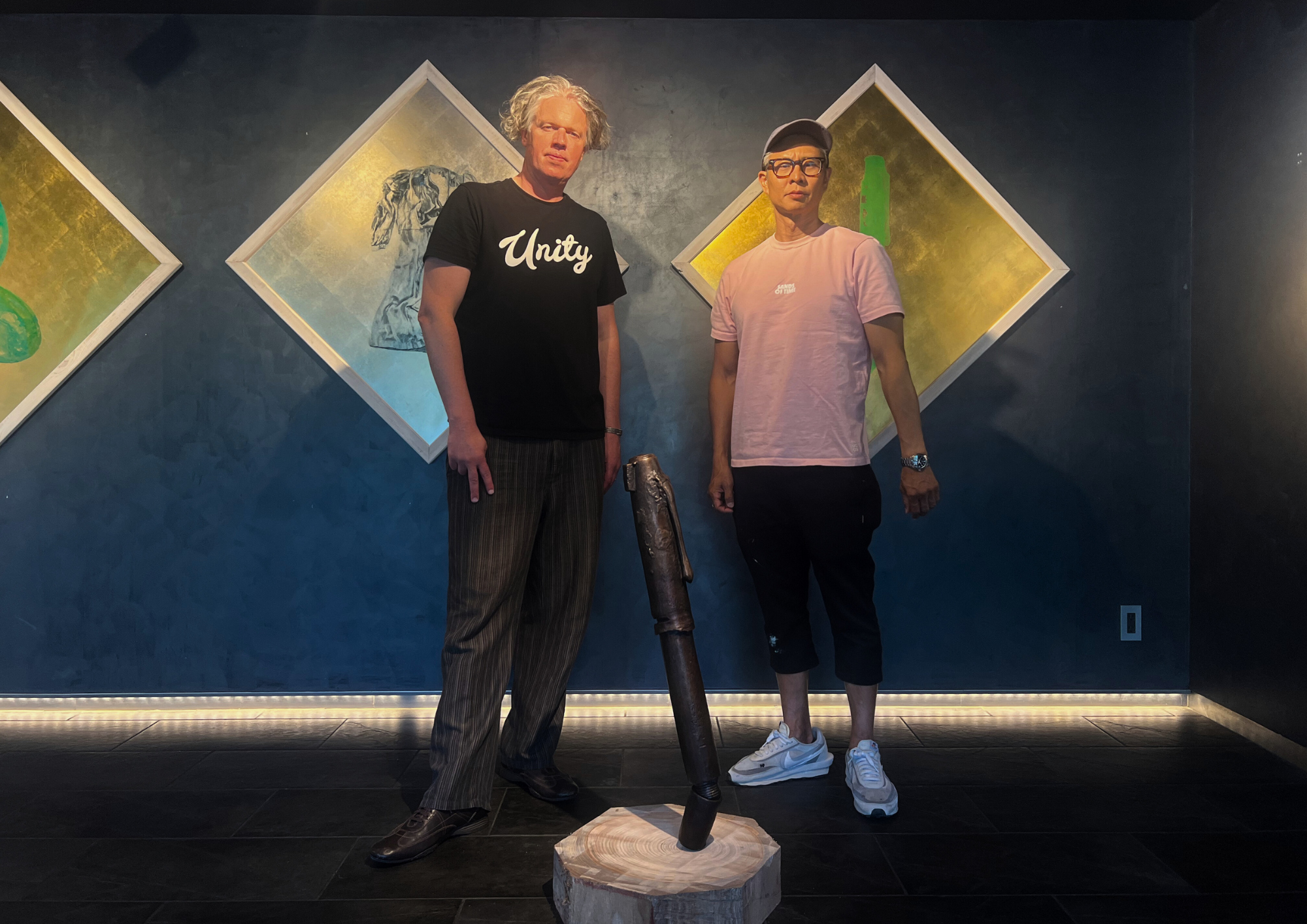
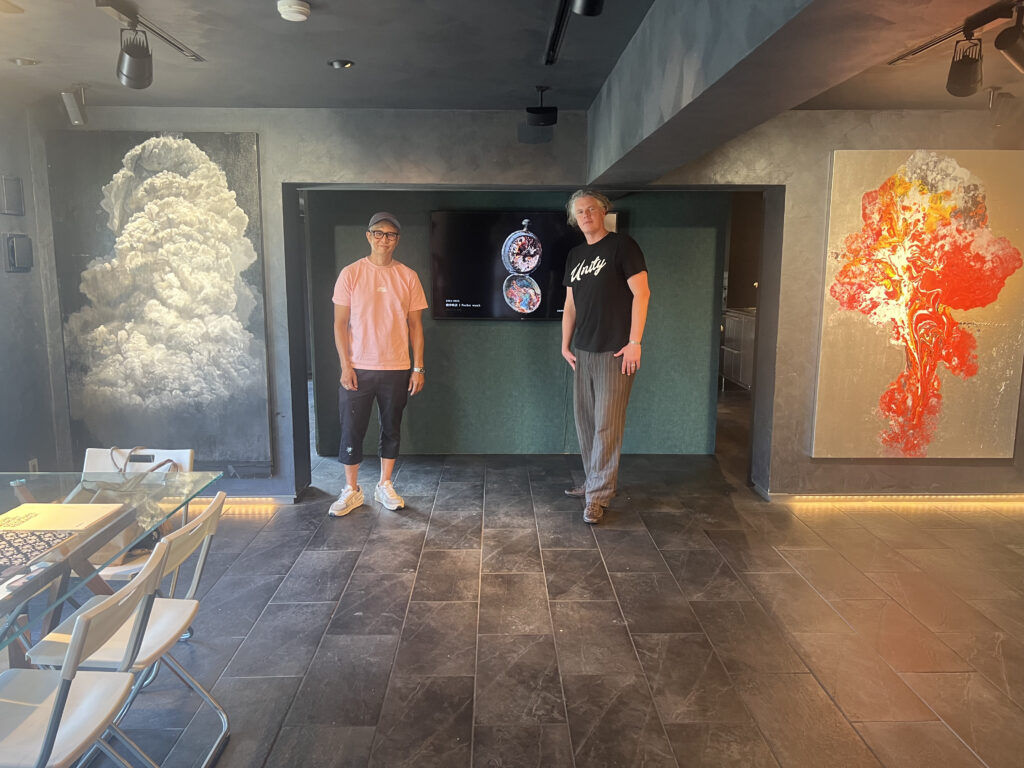
2025年7月、コートヤードHIROOの2階スペースはアーティストの藤元明さんとCannon Herseyさんが取り組むアートプロジェクト「Future Memory」の活動をより多くの方に知っていくための場所、Future Memory Salonとなり、多くのお客様を迎えました。2021年のコロナ禍にコートヤードHIROOガロウで展示されたFuture Memoryですが、当時の状況では来日が叶わなかったCannonさんにお話を伺いました。
Q. 今日はよろしくお願いいたします。まず自己紹介をお願いいたします。
Please introduce yourself.
Cannon:
私の名前はキャノン・ハーシーです。アーティストであり、オーガナイザーであり、映画製作者でもあります。コートヤードHIROOの展示に参加できることをとても嬉しく思います。
My name is Cannon Hersey and I’m an artist, an organizer and a filmmaker. And yeah, very happy to be a part of Courtyard HIROO.
Q. どうやってコートヤードHIROOを知りましたか?
How do you know this place?
Cannon:
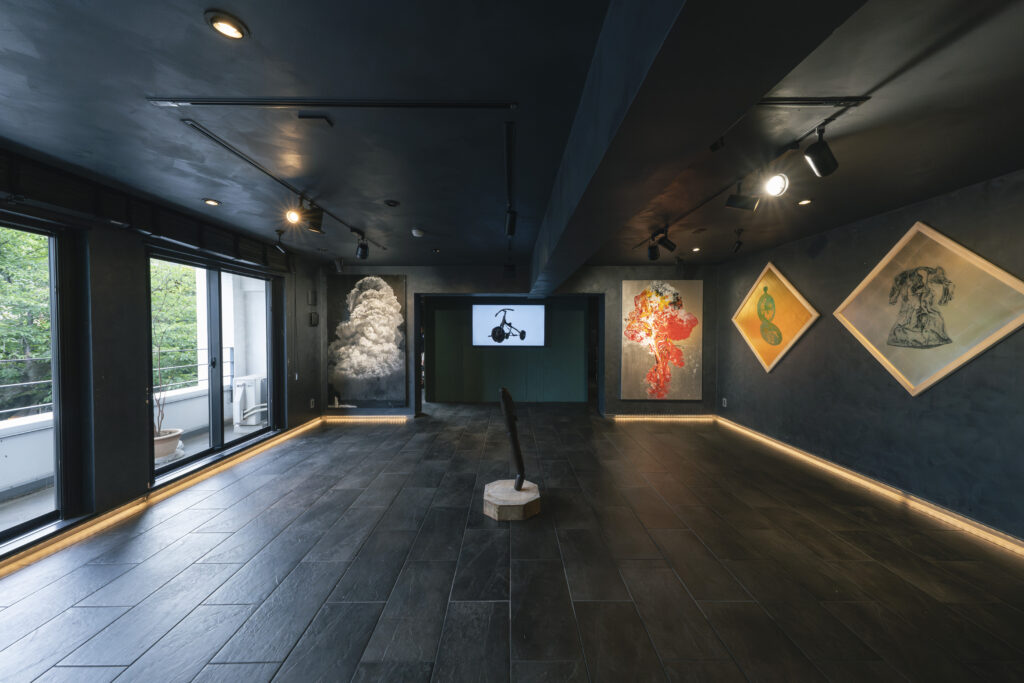
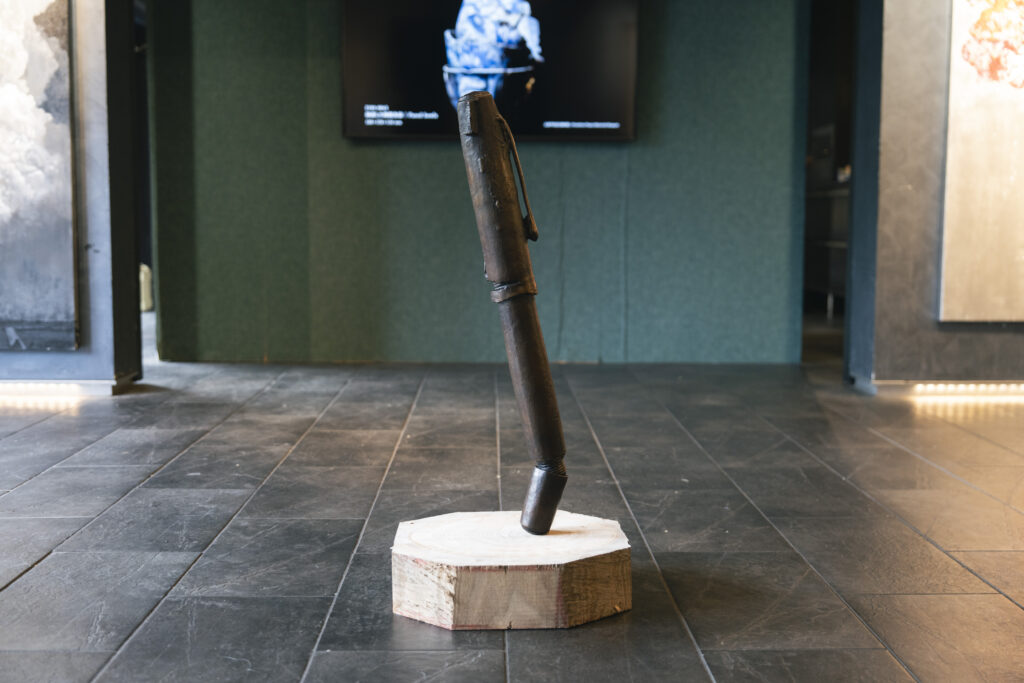
(アーティストの)藤元明さんとマイアミのアートバーゼルに一緒に出展していた2018年、マイアミの通りを歩いていた際、青井さんに偶然出会いました。その後、2019年に合計2回ディナーを共にして「Future Memoryの展示をコートヤードHIROOでやるべきだね」という話になったのです。今回ここの会場にある作品の多く(新作のブロンズ彫刻「Future Memory Pen」を除く)は、2021年の東京オリンピック期間中に、コートヤードHIROOでの展示の一部として発表されたものです。
Akira Fujimoto was in Art Basel, Miami. We were showing together. We’re at a space called the Fearless Artists and we were walking down the street, and we ran into Aoi-san in Miami. So I met Shigeru Aoi in Miami Art Basel, I guess, 2018. And then we had two dinners, in 2019. And we said, oh, we should make a show of future memory at Courtyard HIROO. I made all the work in a church, the silk screens in a church in Hudson, and sent them and sent this work, much of the work that’s on the wall here, except for the new bronze sculpture of Future Memory Pen was exhibited as part of a bigger show here in 2021 during Summer Olympics.
Q. あなたの作品についてと、なぜアーティストになりたいと思ったのかを教えていただけますか?
Could you please explain about your work, and why you wanted to be an artist?
Cannon:
私の父は画家であり、版画家であり、写真家であり、彫刻家でもありました。ですので、私は生まれた時からアートに囲まれて育ちました。家族にとってアートは一つの言語だったのです。私が育った頃、ソーホーが工業地帯からギャラリーやアーティストスタジオに変わる時期でもあり、父は1960年代後半からその場所にいた最初のアーティスト6人の中の一人でした。
父は常に、アートの世界は白人男性だけで構成されるものではないと感じていました。アフリカ系やアジア、先住民アーティスト、そしてほとんど展示されていなかった女性アーティストたちを支持していました。父は厳密にはギャラリストではなく、画家でしたが、白人男性の特権として、社会的に過小評価されているアーティストのための場所を作る責任があると感じていたのです。
私のアート界に対する理解の多くは、父のそうした考え方から来ています。大学を卒業すると、私は「Cross Path Culture」という非営利団体を立ち上げました。これは、アートを通じたグローバルなコミュニティ作りに焦点を当てた団体です。若い頃からアフリカ、中国、モンゴルなどを旅し、そして21歳の時には南アフリカで美術館レベルの展示を行うまでになりました。私は外の世界に学びに行き、現地のアート市場に受け入れられました。そして、そういった地域には非常に質の高いアートがあるのに、アメリカの美術館では全く紹介されていないことに気付きました。アメリカの美術館では、88%から90%が白人男性の作品で、女性の作品すらほとんど展示されていませんでした。裕福なアメリカのパトロンたちは、白人男性だけが優れたアートのアイデアを持っていると思い込んでいたのです。ある意味、日本の市場に似て、少し閉鎖的でした。
父も私も、私たち一人一人が持つ豊かさや質、驚くべき才能を世界は誤解していると感じていました。白人男性の創造的なアイデアだけに注目しているためです。そこで私は、アフリカのアート、そして今や著名なアイ・ウェイウェイ、チェン・ファン、ホアン・シヤンなど中国のアートや、19歳の頃ニューヨークで出会ったドリンキングなど、さまざまなアーティストの作品を紹介し、「Cross Path Culture」を通じて活動を始めました。1999年、2000年にはオンラインマガジンを運営し、中国、ヨーロッパ、アフリカ、南米のアーティストを紹介しました。
こうして、より多様なアートを共有する機会を作っていったのです。私たちはPS1やMoMA、リンカーンセンターにも受け入れられ、22、23歳の時にはアーティスト、キュレーター、オーガナイザーとして、世界中の多様なアートと自分の作品をアート界に紹介していました。
非営利団体は主に資金調達の活動ですが、ある時点で、人々はお金の見返りを求めるようになります。22歳の時、南アフリカのアーティスト、サムソン・ムニージと私は共同でアート制作を始め、最初の3作品をロックフェラー家の若者に販売しました。これが私のキャリアのスタートとなり、アメリカ市場で非常に若い頃から大きなコレクターへの販売を経験しました。作品は半分が私の単独作、半分が共同制作でした。この経験が、私のキャリアの扉を開くきっかけとなったのです。
My father was a painter and a printmaker and a photographer and a sculptor. From birth, I grew up around art. Art was our language as a family. When Soho went from industrial to gallery and artist studios, my father was one of the first six artists in Soho from the late 60s.
My father always felt that the art world was bigger than just white men who were largely being shown. He believed in black artists or African American artists. He believed in Asian artists. He believed in indigenous artists, and he believed in female artists who really weren’t being shown. He wasn’t really a gallerist. He was really a painter who felt that as a privileged white man, he had a responsibility to make space for artists who were underrepresented.
A lot of my understanding of the art world came from his experience thinking that way. As I left college, I started a nonprofit called Cross Path Culture, which was focused on global community building through the arts.
I took into bed in Africa and China where I traveled, Mongolia as a very young person from, you know, I went to Russia at 15 years old. I was in Africa alone at 18, China, Tibet, Mongolia at 19. And I was doing museum level shows by 21 in South Africa. I was kind of going out to learn, working, and being embraced by foreign art markets. And I found that there was art of the highest quality in those places that was being completely not represented in American museums. American museums were showing 88%, 90% white men, not even women. The wealthy patrons of America largely thought that only white men had great art ideas. And so somewhat similar to Japan, a little closed.
For my father and then for me too, we felt that the world was misunderstanding our richness, our quality, our amazing talent by only focusing on creative ideas of white men. And so I started working, bringing African art, bringing Chinese art, Ai Weiwei, Cheng Huang, Huang Siyang, artists who had become major. I met Drinking at 19 years old in New York City, and then worked to build a nonprofit organization, Cross Path Culture. We started doing online magazines in 1999 and 2000 that represented Chinese artists and European artists and African artists, South American artists. And so we started developing an opportunity to share that more diverse art. We were embraced by PS1, by MoMA, by Lincoln Center. We were doing shows at that standard when I was 22, 23 years old as an artist and as a curator, as an organizer, really bringing a diversity of art, also my own art into the art world.
Nonprofit is mostly fundraising, and at a certain point, people wanted something back for the money. So nonprofits, they give you money for free, but most people wanted something. When I was 22, Samson Mnisi, a South African artist, and I started collaborating on making art, and we sold our first three pieces to a young Rockefeller. And that kind of launched my career, was a lot of the selling to big collectors at a very young age in the American market, but often half solo, half collaborative. And that kind of opened the door.
Q. あなたの作品の主なテーマは何ですか?
What’s your main theme of your art?
Cannon:
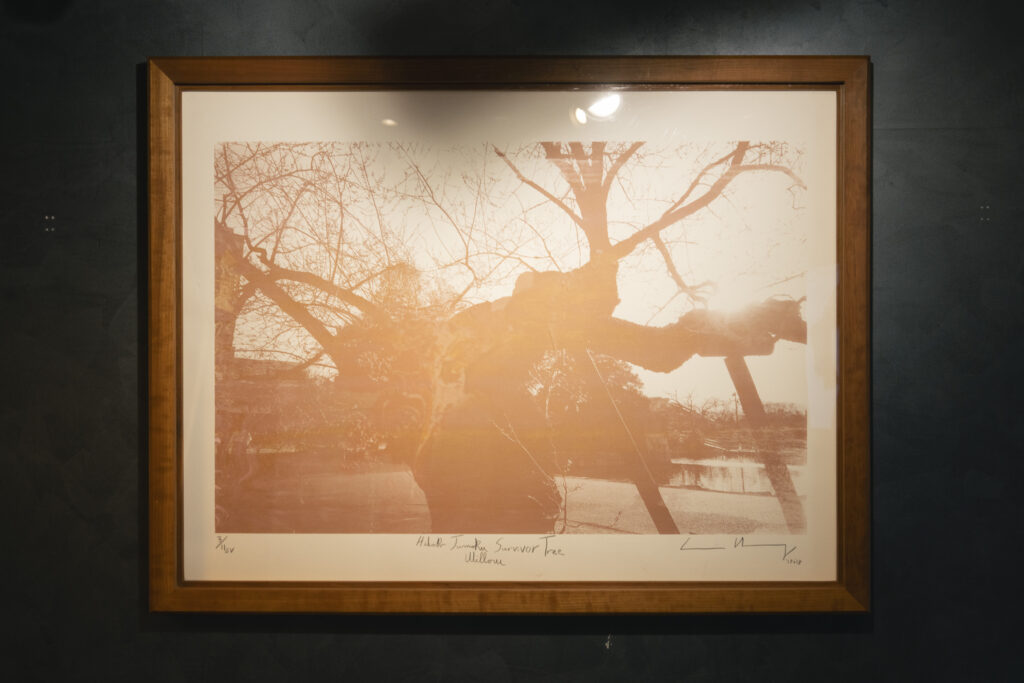
私の作品は常に社会的な文脈に根ざしています。初期の作品の多くはアパルトヘイトの終焉、つまり反人種差別や人種的正義に関するものでした。私の作品の多くは言語や、書とは何か、光と影の表現に関するもの、例えば光で描くことや、光で遊ぶことなどです。そしてここ10年間は、広島をテーマに集中的に制作してきました。広島から世界へと広がるアイデアで、戦争と平和に関するもの、核兵器に関するもの、そして自然の回復力やたくましさに関するものが多くあります。
My art is always kind of rooted in social context. A lot of that early work was about the end of apartheid, so anti-racism, racial justice. A lot of my work is about language and kind of what’s calligraphy, what is play with light, what is painting with light, so light and dark. And then the last 10 years, I’ve been working extensively on Hiroshima, and so on, from Hiroshima to the world, ideas, some to do with war and peace, some to do with nuclear weapons, a lot to do with the resilience of nature.
Q. 今回の来日の目的はなんですか?
What is the purpose of visiting Japan this time?
Cannon:
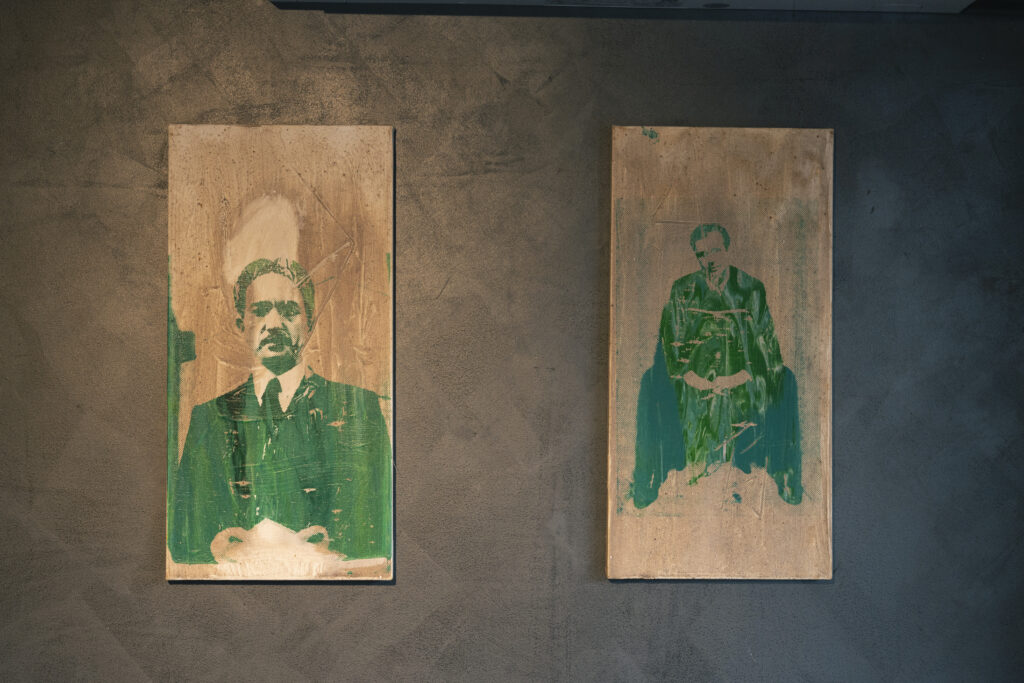
今回の展示では「Future Memory」に焦点を当てています。藤元明と私が約8年間かけて共同で取り組んできた作品です。このアイデアは、広島平和記念資料館に展示してあった、ある物の力から生まれました。私たちは、まだ十分に伝えられていない社会的文脈があり、アートを通じて世界に共有できると感じたのです。従来の表現方法は、人々にどう感じ、どう考えるべきかを伝えるようなものでしたが、その場所に根ざしたアートを作ることで、人々が広島について自分自身の感情や考え、態度を持てるようになると考えました。「Future Memory」は、この時代を象徴する作品として、公共の想像力の中で千年生き続けることができると考えています。今まさにそのことが起きつつあると思います。
This work is focused on future memory, which is the collaborative work that Akira and I have been cultivating for about eight years. A sort of the idea came from the power of the objects in the Hiroshima Peace Museum, and that we felt there was kind of an underrepresented social context that could be shared with the world through art. The way it was being represented was sort of telling people what to feel and think, whereas making art rooted in that place would allow people to have their own emotions, feelings, attitudes about Hiroshima. I think future memory can live in the public imagination for a thousand years as a representation of this time. I think that’s kind of happening right now.
Q. Future Memoryの今後の展開を教えてください
Please tell me what happens in the future of “Future Memory”.
Cannon:
私たちは今、大規模な長編映画の制作準備を進めていて、「Future Memory」の作品の多くはその映画のプロダクションデザインに反映される予定です。これらの作品はこれまで数百、数千単位の人々が目にしてきたものから、映画を通じて数百万、数億人に見られることになります。こうしたアートを新しいメディア体験に統合する取り組みは、グローバルなポップアートの世界では非常に新鮮な試みだと思います。
私は、アートはこれまでよりも大きな声を持つべきだと思っています。これまでアートは市場に制御され、孤立させられてきました。しかし、洞窟壁画に描かれたアートは人々が生き延びる方法であったし、アートは世界の神や女神を見つける方法でした。アートは人々が何千年もの間、最も深い感情を伝える手段でもあったのです。現代では、アートは商品化されてしまいました。それはアート自体にとっても、アートが現代よりはるかに重要な意味を持っていた社会にとっても損失だと思います。アートはただ光り輝く美しいものではありません。アートは永続的な価値を持ち、人間性や共感の根源的な部分と深く結びついています。 それはもしかしたら私たちがお互いを見失ってしまったことに理由があるのかもしれません。お互いへの共感を失い、すべてを商業化してしまったのかもしれません。しかし、アートは単にお金を稼ぐ以上の価値を持っているのです。
Well, we’re getting ready to make a huge feature film, and a lot of future memory will live in the production design of a major motion picture. This work will go from being seen by hundreds and thousands of people to being seen by millions and hundreds of millions of people through a major motion picture. I think that that is very fresh in the world of global pop art, is to integrate art into new media experiences.
I think that art has a bigger voice than it’s been controlled into. It’s been kind of controlled by marketplace and isolated. But art was the way people found survival in cave paintings. Art was the way people found God and goddess in the world. Art is the way that people communicated their deepest feelings for thousands of years. In this era, it’s become a commodity. I think that that’s a loss to the art and to the society to whom art has meant a lot more than it means today. Art is not just shiny, pretty things. Art is lasting value and is sort of core root of humanity and empathy.
Maybe it’s because we’re losing each other. Maybe it’s because we’ve sort of lost empathy for each other, so we just commercialize everything. But art typically has a much bigger value than just making money.
Q.将来の目標は何ですか?それとも、何を成し遂げたいと思っていますか?
what is your future goal, or what do you want to succeed on?
Cannon:
私はアーティストの目標は常に「何かを後世に残すこと」だと思っています。私たちがこの世にいなくなった後、何を表現として残すのかということです。世界で最も偉大なアートは、何百年、あるいは何千年も人々の想像力の中で生き続けると思います。
そして「Future Memory」の大きな目標は、広島の物語を未来の世代に共鳴する形で伝え、起こったことを忘れさせないことです。「Future Memory」はより大きな文脈を持っています。藤元明と私は、これが世界の問題を真剣に見つめ、未来の世代に今起こっていることを忘れさせないために、一緒に取り組める重要な方法の一つだと常に考えてきました。
日本は広島が象徴する考え方を受け入れつつあると思います。5年前に藤元明の「Tokyo 2021」でゼロプロジェクト東京を行ったとき、多くの人にとってはかなり奇異なものでした。「なぜこれをやるの?」という反応が多かったのです。しかし今は変わってきたと思います。日本は被爆者の方々を称え、その方々が年を重ね、亡くなっていく中で、世界にとっての意味を改めて考えているように思います。日々、被爆者は少なくなっています。このアートは彼らの声を広げる役割を果たすのです。
日本の施設が「Future Memory」を受け入れれば、それは公共空間に存在する美しいアート作品となり、深い意味を持つでしょう。単に原爆や被 害、攻撃に関するものだけでなく、回復力や人間性、私たち全員が変化を生み出す力についても伝えるものです。可能な限り、私たちの作品を世界に届けるためにできることをやっていきたいと思います。
広島は、その深い悲しみ、真の苦しみ、そして全てを失ったという事実から、今日の世界が直面している問題についてより深く考えるきっかけを与えてくれます。このアートが人々を訪問へと誘い、人生に何らかの変化をもたらすことを願っています。今、人々は非常に絶望的な気持ちを抱き、ソーシャルメディアや画面の中の情報、ひどいリーダーシップ、壊れた経済の向こうに、何か意味のあるものを求めていると思うからです。人々はもっと意味のあるものを求めていて、神や女神の存在にはあまり注意が払われず、人々は少し迷子になっています。
広島のような場所は、人々に何か真実を感じさせ、意味のある何かを感じさせ、より深い目的を見つける手助けをしてくれます。藤元明と私は、社会的文脈やアートの力を通して、世界により大きな意味をもたらすことに取り組んでいます。そして、人々はそのようなものを求めているのだと思います。
Well, I think the artist’s goal is always to leave something behind. Once we’re no longer alive, what is the representation that we leave behind? I think that the greatest art in the world will live in the public imagination for hundreds, if not thousands of years.
I think that the big goal of future memory is to kind of create a resonating story of Hiroshima for future generations not to forget what happened. I think that future memory is a larger context. Akira and I always thought about, you know, this is one of the great ways we can work together to really look at the problems of the world and let the future generations not forget what happened now.
I think Japan is opening up to Hiroshima ideas, whereas five years ago when we did Zero Project Tokyo at Akira’s Tokyo 2021, it was quite an odd thing to most people. Most people were like, why are you doing this, Akira? I think that it’s changed. I think Japan is sort of celebrating the heroes that are the hibakusha and really considering their meaning in the world as they grow older and pass away. There are fewer and fewer hibakusha alive every day. I think this art extends their voice. I think if facilities in Japan would embrace future memory, they’re beautiful artworks to live in the public and do have deep meaning, not just about atomic bomb or being oppressed or being attacked, but about resilience and about humanity and kind of all of our ability to make a difference. I think where possible, let’s do what we can do to put the work in the world.
I think that Hiroshima has, because of the deep sorrow, the real suffering and all of the loss that happened there, it’s allowed sort of some deeper thinking about what the world is facing today. I hope this art encourages people to visit and that it makes a difference in people’s lives. Because I think people feel very hopeless right now and are kind of looking for something, some meaning in life beyond social media or what’s on their screen or poor leadership or broken economies. I mean, I think people are looking for something more meaningful and, you know, the gods and goddesses get less attention and people are kind of lost a little bit. I think places like Hiroshima can allow people to feel something true, to feel something meaningful, and kind of find some deeper cause. Akira and I both work around sort of social context and the power of art to mean something more in the world. And I think people are searching for that.
Interview:Satoko Kubota